-
+86-18322274823


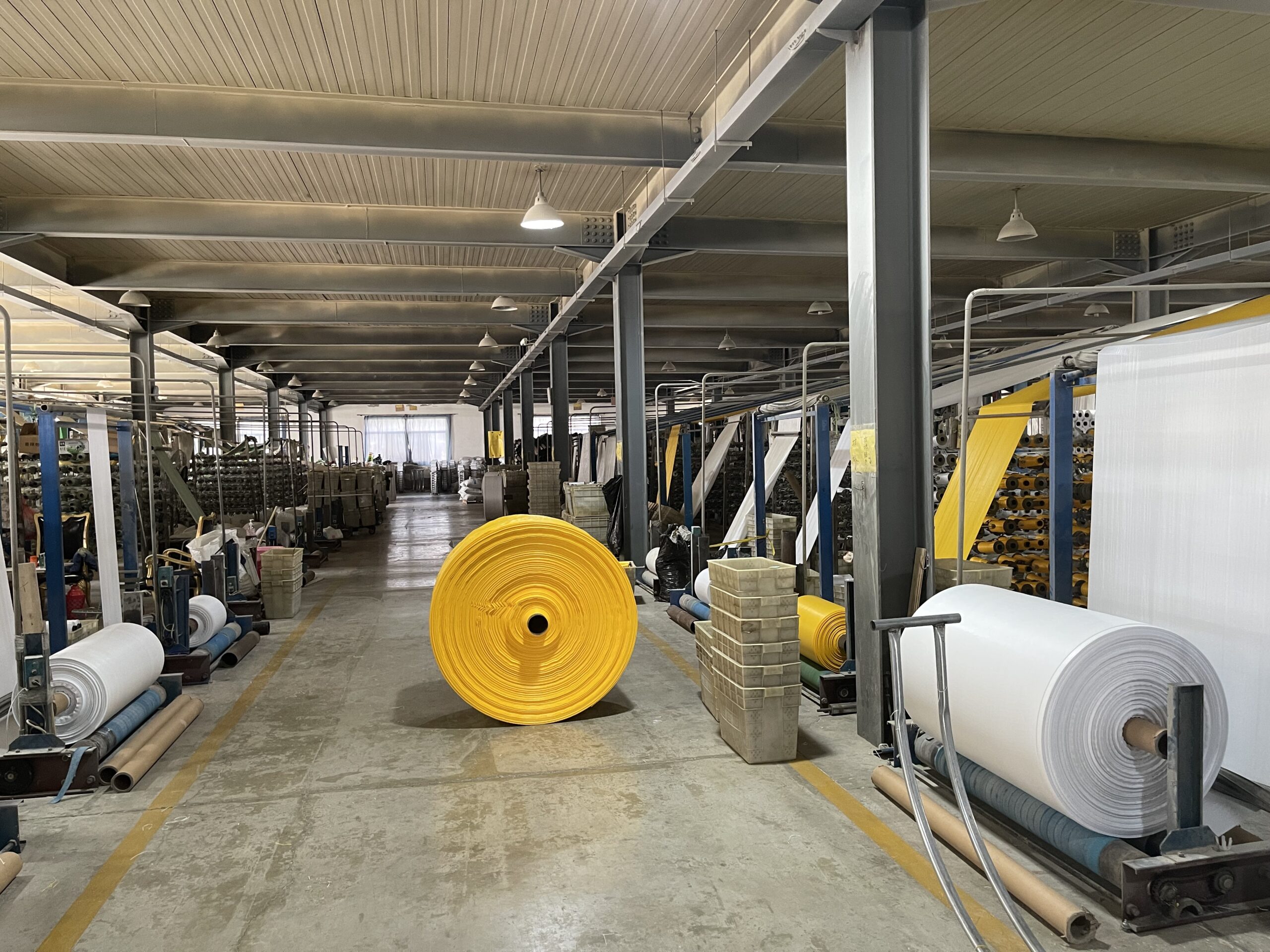
20kg Dog Food Bags: BOPP PP Woven Warehouse Guide
The specification gap between a bag that survives a warehouse and one that fails on the dock is rarely about the material itself—it is about whether the structure was engineered for the load it actually carries.
A 20kg dog food bag is a case study in this principle. It must hold 20 kilograms of dense kibble, withstand forklift handling across 48×40 GMA pallets, present cleanly on a retail shelf, and resist moisture and grease migration for months of storage. This is why specifying 20kg dog food packaging BOPP laminated PP woven bags requires more than a generic woven sack quote—it requires a construction built around fill weight, distribution environment, and closure integrity. JTFPACK manufactures BOPP laminated PP woven bags from 5kg to 50kg, and this guide walks procurement teams through the engineering, testing, and sourcing decisions that determine whether a 20kg program runs smoothly or generates claims. JTFPACK manufactures 20kg dog food packaging bopp laminated pp woven bags from its base in Tianjin, China, under ISO 9001 quality management.
Key Takeaways
- Why 20kg Dog Food Packaging Demands More Than a Standard Woven Bag: A standard PP woven bag is a capable container.
- BOPP Laminated PP Woven Bag Construction: Layers, GSM, and Barrier Logic for 20kg Loads: The performance of a 20kg dog food bag comes from the interaction of two material systems: the PP woven substrate that provides tensile strength, and the BOPP film that provides print surface and barrier.
- US Warehouse-to-Shelf Flow: Pallet Configuration, Handling, and Retail Presentation: A 20kg bag that performs in the lab can still fail in a US distribution center if its dimensions and stiffness are not matched to pallet and rack realities.
- Print and Brand Performance: High-Impact BOPP Graphics That Survive the Supply Chain: The BOPP film exists in part because it is an excellent print surface.
- Drop, Stack, and Seal Testing: Qualifying a 20kg Dog Food Bag Before Volume Orders: No 20kg dog food bag should enter volume production without a documented qualification protocol.
Why 20kg Dog Food Packaging Demands More Than a Standard Woven Bag
A standard PP woven bag is a capable container. It is also, at 20kg fill weight, frequently underspecified. The reason comes down to safe working load. A filled 20kg bag does not experience 20kg of stress—it experiences dynamic loads during filling, palletizing, forklift transport, and drop events that can momentarily multiply the effective load well beyond the static weight. Industry practice is to specify bag structures rated for a 25–30kg safe working load for a 20kg fill, creating a margin that absorbs the shock of handling rather than transferring it to the seams.
The two failure zones on any heavy-duty woven bag are the bottom seam and the gusset folds. On a 20kg dog food bag, the bottom seam carries the entire fill weight in tension every time the bag is lifted. Gussets—the side folds that allow the bag to expand—concentrate stress at the fold lines, particularly at cold temperatures when PP film and woven tapes become less ductile. A standard woven bag without reinforced construction may pass a visual inspection and still fail a 1.2m drop test at the corner. That is why 20kg programs should specify gusset reinforcement and bottom seam construction verified by physical drop testing, not by datasheet alone.
There is also the question of barrier performance. Dog food kibble carries surface fat and is hygroscopic—it absorbs ambient moisture and loses crispness, while fat migration can stain the bag exterior and weaken print adhesion. A single-layer woven bag offers tensile strength but poor moisture and grease resistance. The BOPP lamination layer is what closes that gap, and the closure method is what keeps it closed. For 20kg loads, the closure is not a detail—it is the load-bearing element that determines whether the bag reaches the shelf intact.
Fill weight, dimensions, and the 25–30kg rating logic
Bag dimensions must be matched to fill weight and kibble bulk density, not copied from a prior program. A bag sized too tightly for 20kg of kibble will bulge at the gussets and stress the bottom seam; a bag sized too loosely will not stand upright on shelf and will shift on the pallet. JTFPACK sizes 20kg dog food bags against the customer’s actual product bulk density and target pallet pattern, then validates the result through drop and stack testing before production.
BOPP Laminated PP Woven Bag Construction: Layers, GSM, and Barrier Logic for 20kg Loads
The performance of a 20kg dog food bag comes from the interaction of two material systems: the PP woven substrate that provides tensile strength, and the BOPP film that provides print surface and barrier. Understanding each layer’s role is essential for writing a specification that holds up in production.
The PP woven substrate: 100–120 GSM for palletized distribution
The woven substrate is produced from PP tapes woven into a fabric, then coated or laminated. For 20kg dog food loads, a substrate in the 100–120 GSM range provides the tensile and tear strength needed for palletized distribution and forklift handling. Below this range, the fabric may lack the strength to resist puncture from pallet corners or fork tines; above it, the bag becomes unnecessarily stiff and costly without proportional benefit. The GSM tolerance should be specified explicitly—typically ±5%—because dimensional drift and weight variation between production runs are among the most common procurement complaints.
BOPP film lamination: 18–25 micron for print and moisture resistance
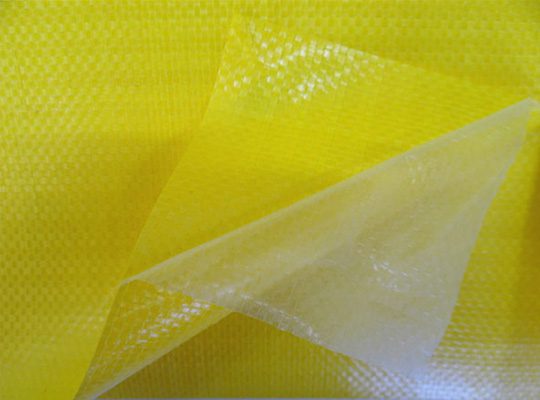
The BOPP (biaxially oriented polypropylene) film is laminated to the woven substrate and serves three functions: it carries the print, it provides a smooth moisture-resistant surface, and it protects the woven fabric from abrasion during pallet handling. For 20kg dog food bags, film thickness typically runs 18–25 micron. Thinner film reduces cost but offers less scuff resistance and less consistent print registration on high-speed flexo or rotogravure presses; thicker film improves graphics durability and barrier but adds cost. The lamination coverage—full-surface versus partial—should be specified based on fat content and climate. High-fat kibble in humid warehouse conditions may warrant an optional inner liner or PE coating in addition to the BOPP film.
Closure engineering: pinch bottom, step-cut, and the heat-welded seal
Closure type is where many 20kg specifications go wrong. JTFPACK’s BOPP pinch bottom bags (PBOM) and step-cut pinch bottom bags use a pinch sealer: after filling, the bag top enters the sealer, the pre-formed T-shape step-cut top fold is folded, and heat melts the laminated plies into a seamless permanent weld. This is a heat-welded closure—the pinch sealer folds the pre-formed T-shape step-cut top fold and heat melts the laminated plies into a seamless permanent weld—and the distinction matters because a heat weld fuses the plies into a continuous bond, while an adhesive closure relies on a bond that can creep under sustained load. The step-cut refers to the stepped corner profile engineered into the bag’s top fold, which interlocks when folded and heat-sealed at closure. That interlock, combined with the T-fold, is also what allows the bag to expand into a flat-bottomed rectangular shape after filling—a result of the closure design, not a stacking feature. For 20kg loads, this squared-off bottom is what keeps the pack standing upright on shelf and stable on the pallet. JTFPACK’s BOPP PBOM Dog Food Bags (T-Shape) are built on exactly this principle. Buyers comparing formats can review the full range of BOPP pinch bottom bags to match closure style to filling line capability.
US Warehouse-to-Shelf Flow: Pallet Configuration, Handling, and Retail Presentation
A 20kg bag that performs in the lab can still fail in a US distribution center if its dimensions and stiffness are not matched to pallet and rack realities. The warehouse is the harshest environment most dog food bags will ever see: forklift handling, 48×40 GMA pallets, rack storage with point loads on the bottom tier, and stretch-wrap compression.
Pallet patterns and the 48×40 GMA constraint
US grocery and pet retail distribution standardizes on the 48×40 GMA pallet, and bag dimensions should be selected to produce a stable, high-density pallet pattern on that footprint. A 20kg bag that is slightly too wide may force an inefficient pattern with overhang; slightly too narrow and the pattern becomes unstable without slip sheets. JTFPACK works backward from the target pallet pattern to bag dimensions, then verifies stack load performance. Slip-sheet and stretch-wrap compatibility should be confirmed at the sample stage—bags with high-gloss BOPP film can slide under stretch wrap if the film’s coefficient of friction is not considered.
Forklift handling and rack storage
Rack storage places the full weight of upper tiers on the bottom-layer bags, which is why stack load testing belongs in the qualification protocol. Bags that pass a drop test can still creep or deform under sustained stack load over weeks in a warehouse. The bag’s stiffness—driven by substrate GSM and film thickness—determines how well it resists that compression and how cleanly it presents after depalletizing.
Retail shelf readiness
On shelf, the 20kg pack must stand upright and hold its shape through handling by store staff and customers. That requires consistent print registration, an appropriate matte or gloss finish, and enough bag stiffness to keep the pack standing after partial depletion of the display. A bag that slumps on shelf reads as damaged product regardless of what is inside it.
Print and Brand Performance: High-Impact BOPP Graphics That Survive the Supply Chain
The BOPP film exists in part because it is an excellent print surface. Flexo and rotogravure printing on BOPP delivers photo-quality graphics that a bare woven bag cannot achieve—but the graphics only deliver brand value if they survive the journey from filling line to shelf.
Registration consistency and color standards
Print registration consistency is the difference between a premium shelf presence and a pack that looks like a misprint. For multi-color dog food graphics, specify registration tolerances and provide Pantone targets for each color. Color drift between production runs is one of the most common quality complaints in woven bag programs, and it is best controlled by agreeing on Pantone standards and approving a physical pre-production sample rather than a digital proof.
Scuff resistance through pallet handling
BOPP film protects print from abrasion, but scuffing can still occur where bags rub against each other during palletizing and forklift transport. Film thickness in the 18–25 micron range and finish selection (gloss versus matte) both affect scuff visibility. Matte finishes hide scuffs better; gloss finishes deliver higher visual impact. The right choice depends on the retail channel and the handling intensity of the distribution path.
Matching finish and stiffness to shelf presentation
Print and structure work together on shelf. A bag with excellent graphics but insufficient stiffness will slump; a bag that is stiff but has inconsistent registration will look off-brand. JTFPACK evaluates print and structure as a single system during sampling, so the approved sample represents the finished shelf appearance, not just a print proof. Teams sourcing for pet food programs can review BOPP laminated PP woven bags alongside print options to align graphics with structural performance.
Drop, Stack, and Seal Testing: Qualifying a 20kg Dog Food Bag Before Volume Orders
No 20kg dog food bag should enter volume production without a documented qualification protocol. Testing is not a formality—it is the mechanism that converts a specification into a reliable supply program.
The core test protocol
A practical qualification protocol for 20kg dog food bags includes four tests. Burst strength testing verifies the bag’s resistance to internal pressure and seam stress. Drop tests from 1.2m at multiple angles—flat, edge, and corner—simulate the handling shocks of palletizing and depalletizing; corner drops are the most revealing because they concentrate stress at the gusset and bottom seam. Stack load tests verify performance under sustained compression in rack storage. Seam peel checks confirm the integrity of the heat-welded closure and the bottom seam, since a heat weld that is under-cured or contaminated will fail progressively under load rather than immediately.
Sampling before volume commitment
The protocol should be run on pre-production samples built to the exact specification—same substrate GSM, same film micron, same closure type—before any volume order is placed. JTFPACK supports pre-production sampling and AQL inspection so procurement teams can approve a physical standard rather than a datasheet. For automated filling lines, samples should also be run through the customer’s filling equipment to confirm the bag opens, fills, and seals cleanly at line speed.
Cold-temperature and climate considerations
Gusset cracking at cold temperatures is a known failure mode for PP-based bags. If the distribution path includes cold storage or winter transit, drop testing should be repeated at the low end of the expected temperature range. Similarly, high-humidity climates warrant verifying lamination coverage and seal integrity under moisture exposure.
Specification Checklist and Common Failure Points for Procurement Teams
A written specification prevents most disputes before they occur. The following checklist covers the parameters that matter most for 20kg dog food programs.
Specification checklist
- Bag dimensions matched to fill weight and target pallet pattern, validated on the customer’s product bulk density
- Substrate GSM (100–120 GSM for 20kg loads) with explicit tolerance, typically ±5%
- BOPP film thickness (18–25 micron) and lamination coverage (full or partial)
- Print color standards specified as Pantone targets, with registration tolerance and finish (matte or gloss)
- Closure type: pinch bottom, BOPP PBOM, or step-cut pinch bottom, with heat-weld parameters agreed
- Barrier options: inner liner or PE coating where fat content or climate requires
- Palletization specs: bags per pallet, pattern, slip-sheet and stretch-wrap compatibility
- Safe working load rating (25–30kg for a 20kg fill) and test protocol documentation
Common failure points
- Bottom seam blowouts from underspecified seam construction or under-cured heat welds
- Gusset cracking at cold temperatures, particularly where film ductility was not tested at low temperature
- Print scuffing during pallet handling, often traceable to film thickness or finish selection
- Dimensional drift between production runs, usually a tolerance specification gap rather than a manufacturing defect
- Closure failure at the heat weld, which can result from contaminated seal areas or incorrect sealing parameters on the filling line
Procurement teams evaluating formats across pet food and feed applications can compare pinch bottom bags and step-cut constructions to determine which closure best matches their filling equipment. For fertilizer and animal feed programs with similar load profiles, JTFPACK’s heavy-duty woven bag solutions apply the same engineering logic.
Technical Specifications at a Glance
| Parameter | Specification |
|---|---|
| Capacity range | 5 kg – 50 kg (11 lb – 110 lb) |
| Construction | BOPP film laminated to PP woven or film core |
| Closure | Heat-welded pinch bottom with pre-formed T-shape step-cut fold |
| Printing | Up to 10-colour reverse gravure (gloss, matte or spot-matte) |
| MOQ | 5,000 pcs standard / 500–1,000 pcs FIBC |
| Lead time | 7–15 days standard, 15–25 days custom print |
| Quality system | ISO 9001 |
| Palletising | Bales on pallets, stretch-wrapped for export |
Sourcing BOPP Laminated PP Woven Bags from JTFPACK: MOQs, Lead Times, and US Delivery
Sourcing a 20kg dog food bag is a program decision, not a one-off purchase. The supplier relationship must support sampling, specification control, inspection, and replenishment cycles aligned to US warehouse operations.
JTFPACK manufactures BOPP laminated PP woven bags, pinch bottom bags, BOPP pinch bottom bags (PBOM), BOPP PBOM dog food bags (T-Shape), and step-cut pinch bottom bags, with capacity from 5kg to 50kg. The bags are moisture-proof and heavy-duty, compatible with automated filling lines, and customizable as cost-effective solutions for pet food, fertilizer, and animal feed programs.
For US-bound programs, JTFPACK supports MOQ flexibility so buyers can qualify a new 20kg specification without committing to a full container before the sample is approved. Pre-production samples and AQL inspection are available to document quality before volume release, and lead times are quoted against the customer’s warehouse replenishment cycle rather than as open-ended estimates. Because dimensional drift and print color variation are the most common sources of downstream disputes, JTFPACK documents the approved sample as the production standard and inspects against it.
The practical takeaway for procurement teams is straightforward: specify the 25–30kg safe working load, lock the substrate GSM and film micron tolerances in writing, test the closure and seams before volume commitment, and align pallet patterns to the 48×40 GMA footprint. When those four elements are in place, 20kg dog food packaging BOPP laminated PP woven bags stop being a commodity purchase and become a reliable, shelf-ready component of the supply chain—one that JTFPACK can support from pre-production sample through recurring US delivery.