-
+86-18322274823


40kg PBOM Bags for Pet Food: Size Specs & Handling Guide
40kg PBOM Bags for Pet Food: Size Specs & Handling Guide
Key Takeaways
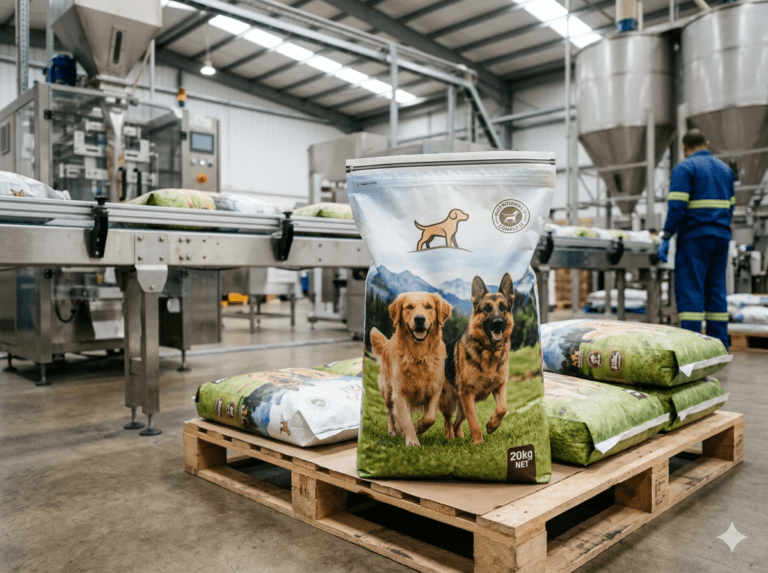
- Core Specifications of 40kg PBOM Bags for Bulk Packaging: When engineering bulk packaging solutions for high-volume pet food production, the specifications of 40kg PBOM bags directly impact line efficiency and supply chain stability.
- Accurate Weight Calibration & Capacity Verification: When engineering packaging for heavy pet food applications, we prioritize precision calibration to ensure reliable performance across automated filling lines.
- Automated Filling Integration and Line Optimization: Deploying 40kg PBOM bags in automated filling operations requires strict machine calibration and thermal sealing protocols.
- Moisture-Proof Construction and Environmental Protection: At JTF PACK, we engineer **40kg PBOM bags** to meet rigorous storage and transit requirements for high-volume pet food distribution.
- Warehouse Stacking, Transport and Safety Protocols: When managing high-volume distribution, we utilize pinwheel stacking techniques to evenly distribute vertical pressure across storage tiers.
Core Specifications of 40kg PBOM Bags for Bulk Packaging
When engineering bulk packaging solutions for high-volume pet food production, the specifications of 40kg PBOM bags directly impact line efficiency and supply chain stability. We design these containers to accommodate standard pallet footprints while maintaining structural integrity during transit. Our manufacturing protocols align with ISO 9001 quality management systems to ensure consistent dimensional tolerances and material performance across every production run. JTFPACK manufactures 40kg pbom bags from its base in Tianjin, China, under ISO 9001 quality management.
Standard Dimensions & Base Width
The outer dimensions typically measure 850x500mm, paired with an 80mm base width that creates a precise rectangular footprint. This geometry is engineered specifically for automated stretch wrapping and palletizing systems. Unlike conventional sack profiles, our structures utilize a pre-formed T-shape step-cut top fold that interlocks strictly at the closure stage during thermal sealing. Once the filled package exits the pinch sealer, the compressed plies expand into a fully squared-off bottom. This geometric transformation occurs solely through the sealing process, not through external stacking forces, delivering inherent stability that prevents shifting or bursting during vertical storage.
- Outer envelope: 850 x 500 mm ± 2mm tolerance
- Base width: 80 mm optimized for automatic conveyors
- Load capacity: Rated for 40kg static loads (supports 5–50kg range)
Film Lamination & Seal Integrity
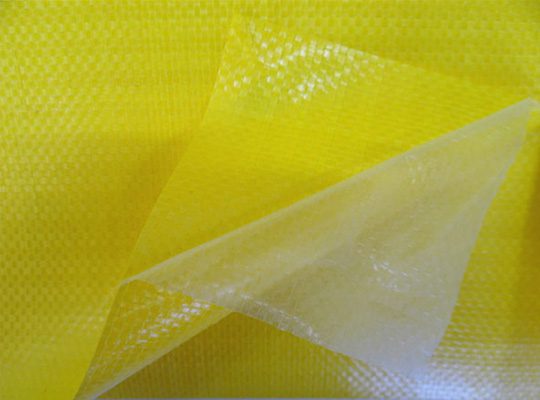
Product durability relies on the synergy between PP woven fabrics and protective surface coatings. A continuous BOPP lamination layer provides superior UV resistance and a high-gloss printing substrate for commercial branding. The polymer matrix also enhances moisture-proof barriers critical for hygroscopic formulations like grain-based pet diets. Every thermal weld undergoes verification against ASTM D882 tensile standards to confirm seam strength without relying on chemical binders or mechanical fasteners. This methodology guarantees a permanent, seamless closure that withstands vibration stress throughout multi-modal freight handling.
Open Mouth Design Mechanics
The unsealed top profile enables rapid throughput on both rotary weighers and vertical form-fill-seal lines. Vision-guided dispensing equipment or trained operators can load accurate net weights within seconds, maximizing cycle rates for automated filling operations. The open-mouth architecture also streamlines downstream workflows, as empty-to-full packages transition directly into pinch sealers where controlled heat fuses the stepped corners. Thermal energy permanently fuses the pre-formed T-shape step-cut top fold, melting the laminated plies into a seamless, permanent heat weld entirely independent of any adhesives or tapes. This closure strategy reduces mechanical dwell time while preserving consistent leak prevention. For procurement teams evaluating alternative formats, we recommend reviewing our detailed comparison of BOPP Laminated Woven Sacks vs Valve Bags. Facilities seeking premium surface finishes should explore our catalog of BOPP Laminated PP Woven Bags & Sacks.
Accurate Weight Calibration & Capacity Verification
When engineering packaging for heavy pet food applications, we prioritize precision calibration to ensure reliable performance across automated filling lines. Our Pinch Bottom Bags utilize durable PP woven substrates with BOPP lamination, delivering moisture-proof protection for payloads spanning capacities from 5-50kg. Specifically, our 40kg PBOM bags require rigorous dimension verification to integrate seamlessly into high-speed manufacturing workflows.
Net versus Gross Weight Calculations
We differentiate net product weight from the bag tare mass to uphold commercial accuracy. By specifying fill quantities independently of packaging weight, we help clients avoid shipping disputes and ensure compliance with regional trade regulations. The structural geometry relies on precise thermal processing: the sealed pinch bottom forms a stable, flat rectangular base because the heat-welded closure interlocks the pre-formed step-cut top fold during the sealing cycle. This interlock creates the expanded footprint characteristic of filled bags, confirming that the squared-off shape results from closure mechanics rather than serving as a stacking interface.
Filling Precision and Tolerance Windows
Compatibility with automated valve attachment systems depends on consistent filling parameters. We advise maintaining a ±2% weight tolerance to optimize throughput and reduce reject rates on rapid production cycles. Verifying load distribution is essential prior to finalizing machine settings, as uneven pressure can stress the thermally welded seam during transit. Our quality control framework adheres to ISO 9001 standards, ensuring that calibration protocols for bag tensile strength and dimensional stability remain validated across every production batch.
Impact of Material Density on Sizing
Volumetric requirements vary based on the bulk density of the formulated feed. Denser compositions, such as concentrated kibble mixes, may necessitate slight adjustments to internal volume metrics compared to lighter formulations to reach the target 40kg without over-extending the laminate layers. Proper sizing preserves the integrity of the BOPP barrier and prevents handling issues caused by improper inflation profiles. For additional reference on capacity configurations suited for livestock and companion animal feeds, review our 50-100lb Square Bottom Polypropylene Bags for Chicken Cattle Horse Feed Sacks documentation.
Automated Filling Integration and Line Optimization
Deploying 40kg PBOM bags in automated filling operations requires strict machine calibration and thermal sealing protocols. Our engineered valve slots mate directly with auger or piston fillers, eliminating lateral drift during continuous dispensing across the 5–50 kg capacity range. The polypropylene woven core provides structural durability, while the exterior BOPP lamination delivers a moisture-proof barrier that preserves kibble freshness during transit.
Valve Compatibility and Orientation
Precise valve-to-spout alignment prevents product waste and maintains consistent fill weights. We recommend securing the filler nozzle height to match valve geometry, minimizing turbulence when loading granular or pelletized formulations. Facilities should verify that pneumatic actuators synchronize with metering pumps to sustain steady throughput without over-stretching the substrate.
Conveyor Alignment and Feed Rates
Optimizing conveyor spacing prevents skewed movement as loaded sacks transition from discharge to the sealing station. Misaligned guide rails introduce rotational friction that distorts bag geometry. Implement these adjustments to maintain straight-line progression:
- Calibrate side-guide width to match empty bag dimensions before loading
- Synchronize belt speed with filler cycle time to eliminate queue buildup
- Install low-friction transfer plates at junction points to reduce drag
High-Speed Sealing Cycle Requirements
Seal parameters must be adjusted according to BOPP melt index specifications to achieve consistent fusion. Each closure undergoes a thermal weld process where the pre-formed step-cut top fold is compressed in a pinch sealer, melting the laminated plies into a seamless, adhesive-free bond. This architecture eliminates tape or hot-melt compounds, preventing delamination under warehouse vibration. After filling, the expanded T-fold and welded seam create a stable rectangular base that improves pallet compression resistance.
We integrate automated vision inspection systems to verify pinch bottom closure integrity at line speed. These modules cross-check seal width and edge continuity against ISO 9001 quality management benchmarks before dispatch. For complete handling guidelines, refer to our Pinch Bottom Bags technical documentation.
Moisture-Proof Construction and Environmental Protection
At JTF PACK, we engineer **40kg PBOM bags** to meet rigorous storage and transit requirements for high-volume pet food distribution. While optimized for heavy loads, our weaving and lamination parameters scale reliably across full capacity ranges from 5 to 50kg. Our woven polypropylene solutions utilize advanced BOPP lamination to deliver a robust moisture-proof construction critical for preserving hygroscopic formulas. Our bags preserve ingredient integrity across diverse environments while seamlessly supporting automated filling operations.
Laminated Barrier Performance
Our process integrates a biaxially oriented polypropylene (BOPP) film layer over PP woven fabric to create an effective vapor barrier against humidity. This multi-layer structure shields hygroscopic pet food formulas from moisture ingress, significantly reducing risks of clumping and microbial spoilage during extended shelf life. The laminated interface also reinforces structural strength, ensuring the bag resists abrasion and punctures common in logistics chains. Our engineering approach mirrors the durability found in Premium Custom 8-Side Seal Cat Litter Packaging Ba, ensuring superior protection for sensitive formulations.
Humidity Control During Storage
Warehousing pet food often involves fluctuating atmospheric conditions that can compromise packaging integrity. Our sealed laminate design prevents external contaminants from compromising ingredient safety through multiple defense layers:
- BOPP film reduces water vapor transmission rates effectively compared to standard woven structures.
- Laminated surface prevents dust and foreign particles from adhering to the package exterior.
- Fused seams resist mechanical stress during pallet movement and stacking operations.
This reliability allows distributors to store large inventories of dry diets without moisture-related degradation. We manufacture these packages under an ISO 9001 quality management system, ensuring consistent barrier performance verified through standardized testing protocols that align with ASTM humidity exposure guidelines. Our extensive catalog within the BOPP Laminated Bags category provides scalable options to match specific environmental resistance needs.
Temperature Fluctuation Resistance
Thermal cycling can stress packaging materials, leading to seam failures or material embrittlement. The fused plies in our **40kg PBOM bags** exhibit thermal stability that maintains structural integrity across seasonal warehouse conditions. The closure utilizes a thermal weld in a pinch sealer; after filling, the bag enters the sealer where heat melts the laminated plies into a permanent seamless weld, creating a secure seal that withstands thermal expansion without relying on adhesives. This robust closure mechanism ensures that the pre-formed T-shape step-cut top fold interlocks and seals permanently, protecting the contents from compromise during transport. Explore this technology further in Optimize Nutrient Retention with Our BOPP Pinch Bottom Bags.
Warehouse Stacking, Transport and Safety Protocols
Interlocking Stack Patterns
When managing high-volume distribution, we utilize pinwheel stacking techniques to evenly distribute vertical pressure across storage tiers. This configuration prevents structural fatigue at 40kg PBOM bags by leveraging the engineered footprint created during manufacturing. After filling, the sealed T-fold expands into a squared-off rectangular base, producing a uniform contact surface that resists lateral shifting. Because our BOPP/PP woven substrates support bulk capacities between 5 and 50kg, consistent geometry ensures predictable load distribution when deployed across automated filling stations and static racking. Procurement teams frequently cross-reference Custom Pinch Bottom Open Mouth Bags 10kg to 50kg to align inventory specifications with existing conveyance infrastructure.
Palletization and Strapping Methods
We standardize transit preparation by combining mechanical restraint with industrial-grade film wrapping. Loaded units are secured using tensile-rated strapping, followed by multi-pass stretch wrap application and reinforced corner boards at all four edges to concentrate tension without distorting the substrate. The inherent moisture-proof barrier of the BOPP laminate works synergistically with these physical restraints, preserving kibble integrity during extended yard storage or cross-dock transfers. Operators must understand how different restraint strategies compare before implementation:
| Restraint Method | Primary Function | Application Protocol |
|---|---|---|
| Stretch Film Wrap | Vibration dampening & climate isolation | Multi-pass overhead spiral application |
| Edge Boards / Corner Protectors | Tension concentration & strap protection | Four-corner placement per pallet tier |
| Tensile-Grade Strapping | Vertical load consolidation | Opposed banding (crisscross pattern) |
Load Testing and Drop Compliance
Every production run undergoes impact simulation calibrated to mirror actual freight routing. We execute controlled drop tests aligned with ASTM shipping standards to verify that the closure resists ply delamination under dynamic stress. Proper execution requires understanding the sealing mechanism: the bottom does not rely on any chemical bonding agent. After filling, the bag top enters the sealer, the pre-formed T-shape step-cut top fold is folded, and heat melts the laminated plies into a permanent seamless weld. Zero adhesive or tape is used. To complement validated durability, we enforce strict ergonomic lifting protocols:
- Designate dual-hand grip zones to balance 40kg loads evenly
- Utilize waist-height loading platforms to eliminate spinal torsion
- Implement mechanical assist carts for long-haul warehouse transfers
All validation procedures operate within our ISO 9001 quality management framework, guaranteeing repeatable performance across international pet food supply chains.
Frequently Asked Questions
What is the standard inner liner requirement for 40kg PBOM bags used with dry pet food?
Our 40kg PBOM bags utilize integrated **moisture-proof** inner liners essential for dry pet food preservation. Standard specifications employ heat-sealed LDPE or HDPE laminations to block water vapor ingress effectively. We design these barriers to withstand the mechanical stress of automated filling systems, preventing dust leakage while securing the full payload. Our engineering ensures the liner bonds securely to the BOPP/PP woven outer layer, maintaining structural stability throughout the supply chain. This robust construction supports our comprehensive range of bulk packaging solutions, including capacities from 5kg up to 50kg for diverse industrial applications.
How do BOPP laminated PP woven bags compare to standard kraft paper sacks in tear strength?
BOPP laminated PP woven bags demonstrate significantly higher tensile and tear resistance than conventional kraft paper sacks. While kraft fibers can degrade upon moisture exposure, our BOPP-laminated structures retain dimensional stability and load-bearing capacity, critical for safe transport of heavy payloads ranging from 5kg to 50kg. The biaxially oriented polypropylene film creates a continuous protective matrix over the PP woven base, drastically reducing puncture vulnerability during handling. This superior durability reduces package failures on high-speed automated lines, offering downstream efficiency advantages that paper alternatives cannot match in demanding logistics environments.
Can 40kg PBOM bags withstand vacuum packing processes without losing shape?
Yes, our 40kg PBOM bags endure vacuum compression while maintaining structural integrity. The thick BOPP lamination combined with a reinforced PP woven substrate provides exceptional burst resistance against negative pressure. Crucially, our pinch bottom employs **thermal welding**; stepped edges fold and fuse into a seamless weld resistant to delamination under suction forces. This reliable seal prevents air re-entry and preserves geometry, ensuring stable stacking during rigorous atmospheric conditioning. This performance highlights why we prioritize heat-welded seam technology for applications requiring reliable containment under dynamic environmental stresses across our full packaging portfolio.
What are the recommended storage humidity levels to preserve BOPP PBOM bag performance?
We recommend storing BOPP PBOM bags in environments maintaining relative humidity below 65% to optimize handling performance and prevent static accumulation. While BOPP and PP materials are inherently hydrophobic and resistant to moisture absorption, controlled storage conditions protect print quality and ensure consistent friction coefficients during high-speed automated filling operations. Extreme moisture variations can occasionally affect static discharge characteristics on conveyor systems. By adhering to these environmental parameters, you maximize bag longevity and ensure smooth integration with your production equipment, preserving the reliability of our packaging solutions regardless of regional climate variations.
How do step-cut pinch bottom designs improve automated line throughput compared to traditional V-bottom configurations?
Step-cut pinch bottom designs boost automated filling speeds by offering a wider, stable mouth opening for rapid bag positioning and efficient spout contact. Compared to V-bottom types, our **heat-welded** step-cut profiles ensure precise alignment in multi-head fillers, reducing cycle times and misfeed rates. The thermal fusion seal withstands high-discharge momentum without failure, while the flat-bottom geometry enhances post-fill stackability for optimized pallet density. These attributes minimize rework and downtime, significantly increasing line velocity. We engineer these profiles to integrate seamlessly with existing automation infrastructure, delivering measurable productivity improvements for bulk packaging operations.
Contact the JTF PACK team today to discuss your specific requirements and request samples.