-
+86-18322274823


BOPP Pinch Bottom Bags for 25kg Poultry Feed Packing
Key Takeaways
- Why High-Speed 25kg Poultry Feed Lines Need the Right Bag Format: At 25kg fill weights and high cycle rates, a poultry feed bag must open reliably at the spout and hold its shape through the entire fill.
- How BOPP Pinch Bottom Bags Support Automated Filling: Packing poultry feed at 25kg places two conflicting demands on a bag: enough puncture and tear resistance to survive automated handling and palletising, and enough barrier performance to keep moisture and feed fats away from a protein-rich product.
- Speed and Efficiency Gains on Poultry Feed Packing Lines: Our BOPP pinch bottom bags are manufactured to fixed width, gusset and step-cut top fold dimensions, so every bag in a 25kg run opens to the same aperture at the filling spout.
- Specifying 25kg BOPP Pinch Bottom Bags for Poultry Feed: Before we quote a 25kg BOPP pinch bottom bag, we confirm three inputs with the buyer: target fill weight, feed bulk density, and the bag dimensions the packing line can actually run.
- Print, Handling, and Moisture Protection for Feed Brands: Our 3 Layer BOPP Laminated PP Woven Bags 15kg 25kg 50kg combine a reverse-printed BOPP film with a high-strength PP woven substrate, so the graphics sit beneath a gloss barrier rather than on a matte surface.
Why High-Speed 25kg Poultry Feed Lines Need the Right Bag Format?
Bag stiffness and opening control
At 25kg fill weights and high cycle rates, a poultry feed bag must open reliably at the spout and hold its shape through the entire fill.
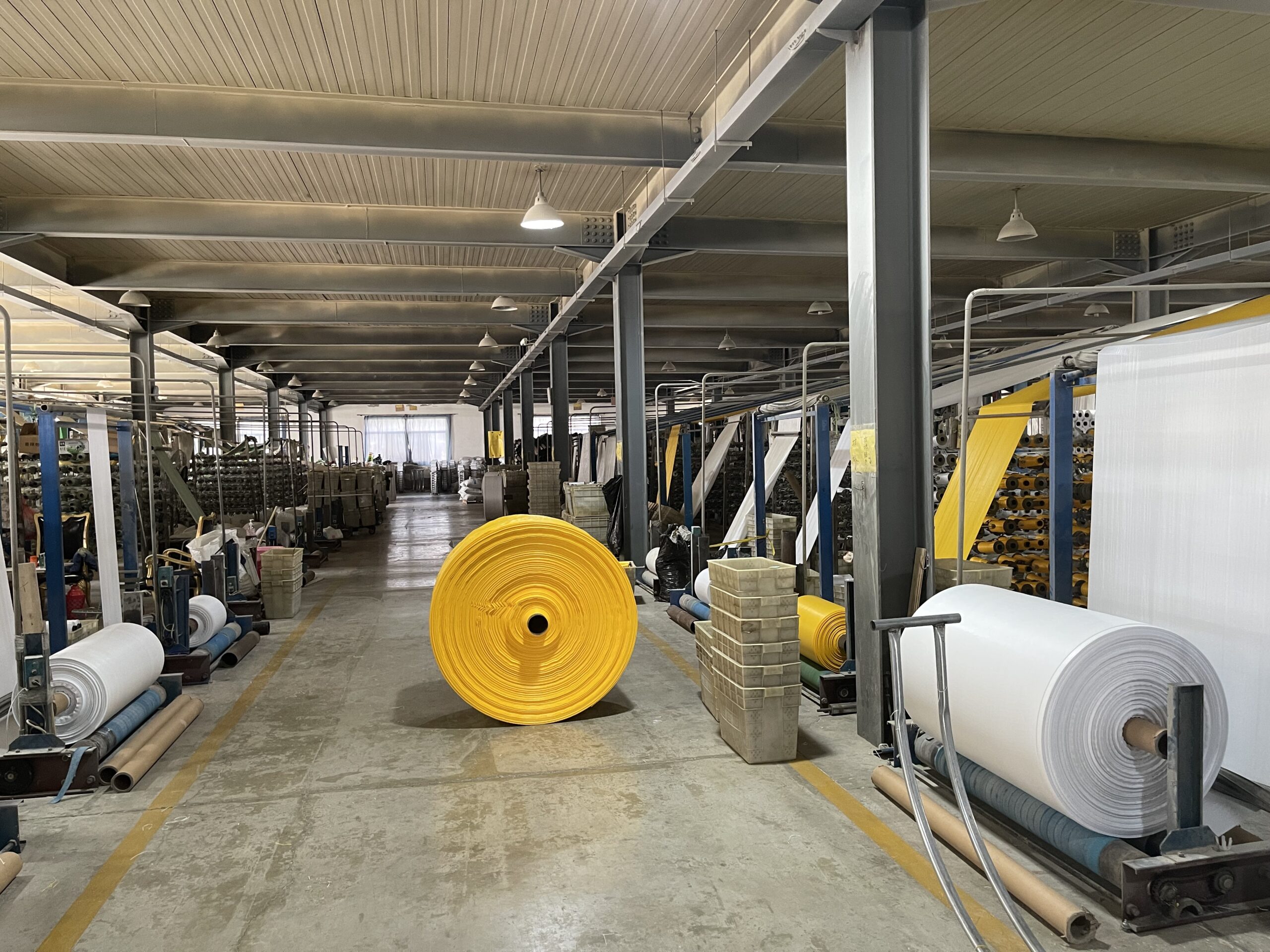
BOPP film laminated to PP woven fabric delivers the stiffness we specify for this duty: the laminated sheet resists creasing and panel collapse, so the gusset stays open while the product column drops. Feed is hygroscopic and dust-generating, so we also specify the BOPP layer for surface moisture protection and print contrast. We verify stiffness and strength with ASTM D882 tensile testing and ASTM D1709 dart impact, alongside ISO 9001 quality management across production. JTFPACK manufactures bopp laminated pp woven packaging from its base in Tianjin, China, under ISO 9001 quality management.
Pinch bottom construction vs. standard woven bags
Standard woven sacks rely on a sewn closure, which adds a sewing operation and thread perforations at the bag mouth. Pinch bottom bags close in a pinch sealer: the pre-formed T-shape step-cut top fold is folded and heat melts the laminated plies into a seamless permanent weld. The squared-off bottom is produced by the T-fold and pinch weld expanding into a flat rectangular base once filled. Our Pinch Bottom Bags are built around this closure geometry, and the 25kg 50kg BOPP Pinch Bottom Bags show the format in a comparable 25–50kg duty.
Line speed versus bag flow
Bag format, not product weight, should drive the specification. Dimensions, gusset depth, step-cut position and weld land must match the filling spout and sealer nest at your line rate. Oversized bags flutter and misregister; undersized bags strain the weld. We size 5–50kg formats around the packing line first, then the feed.
How BOPP Pinch Bottom Bags Support Automated Filling?
Packing poultry feed at 25kg places two conflicting demands on a bag: enough puncture and tear resistance to survive automated handling and palletising, and enough barrier performance to keep moisture and feed fats away from a protein-rich product. BOPP pinch bottom bags resolve that conflict by combining a printed BOPP film with a PP woven structural core, then closing on a heat-welded pinch seam that is built for automatic filling lines.
Construction of BOPP laminated PP woven bags
We laminate a printed BOPP film onto PP woven fabric, so the film carries print, gloss and moisture protection while the woven tape grid carries tensile and tear strength. Converted bags are rated across a 5-50kg fill range. Because the BOPP layer is a continuous film, it also limits grease migration from feed fats — a common failure point in unlined woven sacks. We verify film and fabric strength with tensile testing to ASTM D5034 and in-process checks under our ISO 9001 quality management system.
Pinch bottom, step-cut, and PBOM options
Three formats cover most poultry feed lines:
- Pinch bottom: the squared-off, flat-bottomed rectangular shape appears after filling, when the pre-formed T-fold and pinch weld expand under the feed load.
- Step-cut: a stepped corner profile engineered into the bag top; it interlocks when folded and heat-sealed in the pinch sealer, which melts the laminated plies into a seamless permanent weld.
- BOPP PBOM T-shape: pinch bottom open mouth, for lines that open, fill and then seal at the top.
Automated filling compatibility
Filling performance depends on four variables: how the bag mouth opens at the filling spout, film stiffness, gusset geometry, and bottom weld design. A stiff, well-set gusset keeps the mouth open on high-speed weighers, while a consistent bottom weld prevents seam creep under 25kg of feed. We produce BOPP laminated PP woven bags, pinch bottom bags and BOPP PBOM pet food packaging in the same 5-50kg capacity range — see our 25kg/50kg BOPP Pinch Bottom Sacks or browse the full Pinch Bottom Bags category to match a format to your filling line.
Speed and Efficiency Gains on Poultry Feed Packing Lines
Faster filling and sealing cycles
Our BOPP pinch bottom bags are manufactured to fixed width, gusset and step-cut top fold dimensions, so every bag in a 25kg run opens to the same aperture at the filling spout. That repeatability shortens each fill cycle: the spout enters cleanly on the first attempt, and the pre-formed T-shape step-cut top fold lands in the pinch sealer in the correct orientation every time. Because the closure is a heat weld — the sealer folds the stepped top, then melts the laminated plies into a seamless permanent weld — there is no adhesive, glue or tape step in the cycle. Seal integrity depends on heat, pressure and dwell, which means throughput is matched directly to your filler and sealer rather than to a glue cure time.
Less downtime from bag misfeeds
Misfeeds are usually a dimensional problem, not an operator problem. Consistent bag geometry keeps the stack presenting squarely to the magazine and pick-up:
- Tight tolerance on width, gusset and step-cut depth for reliable singulation on automated lines.
- Predictable opening behavior so the mouth stays open through the full 25kg fill without manual intervention.
- Squared-off bottom after filling — a result of the T-fold and pinch weld expanding — giving stable bags on conveyors, checkweighers and palletizers.
We hold these dimensions under our ISO 9001 quality management system, and our pinch bottom bags are specified against your filler’s magazine and sealer pocket dimensions before production.
Moisture-proof heavy-duty performance
The heavy-duty BOPP-laminated PP woven construction carries 25kg of poultry feed through filling, handling and distribution, while the laminated film face delivers the moisture barrier that protects feed from humidity pickup and caking in storage. Barrier performance can be verified by water vapour transmission rate testing to ASTM F1249, and filled-package durability by drop testing to ASTM D5276. For lines running pelleted and crumb feeds alongside poultry, the same construction is used in our BOPP pinch bottom bags for pet food packaging — review our BOPP laminated PP woven bags & sacks for the full specification range.
Specifying 25kg BOPP Pinch Bottom Bags for Poultry Feed
Capacity and dimensions for 25kg feed
Before we quote a 25kg BOPP pinch bottom bag, we confirm three inputs with the buyer: target fill weight, feed bulk density, and the bag dimensions the packing line can actually run. Poultry feed is not one density — mash typically sits around 0.55–0.65 kg/L, while crumble and pelleted feed run closer to 0.65–0.75 kg/L — so the same 25kg fill can require noticeably different internal volume. As a working range, 25 kg feed sacks generally land between 450–550 mm face width, 750–900 mm length, and 80–110 mm side gussets. Because the T-fold pinch weld expands into a flat rectangular base once filled, the finished sack stands square and palletises predictably.
Gusset, film, and seal specifications
- Gusset: side-gusset construction for a stable brick profile; specify gusset depth against the filled thickness you want on pallet.
- BOPP film: 20–30 micron BOPP laminated over 70–100 gsm PP woven fabric for print sharpness, moisture barrier, and scuff resistance in transit.
- Bottom closure: a heat-welded pinch weld, where the pre-formed step-cut top fold is folded and the laminated plies are thermally melted into a seamless permanent weld in the pinch sealer.
- Top style: standard pinch bottom, step-cut pinch bottom, or BOPP PBOM T-shape depending on sealer geometry and print coverage.
We supply these formats across our pinch bottom bags range, and the same construction is available in heavier feed formats such as our 50-100lb square bottom polypropylene bags for chicken, cattle and horse feed sacks.
Matching bag to feed density and line equipment
Bag design should follow the filler, not the other way round. Tell us whether you run net-weigh, auger, gravity, or volumetric filling, your line speed in bags per minute, and the sealer type and dwell settings. A tighter gusset suits high-speed automatic lines; a wider opening reduces bridging on fine mash. We verify weld and fabric integrity against ISO 9001 quality management procedures, using ASTM D5034 tensile testing on woven substrates and dimensional checks on every production batch, so 25kg BOPP pinch bottom bags arrive matched to your density, your sealer, and your pallet pattern.
Print, Handling, and Moisture Protection for Feed Brands
Custom printing for poultry feed brands
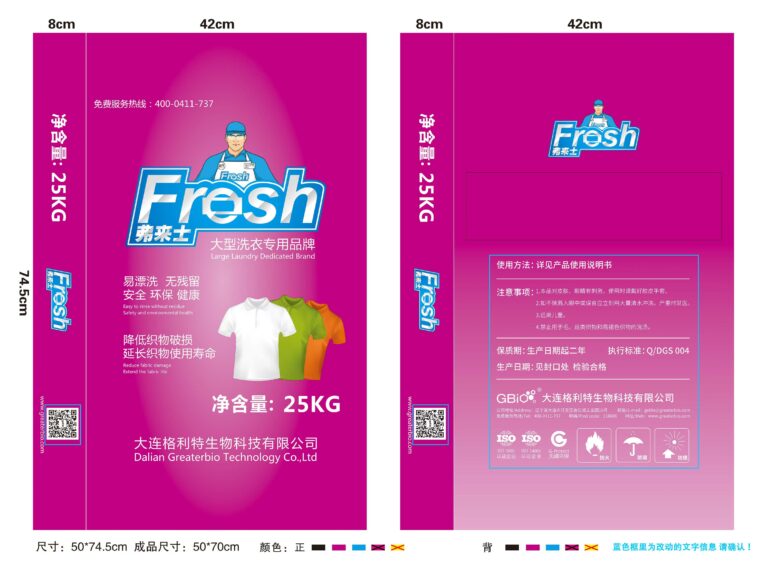
Our 3 Layer BOPP Laminated PP Woven Bags 15kg 25kg 50kg combine a reverse-printed BOPP film with a high-strength PP woven substrate, so the graphics sit beneath a gloss barrier rather than on a matte surface. For poultry feed brands, that means sharp, high-contrast artwork — flock markings, feed type, protein content, and usage instructions — stays legible in dusty feed store displays and under warehouse lighting. We register multi-colour print runs so that brand colors repeat consistently from order to order, which matters when growers identify a ration by bag appearance alone.
Moisture-proof storage and handling
Feed is hygroscopic: humidity during storage and transport degrades pellet integrity, encourages mould, and shortens shelf life. The BOPP lamination on our BOPP pinch bottom bags provides a continuous film barrier across the printed face, limiting water-vapour ingress through the woven body. Under our ISO 9001 quality management system, laminate tensile performance is checked using ASTM D882 test methods, and closure integrity is verified on filled samples so the heat-welded pinch seam does not become the weak point in the moisture barrier.
Stackability and pallet presentation
After filling, the bag top is folded and heat-welded in a pinch sealer, melting the laminated plies into a permanent seamless weld. Combined with the T-fold, that closure lets the 25kg bag settle into a flat-bottomed rectangular block — stable on the pallet, uniform in height, and readable on the shop floor. Heavy-duty construction carries the load through pallet stacking, manual handling, and distributor transport without panel distortion.
RFQ and Supplier Checklist for BOPP Pinch Bottom Bags
Specifying BOPP pinch bottom bags for 25 kg poultry feed is as much a data exchange as a purchase. The more precisely you define fill weight, closure hardware and print requirements in the RFQ, the faster we can confirm material structure and automated filling compatibility — and the fewer surprises appear at the pinch sealer on commissioning day.
RFQ details to share with JTF PACK
Send a complete technical brief so we can match the bag construction to your line:
- Bag size: finished width × length + gusset, sized to your 25 kg fill volume (our range covers 5–50 kg).
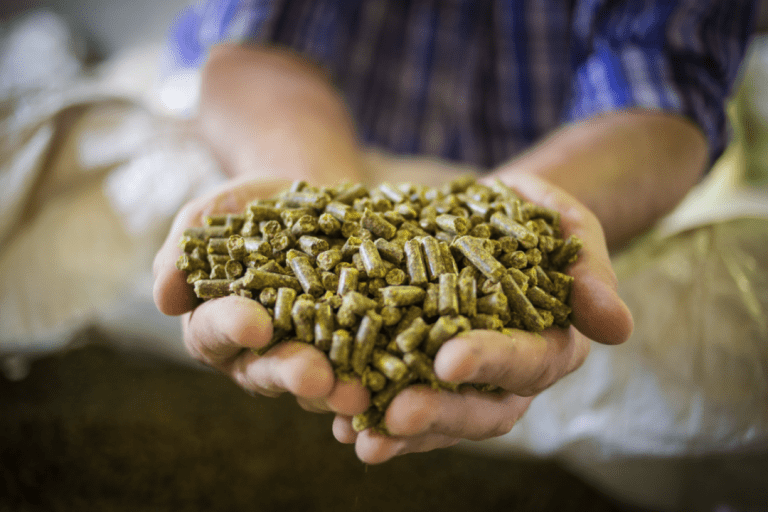
- Target weight and bulk density of the feed — crumb, pellet or meal density drives gusset depth and bottom dimensions.
- Material structure: BOPP film gauge laminated to PP woven fabric, with fabric GSM and lamination thickness.
- Print artwork in vector format, plus colour count and repeat length.
- Packing line details: filler type, fill rate, pinch sealer model and the step-cut top fold dimensions it accepts.
Supplier quality checks including ISO 9001
Ask for written confirmation of material structure, bag dimensions and automated filling compatibility, then examine the quality system behind those numbers. Confirm whether ISO 9001 quality management is part of the supplier’s system and request the certificate scope — it should cover fabric weaving, BOPP lamination and bag conversion, not simply appear as a logo on a datasheet. For closure and film performance, ASTM D5034 (grab tensile) and ASTM D1922 (tear propagation) give you comparable figures for sample approval and incoming-lot auditing.
Pilot runs and line trials
Run 500–1,000 bags through the actual pinch sealer before full production. Verify that the pre-formed step-cut top fold interlocks cleanly, that the heated laminated plies melt into a seamless permanent weld, and that the T-fold bottom expands into a stable flat rectangle once filled. Review our custom pinch bottom open mouth bags from 10 kg to 50 kg and the wider pinch bottom bags range to shortlist structures before the trial.
Technical Specifications at a Glance
| Parameter | Specification |
|---|---|
| Capacity range | 5 kg – 50 kg (11 lb – 110 lb) |
| Construction | BOPP film laminated to PP woven or film core |
| Closure | Heat-welded pinch bottom with pre-formed T-shape step-cut fold |
| Printing | Up to 10-colour reverse gravure (gloss, matte or spot-matte) |
| MOQ | 5,000 pcs standard / 500–1,000 pcs FIBC |
| Lead time | 7–15 days standard, 15–25 days custom print |
| Quality system | ISO 9001 |
| Palletising | Bales on pallets, stretch-wrapped for export |
Frequently Asked Questions
Are BOPP pinch bottom bags compatible with high-speed automated filling lines for 25kg poultry feed?
Yes. We engineer BOPP pinch bottom bags for automated filling lines running 25kg poultry feed. The stepped bottom is heat-welded in a pinch sealer, so the bag opens squarely on the filling spout and the gusseted body stays stable through high-speed dosing, settling and closing. Because the seam is thermally welded rather than stitched, there are no thread tails or needle holes to snag on conveyors. Share your line speed, spout type and closing method, and we will confirm the fit.
What bag dimensions and gusset should I specify for a 25kg poultry feed bag?
Most 25kg poultry feed specifications fall in the range of 50–55cm flat width, 80–90cm length and a 10–12cm side gusset, but the correct figure depends on feed bulk density, pellet size and pallet pattern. Send us a filled sample or your target filled dimensions, and we will calculate the bag size and verify it with a fill trial before production begins.
How do BOPP pinch bottom bags protect poultry feed from moisture?
Protection comes from the construction. BOPP film is laminated over PP woven fabric in a multi-ply structure, and the bottom is heat-welded so the laminated plies melt into one seamless seam with no stitch perforations for humid air to pass through. Gussets and the top closure are sealed the same way, helping keep pellets and crumble within the target moisture range during storage and transport.
What is the difference between pinch bottom bags and BOPP PBOM T-shape bags?
Both are open-mouth bags filled from the top, but the bottom geometry differs. A standard pinch bottom bag uses a stepped, heat-welded seam that folds flat and forms a narrow base. The BOPP PBOM T-shape configuration shapes the bottom seam and gusset into a T, creating a flatter, squarer footprint for standing stability, pallet stacking and print area. We can advise which suits your filling line and pallet pattern.
Can JTF PACK custom print BOPP pinch bottom bags for poultry feed brands?
Yes. The BOPP outer ply is the print surface, and we produce multi-color printed bags carrying your brand, feed specification, batch information and nutritional panels. Our team supports artwork preparation, proofing and color approval before printing plates are produced. Send your design files, preferred colors and order quantity, and we will confirm print feasibility, plate requirements and lead time for the printed run.
What information do I need to request a quote for 25kg BOPP pinch bottom bags?
To quote accurately, send us: filled weight and product form (pellet, crumble or mash), target bag dimensions or a filled sample, material structure and ply requirement, gusset size, print design and color count, order quantity per run, filling line type and closing method, and delivery destination. With those details we can return pricing, MOQ and sampling timeline quickly.
Ready to specify your 25kg poultry feed bag? Request a free quote or a physical sample from JTF PACK — send your bag size, print artwork and order volume, and our team will respond with pricing, material recommendations and a fill-trial sample for your line.