-
+86-18322274823


BOPP Laminated Woven Sacks for Seed & Grain Brands
Private label seed and grain brands are rethinking packaging as a brand asset, not just a container. Where plain woven PP sacks once dominated, BOPP laminated woven sacks now deliver photo-quality graphics, dependable moisture resistance, and automated-filling compatibility in capacities from 5 to 50kg. For brands competing on shelf presence and product protection, switching to BOPP laminated woven sacks is one of the highest-leverage packaging decisions available. JTFPACK manufactures bopp laminated pp woven packaging from its base in Tianjin, China, under ISO 9001 quality management.
Key Takeaways
- Decoding the BOPP Lamination Structure: Film, Adhesive, and Woven Substrate: A BOPP laminated woven sack is a multi-layer composite, and each layer does a specific job.
- Print and Branding Customization: From Flexo to Rotogravure on Laminated Woven: Print method is where packaging cost and brand ambition meet.
- Barrier and Strength Specifications for Seed, Grain, Feed, and Fertilizer: Different fills demand different specifications.
- Sizing, Gussets, and Closure Systems for Private Label Packaging Lines: Packaging that does not run on the filling line is packaging that costs money every shift.
- Compliance, Food-Grade, and Sustainability Considerations for Brand Owners: Compliance is not a paperwork formality; it is a specification input.
Why Private Label Seed and Grain Brands Are Moving to BOPP Laminated Woven Sacks?
The private label segment has changed. Store brands and independent seed houses are no longer competing on price alone; they are competing on perceived quality, and packaging is the first signal a buyer reads. A plain woven PP sack communicates commodity. A BOPP laminated woven sack communicates brand.
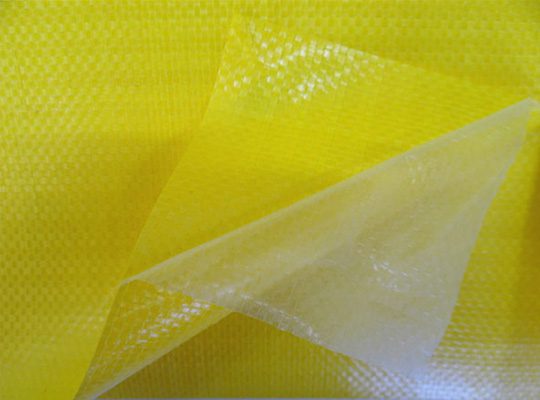
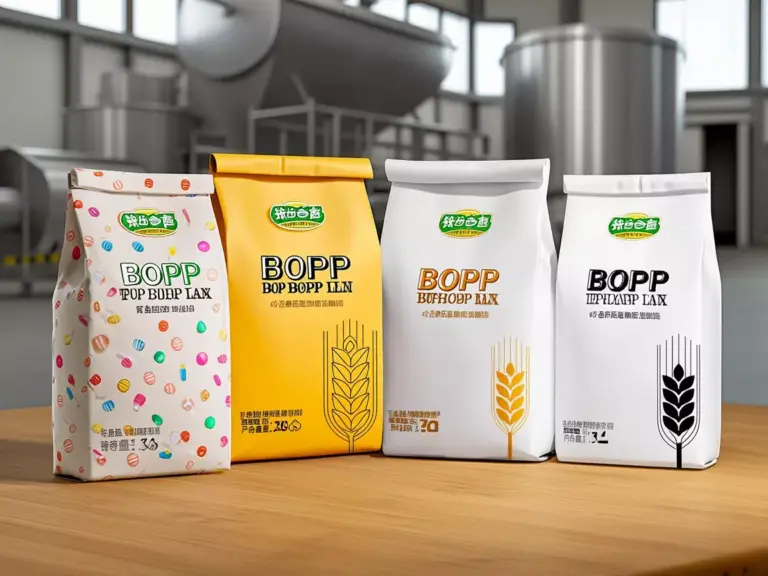
The technical reason is straightforward. BOPP film lamination delivers photo-quality graphics and moisture resistance that plain woven PP sacks cannot match. Woven PP alone has a textured, ribbed surface that swallows ink and limits print resolution. Laminating a biaxially oriented polypropylene film over the woven substrate creates a smooth, glossy canvas that holds fine detail, gradients, and photographic imagery — the kind of shelf presence that private label seed and grain brands need to stand next to established national brands.
The commercial reason is equally direct. Retailers and co-packing partners increasingly expect packaging that runs on automated filling lines without adjustment. BOPP laminated woven bags are engineered for that: consistent panel dimensions, predictable stiffness, and closure systems compatible with pinch sealers and sewing lines. For a brand owner scaling from regional distribution to national retail, that compatibility reduces line downtime and rework.
There is also a durability argument. Surface-printed woven bags scuff in palletizing and transit; the ink sits on the exposed weave. With BOPP lamination, the artwork is typically reverse-printed on the inside of the film and protected by the film itself, so graphics survive handling, stacking, and the abrasion of automated equipment. For high-value seed varieties where the bag is part of the product promise, that protection matters.
Brands evaluating the transition often begin with BOPP laminated PP woven bags as a baseline, then move to pinch-bottom constructions as volumes grow and filling automation becomes a priority.
From Commodity Sack to Brand Billboard
The shift is visible across categories. Seed brands want variety-specific color coding and photorealistic imagery of the crop. Grain brands want origin stories and certification marks rendered legibly. Pet food and feed brands want the same shelf language as consumer packaged goods. BOPP lamination is the common enabler: it turns a 5-50kg industrial sack into a printable brand surface without sacrificing the mechanical strength of woven PP.
How to Decode the BOPP Lamination Structure: Film, Adhesive, and Woven Substrate?
A BOPP laminated woven sack is a multi-layer composite, and each layer does a specific job. Understanding the structure helps brand owners specify correctly rather than over- or under-engineer.
The Woven Substrate
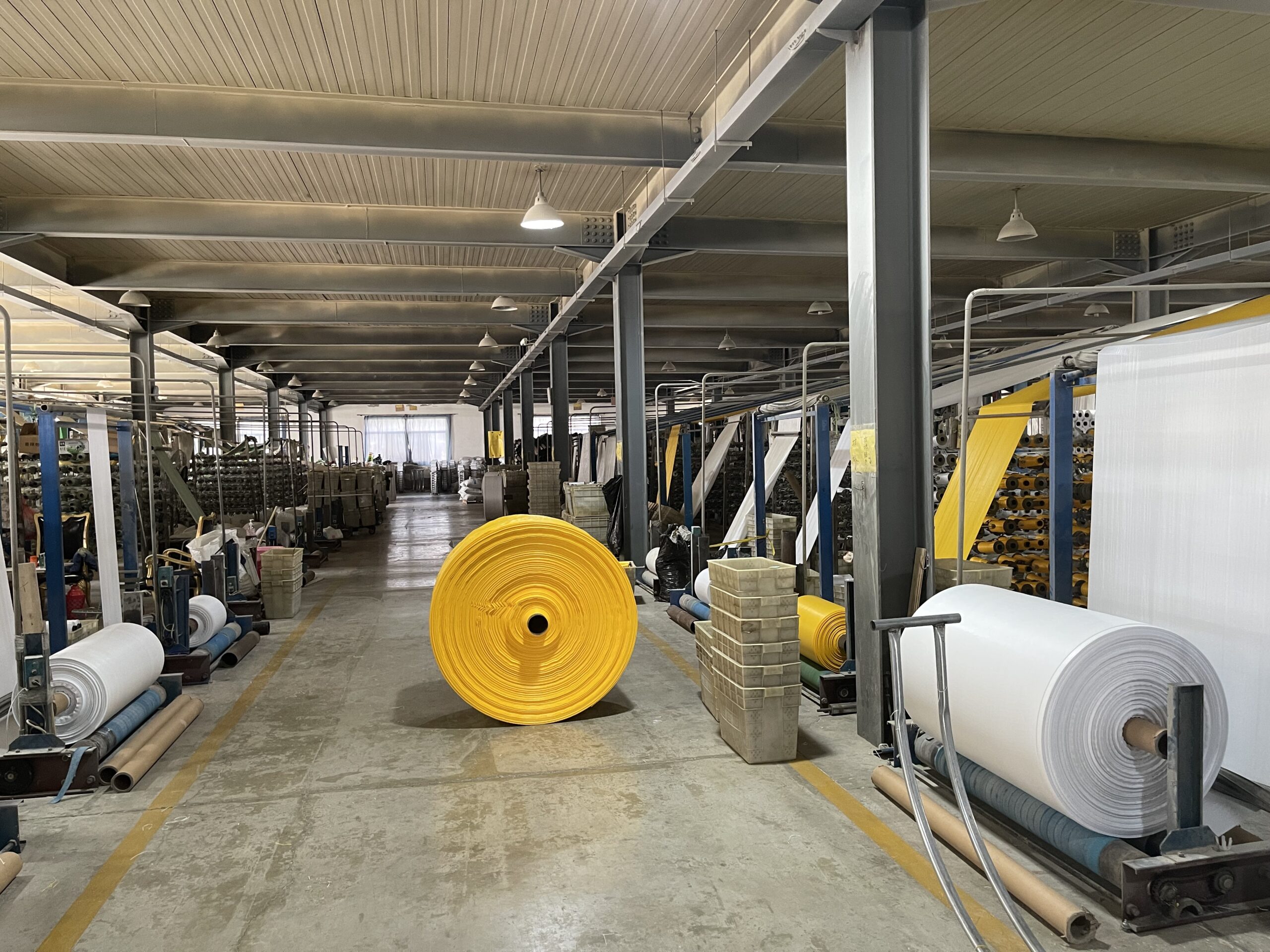
The structural backbone is a woven polypropylene fabric. Tape yarns are extruded from PP resin, stretched, and woven on circular looms into a tube. Three parameters define the substrate:
- Denier — the linear mass of the tape yarn; higher denier means stronger yarns.
- Mesh — the weave density, typically 10×10 to 12×12 for seed and grain sacks.
- GSM — grams per square meter of the finished fabric, typically 70 to 120 gsm for seed and grain applications.
Woven substrate density should be specified against fill weight and stacking height. A 25kg seed bag stacked six pallets high in a warehouse imposes different loads than a 50kg fertilizer bag in outdoor storage. Specifying 70 gsm where 100 gsm is needed saves cost on paper but risks sag and burst in the field; specifying too heavy adds cost without benefit. The right answer comes from fill weight, stacking plan, and transport mode — not from a catalog default.
The BOPP Film
The biaxially oriented polypropylene film is the graphics and barrier layer. BOPP is stretched in two directions during manufacture, which aligns its polymer chains and gives it high tensile strength, clarity, and gloss at low thickness. Typical lamination film thickness ranges from around 15 to 30 microns depending on barrier and print requirements.
The film can be specified in several variants:
- Clear BOPP — maximum gloss and graphics fidelity.
- White or opaque BOPP — higher opacity for bold color blocks.
- Metallized BOPP — a vacuum-deposited aluminum layer that substantially improves moisture and oxygen barrier.
- Coated BOPP — specialty coatings for enhanced barrier or matte finishes.
For hygroscopic products — seed, feed, and certain grain fractions — moisture vapor transmission rate (MVTR) and oxygen barrier can be tuned with film thickness and metallized or coated BOPP options. A metallized BOPP layer is the standard lever when the product is sensitive to humidity during storage or transit.
The Adhesive Layer
The adhesive bonds film to fabric. In most woven sack lamination, a thin extruded polyolefin tie layer or a solvent-based adhesive system is used. The adhesive choice affects delamination resistance, heat-seal performance at the closure, and food-contact compliance. For food-grade and feed-grade applications, the adhesive system must be documented as compliant with the relevant migration requirements — this is a specification point to raise during sampling, not after artwork approval.
Why the Structure Matters Commercially
Each layer is a cost and performance decision. A brand owner who understands the structure can hold a supplier accountable to a specification rather than a vague description. It also makes sampling more efficient: instead of evaluating a single “BOPP bag,” the buyer can evaluate substrate weight, film type, and adhesive system independently against the product’s real-world demands.
How to Customize From Flexo to Rotogravure on Laminated Woven on Laminated Woven Sacks?
Print method is where packaging cost and brand ambition meet. BOPP laminated woven sacks support two dominant print technologies, and the choice should follow the artwork, not the other way around.
Rotogravure: The Premium Option
Rotogravure printing supports up to 8-10 colors with tight registration for complex private label designs. Each color is engraved on a cylinder, and the process delivers consistent, high-density ink laydown across long runs. For brands with photographic imagery, fine gradients, brand color standards that must match across SKUs, or multi-language back panels, rotogravure is the appropriate choice.
The trade-off is setup cost: each color requires a cylinder, and cylinder production adds lead time and upfront investment. That cost amortizes across volume, which is why rotogravure is typically paired with private label MOQs in the 5,000-10,000 piece range per SKU per size and above.
Flexography: The Cost-Effective Workhorse
Flexo is cost-effective for simpler 2-4 color layouts. Plate costs are lower than cylinder costs, and setup is faster, making flexo attractive for brands with clean logo-and-color-block designs, seasonal or promotional runs, and smaller initial volumes. Modern flexo on laminated film delivers respectable quality; it simply cannot match rotogravure on fine detail and photographic reproduction.
Reverse Printing and Abrasion Protection
A critical technical point: reverse-printed BOPP film protects brand artwork from abrasion and scuffing during palletizing and transport, unlike surface-printed woven bags. In reverse printing, the ink is applied to the inside of the film and then laminated to the fabric, so the film itself becomes a protective shield over the graphics. Surface-printed woven bags expose ink directly to handling equipment, pallet wrap, and warehouse surfaces. For brands shipping through distribution centers and retail replenishment systems, reverse printing is the difference between a bag that looks new at retail and one that looks returned.
Artwork Workflow
Practical artwork workflow for custom runs typically follows: brand owner supplies vector artwork and color references; supplier produces a digital proof for layout and color approval; a physical proof or press proof is produced for critical color standards; final approval releases cylinders or plates to production. Building two to three weeks into the schedule for artwork iteration is realistic for first-time SKUs.
Barrier and Strength Specifications for Seed, Grain, Feed, and Fertilizer
Different fills demand different specifications. A single “BOPP bag” specification applied across a portfolio is a recipe for either failure in the field or wasted cost. The following framework helps brand owners specify by product family.
Seed
Seed is hygroscopic and often high-value. Moisture ingress reduces germination rates and can trigger mold. Specifications typically call for 90-110 gsm woven substrate, 10×10 to 12×12 mesh, and metallized or coated BOPP film where long storage or humid climates are expected. Closure integrity is critical: a sewn or heat-sealed closure that fails in transit compromises the entire bag. For premium varieties, drop testing and seam strength testing should be part of pre-production sampling.
Grain
Grain fills are dense and heavy, often 25-50kg. Substrate weight and mesh should be specified against stacking height and pallet configuration. For dense fills, pinch-bottom and block-bottom constructions improve pallet stability, reducing sag and bag burst risk in transit. Barrier requirements vary: whole grains are less sensitive than milled fractions, but moisture resistance remains valuable for outdoor and unheated storage.
Animal Feed and Pet Food
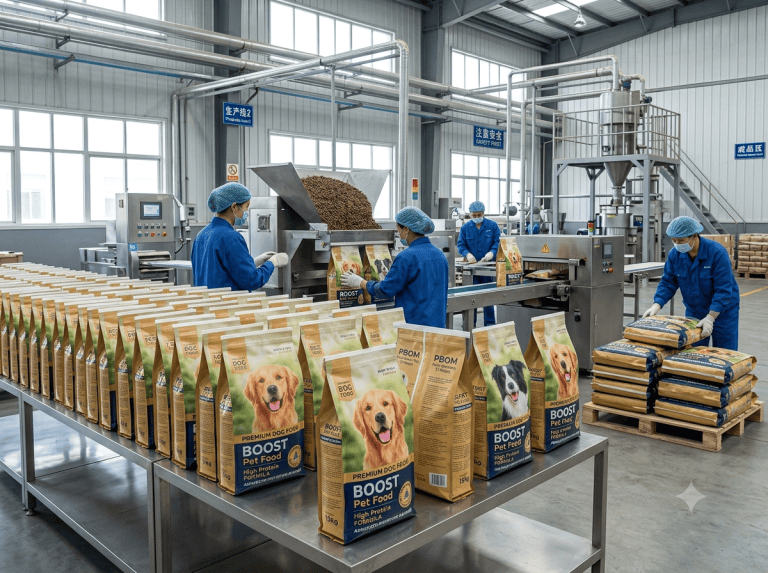
Feed and pet food combine barrier demands with food-grade compliance. Oxygen and moisture barrier affect freshness, fat oxidation, and palatability. For pet food applications, BOPP PBOM dog food bags (T-Shape) are engineered with the closure geometry and barrier options that high-value formulations require. Food-grade and feed-grade compliance documentation — including migration testing and REACH/RoHS statements — should be requested during sampling for pet food and feed applications, not assumed from a generic certificate.
Fertilizer
Fertilizer is dense, often abrasive, and frequently stored outdoors. Heavy-duty woven substrate, robust lamination, and strong closures are essential. Pinch-bottom and block-bottom constructions improve pallet stability for dense fertilizer and grain fills, reducing sag and bag burst risk in transit. Moisture-proof performance protects against caking, which is a common quality complaint in fertilizer distribution.
Strength Testing as a Specification Tool
Strength should be verified, not assumed. Standard evaluations include:
- Seam strength testing at the closure
- Drop testing from specified heights with production fills
- Stacking tests simulating warehouse conditions
- MVTR measurement where barrier is a claim
These tests belong in pre-production sampling, particularly for high-value seed varieties and specialty pet food formulations where a single bag failure is expensive in both product loss and brand trust.
Sizing, Gussets, and Closure Systems for Private Label Packaging Lines
Packaging that does not run on the filling line is packaging that costs money every shift. Sizing, gusset configuration, and closure type must align with the brand owner’s filling equipment and palletization plan from the first sample.
Capacity and Dimensions
BOPP laminated woven sacks from JTFPACK cover 5-50kg large capacity formats, with dimensions matched to fill weight, bulk density, and the filling equipment’s bag presentation system. Bulk density matters: 25kg of a light seed fraction occupies far more volume than 25kg of fertilizer. Dimensions should be derived from actual product bulk density and target fill weight, not from a nominal capacity label.
Gusset Configuration
Gusset configuration — side gusset, bottom gusset, or flat — determines how the bag stands, how it presents on shelf, and how it behaves in palletization:
- Side gusset — expands the bag’s width for higher-volume, lower-density fills and improves print panel area.
- Bottom gusset — supports a squared presentation and stability for retail-facing formats.
- Flat — simplest construction, suitable for dense fills and cost-sensitive applications.
For pinch-bottom constructions, the squared-off bottom comes from the T-fold plus pinch weld expanding into a flat-bottomed rectangular shape after filling. This is a result of the closure design, not a stacking feature — an important distinction when specifying because it determines how the filled bag sits on the pallet.
Closure Systems
Closure type must match the filling line:
- Sewn closures — traditional, robust, and compatible with many existing lines; sewing equipment is widely available.
- Heat-sealed closures — including pinch-bottom heat welding; cleaner appearance and stronger moisture seal.
- Valve closures — for specific filling equipment configurations.
Pinch bottom bags are heat-welded in a pinch sealer. After filling, the bag top enters the sealer, the pre-formed T-shape step-cut top fold is folded, and heat melts the laminated plies into a seamless permanent weld. The step-cut refers to the pre-formed T-shape step-cut top fold — a stepped corner profile engineered into the bag top that interlocks when folded and heat-sealed. The interlock happens at the closure during sealing, not during pallet stacking. This distinction matters for line integration: the sealer must be set up for the specific step-cut geometry.
Brands running automated lines often standardize on pinch bottom bags for their combination of closure strength and squared presentation, and on step-cut pinch bottom bags where the interlocking fold profile improves seal consistency at speed.
Palletization Planning
Closure and gusset choices interact with pallet patterns. A squared, flat-bottomed filled bag stacks more predictably than a pillow-shaped one, which reduces overhang and improves load stability. For dense fills like fertilizer and grain, block-bottom and pinch-bottom constructions are the practical choice for stable pallets.
Compliance, Food-Grade, and Sustainability Considerations for Brand Owners
Compliance is not a paperwork formality; it is a specification input. Brand owners selling into retail, feed, or agricultural channels should build compliance requirements into the sampling process.
Food-Grade and Feed-Grade Documentation
For pet food and feed applications, request the full documentation package during sampling:
- Migration testing results for the film, adhesive, and ink system against the relevant food-contact framework
- REACH/RoHS statements for the complete construction
- Material declarations identifying each layer and its compliance status
A generic “food-grade” claim is insufficient. The documentation should be specific to the construction being quoted, because changing film type, adhesive, or ink system changes the compliance profile.
Ink and Adhesive Selection
Low-migration ink systems and compliant adhesive systems are available and should be specified explicitly for food-contact applications. This is a procurement decision made at quotation, not a production detail to be resolved later.
Sustainability Considerations
Brand owners face increasing pressure from retail partners and consumers on packaging sustainability. BOPP laminated woven PP sacks are mono-material-friendly in the sense that both film and fabric are polypropylene-based, which supports recycling pathways where PP collection exists. Practical sustainability levers include:
- Down-gauging substrate and film where strength testing confirms performance
- Material reduction through optimized dimensions
- Recycled content options where application and compliance allow
- Supplier documentation of material composition to support customer reporting
Sustainability claims should be grounded in verified material data, not marketing language. Requesting composition documentation alongside compliance certificates keeps claims defensible.
Technical Specifications at a Glance
| Parameter | Specification |
|---|---|
| Capacity range | 5 kg – 50 kg (11 lb – 110 lb) |
| Construction | BOPP film laminated to PP woven or film core |
| Closure | Heat-welded pinch bottom with pre-formed T-shape step-cut fold |
| Printing | Up to 10-colour reverse gravure (gloss, matte or spot-matte) |
| MOQ | 5,000 pcs standard / 500–1,000 pcs FIBC |
| Lead time | 7–15 days standard, 15–25 days custom print |
| Quality system | ISO 9001 |
| Palletising | Bales on pallets, stretch-wrapped for export |
MOQ, Artwork Workflow, and Lead Time Planning for Custom Private Label Runs
Private label packaging projects fail on scheduling more often than on quality. Planning MOQ, artwork, and lead time realistically is the difference between a smooth launch and a delayed one.
MOQ Realities
Private label MOQs typically start at 5,000-10,000 pieces per SKU per size. MOQ is driven by setup economics: cylinders for rotogravure, plates for flexo, and loom and lamination scheduling. Brands launching multiple SKUs should plan MOQ across the full range rather than per SKU in isolation, since consolidating sizes and colors can improve economics.
Artwork Workflow and Approval
Artwork approval and cylinder or plate production add 10-15 working days to lead time. The workflow:
- Brand owner supplies vector artwork, color references, and dieline requirements
- Supplier produces digital proof for layout and content approval
- Physical or press proof for critical color standards
- Final sign-off releases cylinders or plates
- Production scheduling begins
First-time SKUs should budget for at least one round of artwork revision. Brands with tight launch dates should submit artwork early and treat proofing as a critical path item.
Lead Time Planning
Total lead time from approved artwork to delivered bags typically includes cylinder or plate production, fabric weaving, film printing, lamination, bag making, and closure formation. Pinch-bottom constructions add bag-making steps for the step-cut top fold and pinch weld preparation. Brands should plan production slots in advance of seasonal demand — seed and fertilizer both have pronounced seasonal peaks — and should confirm capacity availability at quotation, not after artwork approval.
Sampling Before Scale
Pre-production sampling should include fill trials on the brand owner’s actual equipment where possible, closure integrity testing (seam strength, drop testing), and barrier verification where claims are made. For high-value seed varieties and specialty pet food formulations, this step is non-negotiable: a closure failure discovered in a warehouse is far more expensive than one discovered in a sample.
JTFPACK’s customizable cost-effective solutions are structured around this workflow, with sampling and documentation built into the quotation stage rather than treated as post-order extras.
Private label seed and grain brands are choosing BOPP laminated woven sacks because the format resolves a tension that plain woven PP cannot: it delivers shelf-grade graphics and moisture resistance without giving up the strength, capacity, and automated-filling compatibility that 5-50kg agricultural and pet food packaging demands. From substrate specification and film barrier selection to print method, closure geometry, and compliance documentation, every decision maps to a real-world performance or brand outcome. Brand owners who specify against fill weight, stacking plan, and filling equipment — and who build MOQ, artwork, and lead time into their launch schedule — get packaging that protects the product and sells it. To evaluate BOPP laminated woven sacks for your next private label run, contact JTFPACK for sampling and specification support.