-
+86-18322274823


7 Questions to Vet a Pet Food Packaging Bags Supplier
When formulating high-value pet nutrition, the integrity of your supply chain hinges on a single critical decision: choosing the right pet food packaging supplier. A misstep in material selection or manufacturing capability can cascade into reduced shelf life, compromised seal integrity, or costly production delays, ultimately eroding brand trust and profitability. Whether you are launching a premium freeze-dried treat line or scaling bulk distribution for dry kibble, your packaging partner must function as an engineering extension of your operations. This guide outlines seven essential questions to rigorously evaluate potential vendors, ensuring alignment with technical specifications, regulatory standards, and commercial objectives. By applying these criteria, procurement teams can mitigate risk and secure a partnership that delivers consistent quality across all formats, from lightweight treat pouches to heavy-duty 50kg BOPP laminated PP woven bags designed for automated industrial lines.
Why Supplier Vetting Determines Pet Food Shelf Life and Compliance
The relationship between packaging architecture and product longevity is non-negotiable in the pet food industry. Unlike general consumer goods, pet food formulations often contain high lipid contents and sensitive nutrients that degrade rapidly when exposed to oxygen, moisture, or UV radiation. A competent vendor does not simply produce bags; they engineer solutions tailored to the specific degradation pathways of your formula.
You must map your packaging requirements directly to your product type. Dry kibble demands robust moisture barriers and grease-resistant surfaces to prevent rancidity and maintain crunch. Semi-moist foods require plasticizer-stable films that prevent drying out while resisting microbial growth. Wet food pouches may need retort-compatible laminates or high-clarity structures for retail appeal. Treats often prioritize crispness retention, requiring ultra-low water vapor transmission rates (WVTR). Meanwhile, frozen raw diets necessitate materials with excellent cold-crack resistance to survive thermal shock during freezing and thawing cycles without delaminating.
Beyond physical protection, compliance is paramount. A vetted supplier ensures that every layer of your packaging complies with the food-contact regulations of your destination market, validated by appropriate migration testing. Failure to validate these aspects can result in product recalls, legal liability, and irreversible damage to your brand’s reputation. Furthermore, the structural integrity of the bag impacts operational efficiency. For large-format applications, such as our product/bopp-pinch-bottom-bags capable of holding up to 50kg, the supplier must demonstrate expertise in managing heavy loads without compromising the seal zone or causing deformation during stacking and transit.
Question 1: Are Your Materials Food-Grade and Pet-Food Safe?
Material safety is the foundational gatekeeper for any packaging partnership. You must demand proof that all resins, adhesives, and inks used in your packaging meet food-grade standards. Specifically, ask your prospective vendor to confirm the source of their base films and whether they utilize virgin or recycled resins approved for direct food contact. Recycled content, while increasingly popular for sustainability, introduces complex migration risks that must be rigorously validated through mass balance audits and barrier certification.
Request food-contact compliance documentation for all product-contact layers. This includes safety data sheets (SDS) and migration test reports. Migration testing measures the potential transfer of substances from the packaging into the food matrix. For pet food, which can be fatty and acidic, the risk of chemical migration is higher than for dry, low-fat products. Your supplier should conduct or commission extractables and leachables studies to ensure that volatile organic compounds (VOCs), heavy metals, and oligomers remain below safety thresholds.
Ink selection is another critical area. Traditional solvent-based inks can leave residual solvents that compromise flavor and safety. Modern suppliers should offer solvent-free lamination technologies and water-based or ester-based ink systems that minimize odor carryover—a common complaint in pet food where aroma is a key purchasing driver. Additionally, inquire about the availability of recyclable mono-material structures, such as polyethylene-only laminates, if your brand strategy includes circular economy goals. A forward-thinking pet food packaging supplier will proactively discuss sustainable alternatives without sacrificing performance, ensuring you stay ahead of evolving regulatory landscapes and consumer expectations.
Question 2: Can You Engineer the Right Barrier Structure for My Product?
Barrier performance dictates how long your product stays fresh on the shelf. You need a supplier who understands the science behind oxygen and moisture transmission and can calculate target values based on your specific shelf-life claims, distribution climate, and product composition. Ask how they determine the optimal laminate structure for your application.
Common barrier materials include metallized PET, ethylene-vinyl alcohol (EVOH), aluminum foil, and high-barrier copolymers. Metallized PET offers moderate barrier properties and excellent printability, making it suitable for short-to-medium shelf-life dry foods. EVOH provides exceptional oxygen barrier properties but is highly sensitive to humidity; it must always be sandwiched within a moisture-proof outer layer like polypropylene or polyethylene. Aluminum foil offers absolute barrier protection against oxygen, moisture, and light, ideal for premium wet foods or sensitive supplements, though it lacks puncture resistance and can be prone to pinholing if not engineered correctly.
Your supplier should be able to articulate the calculation logic behind their recommendations. For instance, if your kibble has a fat content exceeding 18%, oxidative rancidity becomes a primary threat. The supplier must correlate the Oxygen Transmission Rate (OTR) with the fat oxidation induction period to recommend a barrier that prevents off-flavors throughout the claimed shelf life. Similarly, for products stored in tropical climates, the WVTR must be low enough to prevent moisture ingress that could lead to clumping or mold.
When evaluating structures, also consider mechanical durability. High-barrier films can sometimes be brittle. A skilled engineer will balance barrier requirements with seal integrity and puncture resistance, especially for large-capacity bags like our product/step-cut-pinchoff-bags which experience significant stress during filling and palletizing. Ask for case studies where your supplier adjusted barrier structures to solve specific shelf-life failures for other clients. This demonstrates their ability to troubleshoot and optimize rather than offering generic catalog solutions.
Question 3: Do You Control Extrusion, Lamination, and Printing In-House?
Vertical integration is a strong indicator of quality control and supply chain resilience. When a supplier controls extrusion, lamination, and printing under one roof, they eliminate the variables associated with outsourcing. This cohesion reduces the risk of quality drift, where a defect introduced at one stage goes unnoticed until the final conversion phase.
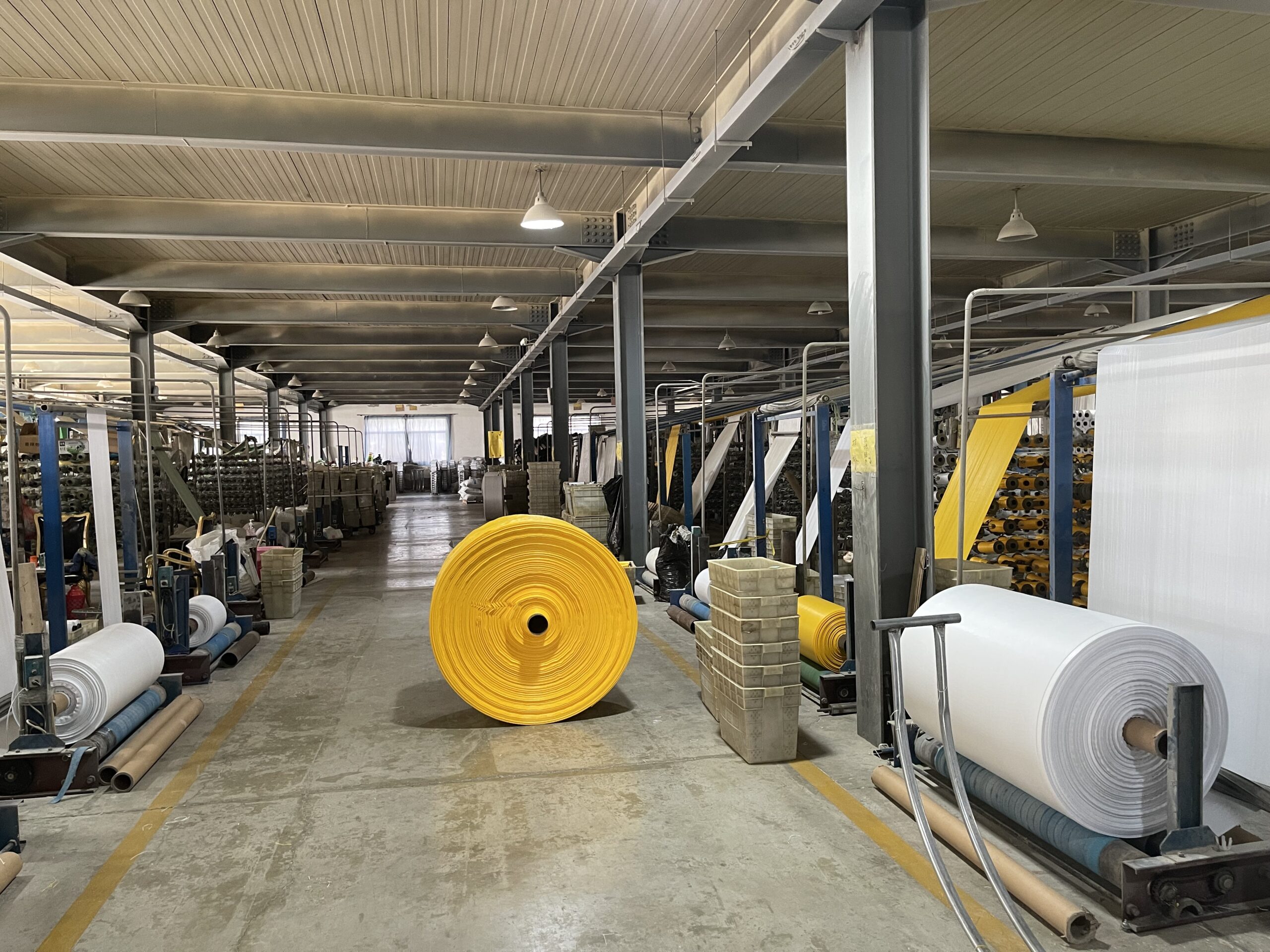
Ask your vendor to walk you through their manufacturing workflow. Ideally, they should produce their own base films or co-extrusions, perform lamination with precise adhesive control, execute gravure or digital printing, and convert the finished web into pouches or bags on dedicated lines. In-house control allows for real-time adjustments. If a print registration issue arises or a lamination bond strength fluctuates, engineers can intervene immediately, minimizing waste and preventing defective stock from reaching customers.
Furthermore, in-house capabilities accelerate innovation. If you require a custom texture, a unique metallic finish, or a specialized sealant layer, an integrated manufacturer can develop and validate these features faster than a disintegrated network of subcontractors. This agility is crucial for seasonal launches or limited-edition product lines. It also enhances traceability; since the entire process occurs within one facility, batch records are centralized, making audit preparation significantly smoother.
For heavy-duty applications, this integration is even more vital. Our product/pp-woven-bags combine the tensile strength of woven polypropylene with the moisture-proof protection of BOPP lamination. Producing this hybrid structure requires synchronized control over weaving tension, coating uniformity, and lamination temperature. A supplier lacking in-house weaving or coating capabilities may struggle to maintain the consistency required for automated filling lines, leading to bag jams and downtime. Verify that your supplier’s equipment is maintained and calibrated regularly, and ask about their protocol for handling material changes or machine maintenance events.
Question 4: How Do You Validate Seal Integrity and Drop Performance?
Seal integrity is the last line of defense against product loss and contamination. Weak seals lead to leaks, spoilage, and customer complaints. You must request detailed technical data regarding the supplier’s validation protocols. This includes seal strength testing, burst pressure analysis, and drop testing simulations.
Ask for the average seal initiation force and peel strength values achieved by their machinery. These metrics indicate how easily the seal opens and how resistant it is to spontaneous separation. For automated filling lines, consistent heat-sealing parameters are essential. Inquire about their use of ultrasonic sealing or continuous band sealing technologies, which can offer superior consistency compared to impulse sealing, particularly for high-speed operations.
Mechanical performance testing is equally important. For bags containing 5kg to 50kg of product, burst pressure tests verify that the bag can withstand internal pressure without rupturing. Drop tests simulate the rigors of logistics, dropping filled bags from various heights onto hard surfaces to assess seam durability. Compression tests evaluate the bag’s ability to resist crushing when stacked on pallets. A reputable supplier will share AQL (Acceptable Quality Limit) sampling standards they apply to finished goods, typically adhering to ISO 2859-1 or stricter client-specific criteria. They should define clear pass/fail criteria for defects such as pinholes, wrinkles, or incomplete seals.
Additionally, verify compatibility with your production environment. If you fill using vertical form-fill-seal (VFFS) machines or premade pouch fillers, the supplier must understand the dimensional tolerances and film properties required. Our product/t-shape-dog-food-bags are engineered for retail display and easy pouring, but they require precise gusset formation and seal alignment to function correctly. Ask for sample runs to validate that the bags perform flawlessly on your specific equipment before committing to volume production.
Question 5: What Are Your Real MOQs, Tooling Costs, and Lead Times?
Commercial transparency is essential for planning inventory and cash flow. Many suppliers quote attractive prices but hide costs behind minimum order quantities (MOQs) or excessive tooling fees. You need a clear breakdown of all financial commitments upfront.
Clarify the true MOQs for both standard and custom designs. Low MOQs are beneficial for testing new markets or rotating SKUs, but they often come at a premium unit cost. Understand the trade-off between MOQ flexibility and economies of scale. Ask if there are different MOQ tiers for different bag sizes or structures; for example, large-format bags may have lower MOQs due to material usage per unit.
Tooling costs can include cylinder plates for gravure printing, die cuts for specific bag shapes, and jig setups for conversion. Some suppliers absorb these costs over large orders, while others charge them upfront. Request a detailed cost schedule. Be wary of vague “setup fees” and ask for itemized charges. Also, inquire about artwork proofing steps. Does the supplier provide soft proofs and hard proofs? How many revisions are included? Clear communication here prevents costly errors where the final print deviates from the approved design.
Lead times vary based on complexity, material availability, and production scheduling. Ask for realistic lead times for initial orders versus repeat orders. Repeat orders should be significantly faster if the supplier maintains safety stock of base materials and retains the job files. During peak seasons, such as the holiday rush or agricultural planting cycles, lead times can extend. A transparent supplier will communicate these fluctuations proactively and offer expedited options if available. Understanding these dynamics helps you build robust inventory models and avoid stockouts that disrupt sales channels.
Question 6: Can You Scale From Pilot Run to High-Volume Production?
Growth requires a partner who can scale with you. Assess the supplier’s capacity headroom and contingency planning. Ask about their annual production volume and current utilization rates. A supplier operating at full capacity may struggle to accommodate sudden spikes in demand or emergency replenishment requests.
Evaluate their approach to pilot runs. Before launching mass production, a pilot run allows you to validate the packaging on your line, check print quality, and verify performance under real-world conditions. A scalable supplier treats pilot runs as a collaborative development phase, providing technical support to tweak parameters rather than viewing them as administrative hurdles. They should offer feedback on design improvements, such as optimizing bag dimensions to maximize container loading efficiency.
For high-volume production, inquire about backup lines and redundancy. Manufacturing equipment can experience breakdowns; having backup converters ensures continuity. Additionally, ask about their raw material supply chain. Do they secure long-term contracts with resin manufacturers to buffer against market volatility? A stable supply chain protects you from price surges and allocation shortages.
Consider seasonal variability. The pet food industry experiences demand fluctuations driven by marketing campaigns, veterinary recommendations, and seasonal trends. Your supplier should demonstrate experience managing peak periods, perhaps by referencing their work with fertilizer or animal feed sectors, which also face intense seasonal demand. Our category/heavy-duty-packaging portfolio serves diverse industries, illustrating the supplier’s ability to flex resources across different product categories to maintain reliability. A partner with proven scalability gives you the confidence to invest in brand growth without fearing supply chain bottlenecks.
Question 7: What Certifications, Audits, and Traceability Do You Provide?
Regulatory compliance and social responsibility are increasingly central to procurement decisions. Verify that your supplier holds recognized quality management certifications. ISO 9001 certification indicates that the facility adheres to rigorous hygiene, safety, and quality management systems. Depending on your target market, additional food-safety or regional approvals may also be relevant.
Audit readiness is a practical concern. Ask how often the supplier undergoes third-party audits and whether they welcome client site visits. A confident supplier will facilitate audits and provide corrective action reports for any findings. This transparency builds trust and ensures that issues are addressed promptly rather than concealed.
Traceability is the backbone of recall management. In the event of a quality issue, you must be able to trace a specific batch of bags back to the raw material lot, production date, and machine parameters. Ask about the supplier’s digital traceability systems. Do they use barcode scanning and ERP integration to track materials from receipt to dispatch? Full lot-level traceability minimizes recall scope and protects public health.
Finally, implement a weighted scorecard to compare suppliers objectively. Assign scores based on criteria such as technical capability, quality assurance, cost competitiveness, lead time reliability, and sustainability initiatives. This data-driven approach removes bias and highlights the partner who best aligns with your strategic goals. By thoroughly vetting candidates through these seven questions, you ensure that your packaging investment supports product excellence and business resilience.
Selecting the right partner is a strategic decision that influences every aspect of your product lifecycle, from formulation stability to shelf presence. As you navigate the evaluation process, prioritize vendors who demonstrate deep technical expertise, robust quality systems, and a genuine commitment to your success. A verified pet food packaging supplier acts not just as a vendor, but as a collaborator in protecting your brand’s promise to pet owners. JTFPACK stands ready to meet these rigorous standards, offering advanced solutions like moisture-proof pinch bottom bags, high-barrier laminates, and customized structures tailored for automated filling lines. By partnering with a manufacturer that excels in engineering, compliance, and scalability, you safeguard your product integrity and drive sustainable growth in the competitive pet nutrition market. Explore our comprehensive range of post/automated-filling-guide to discover how our technology can streamline your operations and elevate your packaging performance.
Looking for a reliable supplier? Explore our custom pinch bottom bags range for pet food and feed packaging, with factory-direct pricing and free samples available.