-
+86-18322274823


Step-Cut Pinch Bottom Bags Automated Filling for Pet Food
Step-Cut Pinch Bottom Bags Automated Filling for Pet Food
Why Step-Cut Pinch Bottom Bags Suit Automated Filling Lines
In step-cut pinch bottom bags automated filling systems, compatibility depends on how the bottom format presents during line handling. Our BOPP laminated PP woven bag systems use a pinch bottom that forms a stable flat plane after opening, reducing bag-mouth skew and improving vacuum-gripper indexing.
How the step-cut bottom affects automated filling setup
Repeatable geometry is essential. A step-cut pinch bottom provides a defined seam edge and bottom panel that can be indexed by grippers or vacuum plates. This supports smoother pickup, fewer misfeeds, and tighter fill-height control. Moisture-proof lamination matters on fast lines because condensation, dust, and product fines can weaken handling. Heavy-duty construction and custom printing improve barcode visibility and traceability without adding loose labels.
Pinch bottom geometry in 5-50kg bag formats
Across pet food, animal feed, and fertilizer packaging, bag capacities commonly range from 5 kg to 50 kg. Smaller 5–10 kg formats need precise mouth opening and controlled bottom expansion, while 25–50 kg sacks depend on heavier pinch seams and fabric strength. Dimensional consistency can be evaluated using practices aligned with ISO 4878, a woven-sack benchmark for flatness, opening geometry, and repeated handling.
- Moisture-proof BOPP/PP laminates protect against humidity and fine-dust infiltration.
- Heavy-duty pinch seams resist stretching during opening, filling, and transport.
- Custom printing supports lot codes, handling instructions, and machine-readable identification.
Where JTF PACK pinch bottom bags fit in pet food, fertilizer, and animal feed
JTF PACK pinch bottom bag options, including Pinch Bottom Bags and BOPP laminated PP woven structures, are designed for high-volume filling. Our Polypropylene DAP Urea Packaging Bags BOPP laminated PP woven fertilizer bags examples show how moisture barriers and print surfaces support automated line readability. For 5-50 kg filling lines, the pinch bottom format also supports consistent bag placement and reduced manual repositioning. The result is packaging that balances load retention, compatibility, and cleaner line performance.
Automated Filling Compatibility: From Feeding to Sealing
Bag feeding and bottom formation on automated equipment
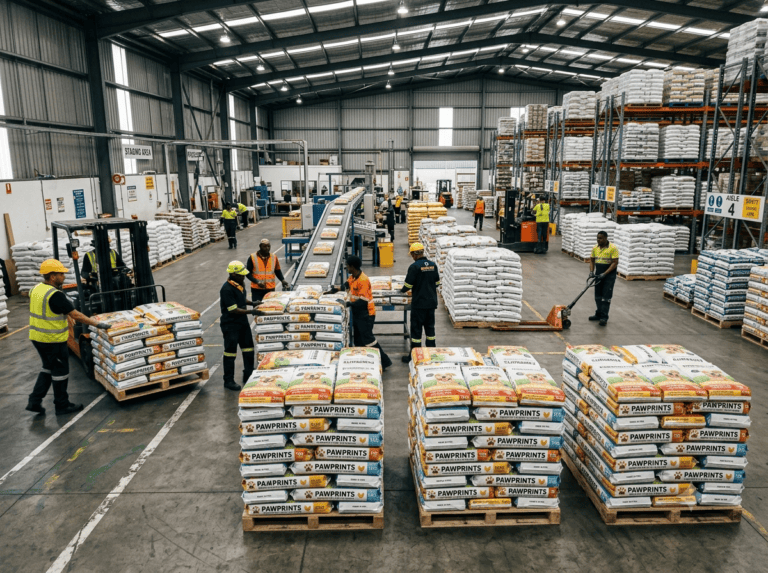
For step-cut pinch bottom bags automated filling, we design pinch bottom and step-cut pinch bottom bags to run predictably on packaging lines. The step-cut opening gives the bag mouth a defined geometry, helping vacuum or gripper feeders separate, position, and open bags with fewer mispicks than blanks. During transfer, the cut pattern controls the bottom fold, reducing collapse into the pinch seam before fill. The base then forms quickly and retains filled shape.
Fill alignment for step-cut pinch bottom bags
Automated filling depends on repeatable alignment. Step-cut pinch bottom bags are well suited to auger, gravity, or weighing heads because the mouth is presented at a fixed height, allowing the nozzle to enter without disturbing the pinch seam. Moisture-proof BOPP laminated PP woven construction helps maintain friction and rigidity during stable filling. After filling, the top edge must seal cleanly, so pinch bottom geometry supports both line speed and seal integrity. To compare formats, review our Pinch Bottom Bags category.
Handling 5-50kg fills in heavy-duty woven bags
Heavier capacities require stronger seams and tighter filling tolerances. We build woven pinch bottom bags for 5-50kg fills, often with BOPP laminate for pet food, fish feed, animal feed, and fertilizer. The laminate supports abrasion resistance and moisture barrier, while woven structure handles bulk weight and transport stress. For 25kg or 50kg lines, match bag construction to flow rate, fill head tolerance, and top or bottom discharge. Our Fish Feed Bags Bopp Laminated Pp Woven Bags Custom page shows a heavier-duty format on automated lines.
Before production, align bag format, target weight, and filling line specifications. Compatibility is not only the bag: it is the interaction of step-cut mouth geometry, bottom strength, weave gram weight, and sealer temperature. For sample qualification, specify expected line speed and reference ASTM D4169 container-system testing to guide drop, compression, and handling checks. This data-driven approach helps our packaging engineers ensure the final pinch bottom bag is optimized for automated filling from feeding to sealing, reducing stoppages on high-throughput pet food lines.
Moisture-Proof BOPP Lamination for Pet Food and Fertilizer
Why moisture resistance matters in bagged pet food
Moisture exposure during warehouse storage, loading, and shelf display can compromise dry pet-food presentation. Our moisture-proof BOPP lamination is specified for step-cut pinch bottom bags automated filling programs. The laminated surface supports custom printing, while PP woven construction supports heavy-duty fill weights from 5 to 50 kg. BOPP PBOM dog food bags and T-shape options let buyers align structure, retail shelving, and filling systems.
Because these bags run on automated equipment, dimensional consistency matters. A stable BOPP face can carry brand artwork, lot codes, feeding instructions, and labels.
- Moisture-proof: laminated BOPP face suits humid storage.
- Heavy-duty: PP woven construction supports 5-50 kg targets.
- Custom printing: carries brand artwork, lot codes, and labels.
- Automated filling: consistent bags fit pinch bottom equipment.
Protecting fertilizer and animal feed from humid handling
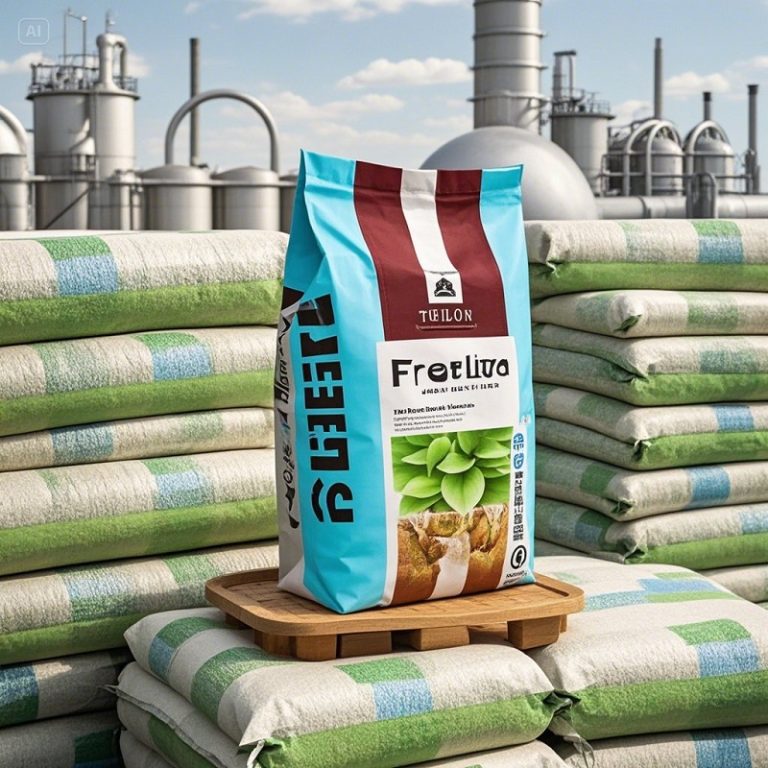
Humid storage, tarp contact, floor condensation, and truck-yard exposure are common in fertilizer and animal-feed packaging. We engineer heavy-duty PP woven bags with moisture-proof BOPP lamination for 15 kg, 25 kg, and 50 kg programs. For urea, DAP, compound fertilizer, or bulk feed, the outer surface supports automated filling compatibility while carrying product names, NPK declarations, lot marks, and safety text.
Our 3 Layer BOPP Laminated PP Woven Bags 15kg 25kg 50kg Pinch Bottom Bags Feed Packaging are specified with Pinch Bottom Bags for feed packaging; material and print-area choices remain project-specific.
BOPP laminated surface options for custom printing
For package designers, BOPP lamination creates a moisture-proof outer layer and a high-contrast surface for branding. Print zones can cover front, side, bottom, and gusset areas depending on geometry. Where distribution requires documented handling assumptions, ASTM D4169 can be used as a transport-distribution reference.
| Format | Best use |
|---|---|
| BOPP PBOM | Premium pet food |
| T-shape | Retail and fulfillment |
| Step-cut pinch bottom | Automated filling |
These formats require aligned size and print-layout specifications.
Custom Printing and Branding on BOPP PBOM and Dog Food Bags
When specifying step-cut pinch bottom bags automated filling, we treat printing, structure, and fill-line behavior as one system. Our Custom BOPP Laminated PP Woven Bags Manufacturer 5-50kg formats combine BOPP-laminated PP woven surfaces with moisture-proof protection, supporting high-definition graphics for pet food without compromising bag opening, pinch formation, or case fill.
Printing on step-cut pinch bottom bags for shelf presentation
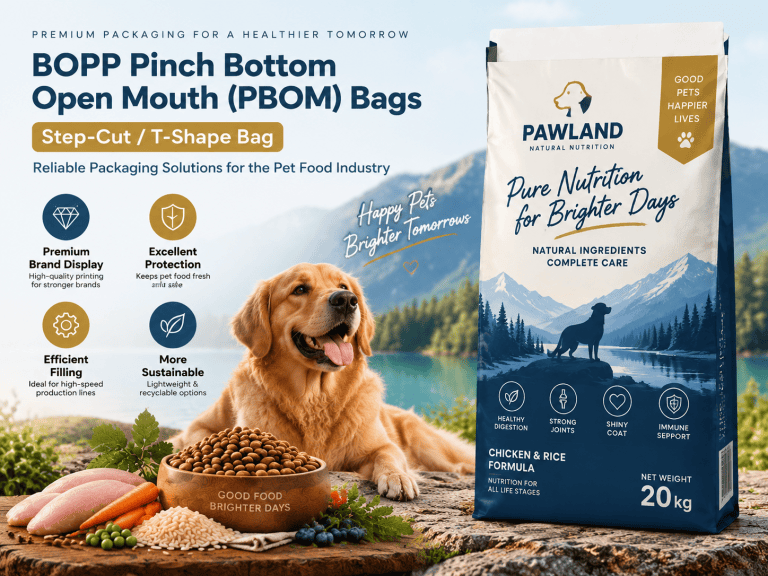
For retail Pinch Bottom Bags, we use BOPP film to create a glossy, printable face over PP woven strength. Dog food bags in 5 kg, 10 kg, and 20 kg use front brand blocks, side callouts, and back-panel artwork. Step-cut perforations are placed in non-critical areas so bags open cleanly after automated filling, while moisture-proof laminated surfaces help graphics survive handling and stacking.
BOPP PBOM dog food bags in T-shape formats
T-shape BOPP PBOM formats provide flat printable panels and shelf stability for kibble. T-shape helps automated fillers square the bag, while step-cut options improve consumer opening. We compare common formats:
| Format | Best Use | Automation/Print Note |
|---|---|---|
| Pinch Bottom Bags | General feed, fertilizer | Place logos away from pinch zone. |
| BOPP Pinch Bottom (PBOM) Bags | Moisture-sensitive 5-50kg products | Supports fine type and varnish. |
| BOPP PBOM Dog Food Bags (T-Shape) | Shelf-stable retail pet food | T-shape aids filling and display. |
| Step-Cut Pinch Bottom Bags | Pet food, animal feed | Step cuts open after automated filling. |
Aligning artwork with automated fill line placement
We position perforations outside structural stress lines and keep graphics clear of pinch zones. ASTM D5276 guides filled-bag drop-test planning. We set plates from 5 kg retail packs to 50 kg bulk feed bags so branding stays visible while fillers, pinchers, and stackers run cleanly with reduced misalignment on each high-speed fill cycle.
Product Selection Guide: Pinch Bottom, PBOM, and BOPP Laminated Bags
When to choose BOPP pinch bottom PBOM bags
We choose BOPP pinch bottom PBOM bags when shelf-ready pet food branding and automated filling require a stable gusseted base, high-definition laminated print, and moisture-proof PP woven construction. PBOM dog food formats are best suited to 5 kg–25 kg retail bags that must stand upright after filling, present the front panel clearly, and survive bulk-stack handling without toppling. For brands that need visual differentiation without sacrificing packaging integrity, our Pinch Bottom Bags range supports custom printing, laminated film structures, and pinch-bottom geometry.
When to choose step-cut pinch bottom bags
Step-cut pinch bottom bags automated filling should be selected when line efficiency and downstream handling are the primary priorities. The step-cut bottom creates a flat, predictable base and clean sidewall, helping bag opening, pinch-bottom forming, and stable positioning under a filling head. This format is useful for pet food, granular feed, and fertilizer bags where consistent bag formation, reduced misfeeds, and moisture-proof packaging matter. On high-cycle automated lines, we specify step-cut profiles to improve handling accuracy and reduce operator adjustment during filling.
Matching bag format to pet food, fertilizer, and feed
We map each format by bottom structure, fill compatibility, capacity, and moisture barrier expectation. The following selection framework helps match packaging to product behavior, line capability, and retail requirements.
| Bag format | Primary application | Typical capacity | Automated filling benefit |
|---|---|---|---|
| BOPP pinch bottom PBOM | Branded dog food, cat food, premium retail pet food | 5 kg–25 kg | Stands upright after pinch-bottom filling; shelf-ready front panel |
| Step-cut pinch bottom | High-speed pet food, feed, granular fertilizer | 10 kg–25 kg | Predictable bottom geometry supports consistent opening, forming, and fill alignment |
| BOPP laminated PP woven | Fertilizer, feed, general custom-printed sacks | 25 kg–50 kg | Moisture-proof lamination with print surface; compatible with pinch-bottom automated lines |
For general custom-printed woven packaging needs, our BOPP Laminated Bags category provides technical options for moisture-proof surfaces, PP woven strength, and print-ready formats across pet food, fertilizer, and feed applications. This allows us to balance retail visibility, line uptime, and product protection. Where buyer specifications require verification, we can align material and performance tests with applicable ASTM or ISO references before production samples are approved for moisture-proof, PP woven, and BOPP laminated structures.
Operational Tips for Smooth Step-Cut Pinch Bottom Bag Filling
Preparing bags for automated dispensing
Before scaling step-cut pinch bottom bags automated filling, we recommend a line trial with your existing filler, bag former, and pinch bottom feeder. Verify that the bag opening stays open, the step-cut geometry feeds cleanly, and the custom print placement does not interfere with clamps or sensors. For pet food and animal feed, BOPP laminated PP woven constructions should be moisture-proof enough to protect dry kibble and pellets during filling, storage, and transport.
Checking pinch bottom alignment before filling
Inspect pinch bottom formation, fold symmetry, and bag squareness on incoming pallets. A misaligned bottom can cause skewed seals, product loss, or downtime at 5-50kg capacities. For bags like Pet Food Bag Plastic Bopp Laminated PP Woven Dog C, confirm the opening dimension matches the filler spout and that heavy-duty handles or top closures support downstream handling.
Reviewing fill weight and seal readiness on 5-50kg bags
Run weight verification on calibrated fillers and confirm seal integrity carefully under pinch, lap, or heat settings. For fertilizer, feed, and pet food lines, review BOPP/PP layers against FDA 21 CFR food-contact standards. Explore more configurations in our Pinch Bottom Bags category to compare step-cut options.
- Test empty bags before production.
- Record filler speed and seal temperature.
- Check print registration near seams.
| Line check | What to confirm | Common risk |
|---|---|---|
| Bag feed | Step-cut bags dispense without skew | Clamp misalignment |
| Bottom formation | Pinch bottom folds evenly at 5-50kg | Skewed seal |
| Fill weight | Calibrated auger or net weight repeatability | Overfill or giveaway |
| Seal readiness | Heat or ultrasonic settings match BOPP/PP construction | Weak seam failure |
| Handling | Moisture-proof outer layer survives pallet handling | Print scuffing |
Frequently Asked Questions
What are step-cut pinch bottom bags?
Step-cut pinch bottom bags are plastic woven sacks designed with a structured bottom that supports automated filling and stable stacking. We produce them for typical fill capacities from 5-50 kg, using PP woven fabric, BOPP laminated surfaces, and moisture-proof liners when required for powders, granules, chemicals, feed, cement, and building materials.
Why do automated filling lines prefer this bag design?
The pinch-bottom geometry helps bags maintain a predictable opening, upright position, and square base during automated filling, closing, and palletizing. For our 5-50 kg sack programs, this supports smoother feeding on bag-making and filling equipment, reduces manual handling, improves print alignment, and creates stable pallet patterns for moisture-proof BOPP or PP woven packaging.
Which materials and structures work best for step-cut pinch bottom bags?
We commonly use PP woven fabric, BOPP laminated woven material, and optional PE liners. This combination supports 5-50 kg fill ranges while addressing dust containment, moisture resistance, print clarity, and bag stiffness. For high-humidity or fine-powder applications, we evaluate liner thickness, seal placement, and bottom structure to maintain stable automated filling without compromising sack strength or stack performance.
Can step-cut pinch bottom bags be used for powders and granules?
Yes. We design step-cut pinch bottom bags for granular and powdered materials such as fertilizer, animal feed, cement, chemicals, minerals, and bulk products within typical 5-50 kg fills. The bottom geometry supports consistent bag placement, while moisture-proof liners, dust-tight seams, and stable base construction help reduce spillage and improve automated filling efficiency.
Do these bags support custom printing and branding?
Yes. BOPP laminated step-cut pinch bottom bags provide excellent surface print quality for company names, product data, handling symbols, lot codes, and QR or barcode elements. We match print layouts to automated bag handling, filling, and palletizing systems so that labels remain visible, orientation is predictable, and brand presentation supports 5-50 kg commercial packaging lines.
What bag capacities are suitable for automated filling?
Our standard range for step-cut pinch bottom sacks is commonly 5 kg to 50 kg, depending on product density, bag dimensions, fabric basis weight, and filling station configuration. Lighter small-format bags help granule accuracy and handling, while heavier large-format bags provide stable pallet loading. We size each bag for reliable automated opening, filling, closing, and discharge.
How do moisture-proof features affect automated filling performance?
Moisture-proof construction improves stability for sensitive powders, granules, fertilizers, cement, and chemicals by reducing dust leakage, moisture ingress, and surface contamination during filling. With BOPP or PP woven structures and appropriate liners, step-cut pinch bottom bags can maintain shape and print clarity during automated 5-50 kg filling cycles, supporting smoother discharge and reliable warehouse stacking.
How can we ensure bag compatibility with our filling machine?
We recommend sharing bag size, fill weight, target throughput, closure method, product type, and machine format details. For 5-50 kg step-cut pinch bottom bags, compatibility depends on bag-making parameters, pinch-bottom dimensions, film thickness, seam strength, and gripper or suction requirements. This allows us to align PP or BOPP structures with your automated filling line.
Contact the JTF PACK team today to discuss your step-cut pinch bottom bags, 5-50 kg fills, moisture-proof structures, and automated filling requirements.