-
+86-18322274823


Why Cold Weather is Destroying Your PP Woven Packaging Bags
As the temperature drops, many food producers and distributors face a frustrating phenomenon: packaging that was perfectly reliable in the summer suddenly becomes “brittle.” Bags that used to be tough are now tearing upon opening, cracking under slight pressure, or leaking at the seams after a standard shipping route.
It’s not necessarily a drop in quality—it’s physics. At JTF Pack, we specialize in high-performance packaging, and we know that cold weather is the ultimate stress test for flexible materials. If you want your products to reach customers intact this winter, you need to understand how to manage “low-temperature embrittlement.”
1. The Trap of “Material Indifference”
The most common mistake businesses make is choosing packaging based solely on cost without considering the “Glass Transition Temperature” of the material.
Standard plastics like General-Purpose Polypropylene (PP) can become brittle once temperatures dip toward 0°C. In contrast, Polyethylene (PE) handles cold better, but even standard PE can fail in extreme Northern winters or deep-freeze logistics.
The JTF Solution: Our BOPP Laminated PP Woven Bags are specifically engineered to withstand temperatures as low as -25°C. By combining the structural strength of woven polypropylene with a specialized BOPP film lamination, we provide a shield that maintains flexibility and impact resistance even when the mercury unconventionaly drops.
Expert Tip: Don’t just ask for a quote; tell your supplier your lowest expected storage temperature. A professional manufacturer will suggest toughened resins or composite structures to ensure your bags don’t turn into “glass” in the cold.
2. The Danger of Over-Stacking in Cold Storage
In cold environments, the molecular motion within plastic slows down, making the material stiffer and less able to absorb energy. If you stack your bags too high in a cold warehouse, the sheer weight on the bottom layers creates “stress cracking.”
Furthermore, if a warehouse is damp, the fluctuation between cold and humidity can cause bags to stick together or develop micro-fractures in the seal areas.
How to Protect Your Stock:
- Temperature Control: Try to keep storage areas above 5°C.
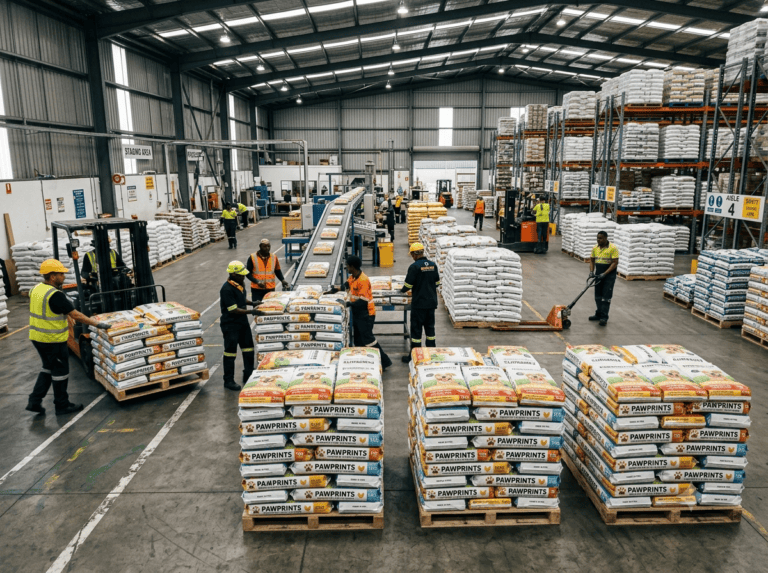
- Off the Floor: Always use pallets to avoid direct contact with freezing concrete floors.
- Limit Stack Height: Keep stacks under 1.5 meters to reduce pressure on the bottom bags.
- FIFO Method: Practice “First In, First Out” to ensure older stock—which may have been exposed to cold longer—is used first.
3. Neglecting the “Last Mile” Thermal Shock
The journey from your warehouse to the customer’s door is the most dangerous phase. A bag might leave a heated facility, sit on a freezing loading dock at -10°C, and then be tossed into a delivery truck. This rapid “freeze-thaw-freeze” cycle fatigue the plastic.
Many merchants assume that “Cold Chain” logistics solves everything. However, cold chain ensures the food stays cold; it doesn’t always protect the packaging from physical impact while it is in a brittle state.
Strategic Advice: If your products travel through high-latitude regions, specify “Low-Temperature Impact Resistance” in your packaging requirements. For bulk shipments, consider adding outer buffers or corrugated insulators. At the very least, ensure your outer shipping cartons are labeled with “Handle with Care: Avoid Cold Compression.”
Conclusion: Don’t Let the Cold Crack Your Reputation
Packaging failure isn’t just a loss of a bag; it’s a loss of product, a loss of shipping costs, and a blow to your brand’s reputation.
At JTF Pack, we don’t just sell bags; we provide protection. Whether you are dealing with frozen foods or outdoor winter transit, our team can customize a BOPP Laminated PP Woven bags solution that keeps your products secure from the factory floor to the consumer’s table.
Is your packaging ready for the freeze? [Contact JTF Pack today] for a consultation on winter-ready materials and let us help you “winter-proof” your supply chain.