-
+86-18322274823


PP Woven Bags: 27 Questions Global Buyers Ask (FAQ)
If you are sourcing PP woven bags for the first time, you will quickly discover that specifications, MOQs, payment terms, and shipping arrangements vary widely between manufacturers. This guide answers the 27 questions our export team receives most often from buyers in more than 90 countries — covering product types, sizes, customization, pricing, lead times, and logistics — so you can prepare a complete inquiry and evaluate suppliers with confidence.
Every answer below reflects our actual manufacturing capabilities at JTF PACK, a Tianjin-based woven bag manufacturer with over 30 years of production experience.
What This Guide Covers
- Product types and specifications — bag constructions, sizes, printing, handles, zippers, vents
- Minimum order quantities — standard MOQs and trial-order options
- Pricing and payment — quotation requirements, Incoterms, T/T and L/C
- Lead time and shipping — production schedules, samples, sea-freight timelines, container loading
- Special requirements — breathable barriers, food-contact FIBC, UV stabilization, shelf life
- Ordering process — from inquiry to delivery, step by step
- Beyond the FAQ — a 7-step framework for choosing the right bag, plus technical background on GSM, denier, and quality verification
Product Types & Specifications
Choosing the right bag construction starts with your product, your filling equipment, and your storage environment. These answers cover the full range of constructions we manufacture, from BOPP laminated woven bags to pinch bottom bags.
What types of woven bags can you produce?
We manufacture the following products:
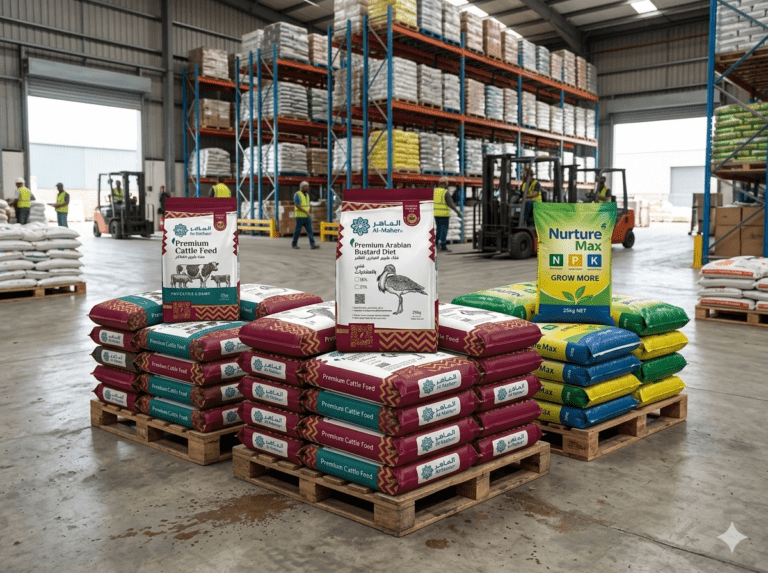
- BOPP laminated PP woven bags: for fertilizer, feed, chemicals, seeds, pet food and more
- Pinch bottom bags: patented premium design for pet food, fertilizer and feed, with heat-sealable closure
- PP/PE laminated woven bags with inner liner: moisture-proof, for food, feed and chemical raw materials
- FIBC / jumbo bags: 500kg-2000kg, for silage, minerals, chemicals and feed
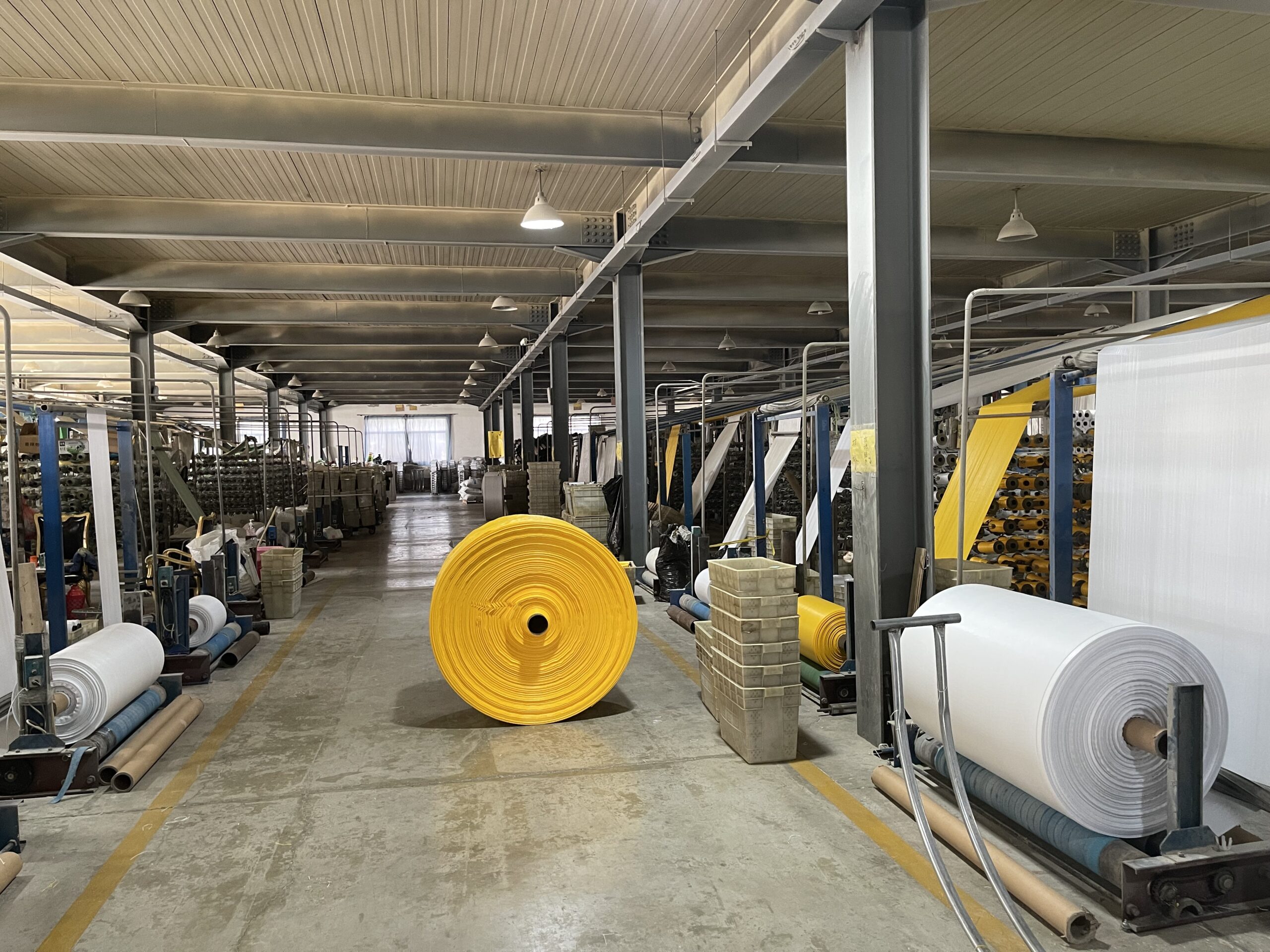
- PP woven fabric rolls: for customers who convert fabric into bags themselves
- Valve bags: for cement, gypsum powder and other powdered materials
- 4-side seal bags: for fish feed, pet food and similar products
- Non-woven T-shirt shopping bags: for retail and supermarket use
Can the bags be custom printed?
Yes. We support:
- Single color to full-color (CMYK) printing
- Single-side or double-side printing (e.g. 6-color double-side)
- Custom logos, product labels, weight marks and grade indicators
- Customer artwork in AI/PDF format, or we can assist with design
- Printing plate (cylinder) costs are quoted separately based on design complexity
What sizes and specifications are available?
We customize dimensions to your requirements. Frequently requested sizes include:
- 25kg / 50kg standard woven bags
- 5kg / 10kg / 15kg / 20kg small-format bags
- 40kg horse feed bags (60x102cm)
- 60x80cm woven PE bags
- 400+2x50mm x 600mm pinch bottom fertilizer bags (10kg capacity)
- Silage bags 2.7m diameter, 65/75m length
- 55x105cm / 55x95cm / 70x120cm standard PP woven bags
- 75x123cm large-format PP woven bags
- 49x64cm cement valve bags
- 86x58cm flat-bottom feed bags
Can the bags be water-resistant or moisture-proof?
Yes. We offer:
- BOPP laminated bags: surface lamination provides basic water resistance
- PP/PE laminated bags with inner liner: better moisture protection for humidity-sensitive products such as food and fertilizer
- Breathable waterproof bags: for special products like yeast and probiotics that need to breathe while staying dry
Do you offer food-grade bags?
Yes. We provide food-grade PP woven bags for rice, spices, sugar, confectionery, pet food and other food products. Food-grade materials with supporting documentation can be provided on request.
Can you produce bags with carry handles?
We currently produce BOPP woven bags with die-cut carry handles or hand holes. We do not produce bags with attached handles. If you need a handled packaging solution, share your requirements and we will recommend the most suitable option.
Can you produce bags with zippers?
Yes. We produce flat-bottom feed bags with zipper closure, suitable for pet food, feed and other products that need repeated opening and reclosing.
Can you produce bags with air vents?
Yes. For products like fish feed and pet food that need degassing, we produce 4-side seal bags with air vents. Vent quantity and position can be customized; reducing the number of vents lowers unit cost.
Minimum Order Quantity
MOQ is one of the first practical constraints in any sourcing project. Here is how our minimums work by product type, and how trial orders fit in.
What is your minimum order quantity (MOQ)?
MOQ varies by product type and specification:
- Standard woven bags: generally 5,000 pieces (e.g. 25kg/50kg standard bags)
- FIBC / jumbo bags: typically 500-1,000 pieces
- PP woven fabric rolls: 1 ton MOQ
- Special custom bags: negotiable based on specifications
Share your product specs and quantity requirements, and we will confirm the best option for you.
Can I place a small trial order?
Yes. We understand trial-order needs and support small-batch orders for selected products. Unit prices for small batches are slightly higher than bulk orders, but a trial helps you verify product quality and market response before scaling up.
Pricing & Payment
Accurate quotations depend on complete specifications. The answers below explain what information to prepare and which trade terms we support.
How do I get a quotation?
Provide the following information and we will reply within 24 hours:
- Bag type (BOPP laminated / PP woven / pinch bottom / FIBC / valve bag, etc.)
- Dimensions (length x width x thickness/GSM)
- Load capacity (e.g. 25kg, 50kg)
- Printing requirements (number of colors, single or double side)
- Quantity
- Inner liner / lamination needed or not
- Destination port (for CIF quotation)
Does the quotation include freight?
We offer multiple quotation terms:
- FOB (Free On Board): sea freight not included
- CIF (Cost, Insurance and Freight): includes freight and insurance, destination port required (e.g. CIF Colombo, CIF Mersin, CIF Jeddah, CIF Dakar, CIF Vladivostok)
- CFR (Cost and Freight): e.g. CFR Chattogram
- DAP (Delivered at Place): e.g. DAP Jeddah
- EXW (Ex Works)
What payment terms do you accept?
We typically accept:
- T/T wire transfer (30% deposit + 70% before shipment, or 50/50)
- L/C at sight
- Other payment methods negotiable
Specific payment terms are stated in the formal Proforma Invoice (PI).
Does the price change with quantity?
As a direct manufacturer, our pricing is relatively stable. Larger orders (e.g. full container loads) typically receive better pricing. For long-term partners, fixed-price arrangements are available.
Lead Time & Shipping
Production scheduling, sample evaluation, and ocean-freight planning determine your total time-to-shelf. These are the figures buyers ask for most.
How long is the production lead time?
Typical lead times:
- Standard products: 7-15 days
- Custom printed products: 15-25 days (including plate making)
- Large-volume orders: negotiable based on quantity
- Urgent orders: expedited production available on request
Can you send samples?
Yes. We support:
- Free samples for standard specifications
- Custom samples at a small plate/sample fee, refundable after order confirmation
- International express via DHL/FedEx, typically 3-7 days delivery
Which countries do you ship to?
We export worldwide, with customers across:
- Asia: Thailand, Malaysia, Sri Lanka, Saudi Arabia, UAE, Turkey, Indonesia, Qatar, Iraq, Bangladesh, South Korea
- Africa: South Africa, Kenya, Ghana, Ethiopia, Nigeria, Sierra Leone, Zimbabwe, Senegal
- Americas: USA, Peru, Guatemala, Bahamas, Uruguay, Mexico, Brazil, Colombia
- Oceania: Australia, New Zealand
- Europe: Hungary, Estonia, Russia
How long does sea freight take?
Transit times vary by destination port. Common references:
- Middle East (Qatar, Saudi Arabia, etc.): about 20-30 days
- Africa (Lagos, Nigeria, etc.): about 40-50 days
- South America: about 30-45 days
- Southeast Asia: about 10-20 days
How many bags fit in one container?
Container loading depends on bag size and GSM. For example, a 40FT container holds roughly 100,000-150,000 standard 25kg woven bags. Provide your bag specifications at inquiry and we will calculate the optimal loading plan.
Special Requirements
Some products demand more than a standard woven bag — breathability, aroma retention, food-contact materials, or outdoor durability.
Can you produce breathable yet waterproof bags?
Yes. For products like yeast, probiotics and organic fertilizer that require breathability, we offer breathable waterproof woven bags that let the product breathe while blocking external moisture.
Do you supply PP woven fabric rolls?
Yes. We supply tubular PP woven fabric rolls. Common specifications:
- GSM: customized
- MOQ: 1 ton for trial orders
Can bags keep rice aroma for over 6 months?
For aroma-sensitive products like Thai jasmine rice, we offer high-barrier laminated bag solutions. Special material combinations extend aroma retention. Share your packaging specifications and aroma retention targets, and we will recommend the most suitable structure.
Can you produce food-contact-grade FIBC bags?
Yes. Our FIBC bags are made from food-grade PP resin, suitable for direct packaging of feed and agricultural products. If your target market has specific food-contact material requirements, please share the applicable standards and we will confirm material compliance and provide supporting documentation.
Can the bags be UV resistant?
Yes. If bags will be stored or used outdoors, we can add UV stabilizers to extend service life under sunlight. Please indicate UV protection needs when requesting a quotation.
What is the shelf life of the bags?
Store bags in a cool, dry place away from direct sunlight and heat. Under normal storage conditions, bags remain serviceable for 1-2 years. High-temperature environments (e.g. 50°C) may accelerate aging, so prompt use is recommended.
Ordering Process & Contact
A transparent process protects both sides. Here is exactly what happens between your first email and delivery at your port.
What is the ordering process?
1. Inquiry: send requirements via website form, email or WhatsApp
2. Quotation: we reply with a quotation within 24 hours
3. Confirmation: confirm specifications, price, lead time and payment terms
4. Sampling: for custom printing, confirm artwork and produce samples
5. Production: production arranged after deposit receipt
6. Inspection: pre-shipment inspection can be arranged
7. Shipment: shipping arranged after balance payment
8. Documentation: full shipping documents provided (B/L, invoice, packing list, certificate of origin, etc.)
How can I contact you?
Use the contact form on our website or reach our export team through the contact page — we respond to every inquiry within 24 hours.
How to Choose the Right Woven Bag: A 7-Step Framework
Individual answers get you part of the way. When you are ready to specify a bag for a real product line, follow this sequence — each step narrows the options and prevents the most common (and expensive) sourcing mistakes.
Step 1: Define Your Product and Environment
Start with the product itself. Granule size, fat content, moisture sensitivity, and whether the product will sit outdoors all change the construction. Pet food with 15%+ fat content needs a stronger oxygen barrier than plain grain; fertilizer stored through a monsoon season needs a different barrier than fertilizer moved quickly through a covered warehouse. List your product’s characteristics and its full journey — filling, palletizing, transport, retail or farm storage — before specifying anything.
Step 2: Match the Bag Structure to Your Filling Line
Bag structure determines filling speed and seal integrity. Pinch bottom bags run cleanly on automated form-fill-seal lines for pet food and feed, with heat-sealed closures that block moisture and pests. Valve bags fill fastest on rotary packers for cement and powders. Open-mouth bags offer the simplest operation for manual or semi-automatic lines. Confirm your line type and speed (bags per minute) with the manufacturer before finalizing the design — a bag that runs at 20 bpm on one line may misfeed at 40 bpm on another.
Step 3: Specify Size and Capacity
Capacity drives dimensions. Common reference sizes we produce:
| Capacity | Typical Dimensions | Common Applications |
|---|---|---|
| 5-10kg | 40x60cm to 400+2x50mm x 600mm pinch bottom | Pet food, seed, specialty fertilizer |
| 20-25kg | 55x95cm, 55x105cm | Feed, fertilizer, rice, flour |
| 40-50kg | 60x102cm, 70x120cm, 75x123cm, 86x58cm flat bottom | Fertilizer, grain, industrial products |
| 500-2000kg | FIBC jumbo bags | Minerals, chemicals, feed ingredients |
These are starting points — dimensions are fully customized. When in doubt, request samples in two or three sizes and test them on your actual product.
Step 4: Select the Barrier Level
Barrier requirements fall into four practical tiers:
| Barrier Tier | Construction | Best For |
|---|---|---|
| Basic | Uncoated woven PP | Dry products, covered storage, short distribution |
| Laminated | BOPP film lamination | Moisture resistance plus high-quality print |
| Lined | PP/PE with inner liner | Humidity-sensitive products such as fertilizer and food |
| High-barrier | Specialized laminates | Aroma retention (e.g. jasmine rice), high-fat products |
Breathable constructions exist too — for yeast, probiotics, or organic fertilizer that must release moisture while blocking rain. Match the tier to your worst-case storage scenario, not your average one.
Step 5: Plan Printing and Branding
BOPP laminated bags accept photorealistic multi-color printing (CMYK, up to 8-color gravure), which is why they dominate retail pet food and fertilizer shelves. Standard PP woven bags typically carry 1-3 color flexographic prints. Remember that each color requires a printing plate, so artwork simplification is the first lever for cost reduction. Supply print-ready artwork in AI or PDF, and always approve a physical proof before mass production — screen colors never match laminated film exactly.
Step 6: Confirm MOQ and Lead Time Together
Standard MOQs (5,000 pieces for regular woven bags, 500-1,000 for FIBC, 1 ton for fabric rolls) interact with lead times: custom printing adds 10-15 days for plate making on top of the 7-15 day production window. If you are planning around a planting season or promotional date, work backwards from the delivery date and add two weeks of ocean freight buffer — see the shipping timelines above for route-specific figures.
Step 7: Sample, Inspect, Then Commit
Never skip physical verification. Request production-line samples (not just salesman samples), test them on your filling equipment, and check seam strength, drop performance, and print registration. For first orders, a pre-shipment inspection — third-party, video call, or in person — catches defects before they cross the ocean. The cost of an inspection is trivial next to the cost of rejecting a container at your port.
Technical Background: GSM, Denier, and What They Mean for Your Order
Woven bag specifications revolve around two numbers. GSM (grams per square meter) measures fabric weight — a 25kg fertilizer bag typically uses 65-90 GSM body fabric, while heavy-duty industrial bags run 100+ GSM. Higher GSM means more material, higher cost, and better drop and tear resistance.
Denier measures yarn thickness: 800D to 1,200D tapes are common in packaging bags. Thicker tapes weave into stronger fabric at the same GSM. When comparing quotes between suppliers, check that both GSM and denier are specified — a ’25kg bag’ at 60 GSM and one at 85 GSM are different products at different prices.
Quality verification is systematic, not guesswork. Under our ISO 9001 quality management system, every production batch passes dimension checks, seam strength tests, and print registration inspection before packing. Buyers should request batch test reports with each shipment and keep retained samples from every order for comparison.
Export Experience and Global Logistics
With customers in over 90 countries, we ship to every major region. Typical sea-freight timelines from Tianjin:
| Region | Transit Time (approx.) | Notes |
|---|---|---|
| Southeast Asia | 10-20 days | Fastest routes; frequent sailings |
| Middle East (Qatar, Saudi Arabia, UAE) | 20-30 days | Major ports well served |
| South America | 30-45 days | Longer routes; plan seasonal stock early |
| Africa (Lagos, Mombasa, Dakar) | 40-50 days | Allow the widest buffer |
Loading efficiency matters as much as transit time. A 40FT container typically holds 100,000-150,000 standard 25kg bags, depending on dimensions and GSM. We calculate the optimal loading plan for your exact specification and provide full documentation with every shipment: bill of lading, commercial invoice, packing list, and certificate of origin.
For a worked example of bag selection for a specific application, see our guide to BOPP pinch bottom bags for pet food packaging.
Technical Questions Buyers Ask
What is the difference between GSM and denier in woven bags?
GSM (grams per square meter) measures the weight of the woven fabric — heavier fabric is stronger and more expensive. Denier measures the thickness of the individual PP yarns used to weave it. Two bags can share the same GSM but perform differently if one uses thicker, higher-tenacity yarns. Specify both values when comparing supplier quotes.
How can I inspect bag quality before shipment?
Three practical options: (1) third-party inspection agencies such as Bureau Veritas, TÜV or Intertek, typically USD 100-300 per man-day; (2) a live video inspection call where our team walks your order through dimension, seam, and print checks; (3) an in-person visit to our Tianjin facility. For first orders we recommend option 1 or 3.
What should I check when receiving a bag shipment?
Inspect a random sample from each production batch: verify dimensions against the specification sheet, test seam strength by hand-pulling, check print registration and color against your approved proof, and fill several bags with your actual product for a trial run. Document any deviations with photos before the container is emptied — claims are far easier to resolve with intact pallet evidence.
Can one bag design serve multiple products?
Often, yes. A well-chosen universal size with generic print panels can package several SKUs, which reduces plate costs and lets you combine volumes for better MOQ pricing. The tradeoff is weaker shelf differentiation. Many buyers run a universal bag for wholesale channels and a premium printed design for retail.
How long do printing plates last, and what happens on reorders?
Gravure cylinders and flexo plates are durable and remain usable for many years when stored properly. We retain your plates between orders, so repeat runs skip plate charges entirely — you pay only the plate cost once. Keep your artwork files updated so design changes can be quoted quickly.
Do you support scheduled or repeat-order production?
Yes. Repeat customers commonly place quarterly or seasonal blanket orders with scheduled releases. This locks pricing, guarantees production slots during peak seasons, and lets us hold printed fabric or finished inventory against your call-off schedule.
About JTF PACK
Tianjin Jiataifeng Plastic Weaving Co., Ltd. (JTF PACK) is a professional PP woven bag manufacturer with over 30 years of production experience. Our product range covers BOPP laminated bags, pinch bottom bags, PP/PE laminated bags, FIBC jumbo bags, woven fabric rolls, valve bags and 4-side seal bags, serving fertilizer, feed, food, chemical, construction and pet food industries across 90+ countries. We provide custom printing, rapid sampling and flexible MOQ as a one-stop packaging solution.
Ready to discuss your project? Contact our team and receive a detailed quotation within 24 hours.
For detailed specifications, available sizes and custom printing options, browse our wholesale BOPP laminated bags category, or contact our team for a tailored quotation.