-
+86-18322274823


Common Types of Rice Packaging Bags and Their Advantages
In the global rice market, the packaging is more than just a container—it is a silent salesman. From protecting the delicate aroma of Jasmine rice to ensuring the shelf-life of bulk exports, the choice of packaging material and design directly impacts a brand’s bottom line and consumer trust.
As a dedicated manufacturer of premium rice packaging solutions, we understand that “one size does not fit all.” Here is a comprehensive breakdown of the most effective rice packaging types and how to choose the right one for your product positioning.
1. Classification by Size: Bulk vs. Retail Ready
The volume of your packaging dictates the consumer’s purchase intent and the logistical requirements.
- Large Capacity Bags (5kg – 25kg): Usually crafted from heavy-duty Nylon/PE composites or Woven Polypropylene bags, these bags are the workhorses of the industry.
- The Advantage: Equipped with reinforced ergonomic handles, these are designed for easy transport. They offer the best cost-per-kilogram ratio, making them the preferred choice for family stockpiling and the catering sector.
- Small & Medium Formats (500g – 2.5kg): As modern households shrink, so do their rice packaging bags.
- The Advantage: These “Freshness Packs” minimize the time rice spends exposed to air after opening. Often designed as stand-up pouches, they offer excellent shelf presence and portability for the urban shopper.
2. Material Science: Transparency vs. Protection
The material determines how well the rice survives the journey from the farm to the table.
- Transparent Plastic Packaging: Sometimes, the product is its own best advertisement. Clear PE or BOPP bags allow consumers to inspect the grain’s luster and wholeness immediately.
- Best for: High-clarity specialty grains where visual quality is the primary selling point.
- High-Barrier Vacuum Packaging: Utilizing a multi-layer Nylon/PE composite, vacuum sealing removes oxygen to halt the growth of weevils and mold.
- The Advantage: It extends shelf life to 12–18 months and creates a “brick-like” hardness that saves shipping space. For premium brands, vacuum sealing is a hallmark of “freshness” and “purity.”
3. Functional Innovations: Elevating User Experience
Modern packaging is increasingly focused on convenience and gifting.
- Stand-Up Pouches with Reclosable Zippers: These bags eliminate the need for a separate rice tin. The integrated zipper allows users to seal the bag after every use, keeping moisture and pests out.
- Gift-Ready Boutique Packaging: Often sold in sets (e.g., four 1kg vacuum bags inside a rigid box), these utilize premium finishes like matte lamination or gold foil stamping.
- The Advantage: These are designed for the “gift economy,” allowing regional brands to command a premium price by highlighting cultural heritage and exclusivity.
How to Select the Ideal Packaging for Your Business?
Choosing the right bag is a balancing act between Cost, Protection, and Marketing.
- For High-End Boutique Rice: Opt for 1kg-2kg Vacuum Stand-Up Pouches. The rigid structure and superior preservation justify a higher price point.
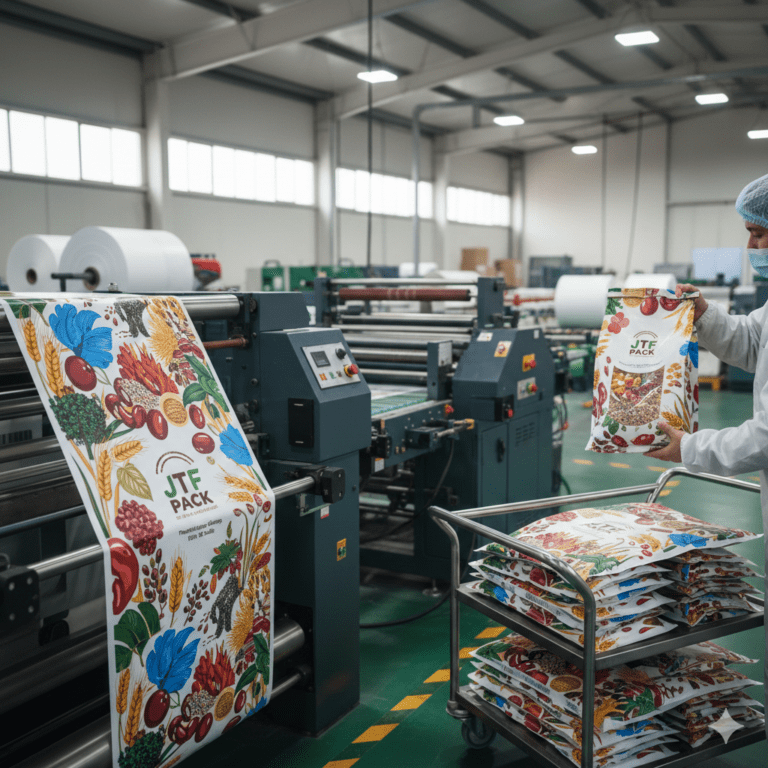
- For Supermarket Staples: Go with 5kg-10kg Composite Bags with Handles. Focus on durability and vibrant, high-quality gravure printing to stand out on the lower shelves.
- For Humid Climates: Always prioritize Vacuum Sealing. The initial cost is higher, but it prevents the massive losses caused by spoilage and returns.
The Bottom Line
Rice packaging has evolved from a simple sack to a sophisticated tool for brand storytelling. At [JTF PACK], we don’t just manufacture bags; we provide the protection and aesthetic appeal your grains deserve.
Looking to upgrade your brand’s presence on the shelf? [Contact JTF PACK team today] for a custom consultation on material selection and structural design. Let’s build a packaging solution that grows your business.