-
+86-18322274823


BOPP Pinch Bottom Bags: Securing the Future of Pet Food with High-Barrier Packaging
The global pet industry is booming, and with it, the demand for sophisticated pet food packaging. This isn’t just about keeping kibble contained—it’s about ensuring safety, freshness, and sustainability from the factory to the pet bowl.
At its core, pet food packaging is a multi-layered guardian, designed to protect the food from moisture, oxygen, light, and contaminants. This protection is critical for extending shelf life and preserving the nutritional quality that pet owners demand.
📊 The State of the Global Pet Food Packaging Market
The market is currently on a steady upward trajectory. Projections indicate a market size of 67.48 billion RMB by 2030, with a compound annual growth rate (CAGR) of 4.36% from 2023 to 2030. North America is the largest player, but Europe and the Asia-Pacific regions are quickly catching up, together accounting for over 45% of the global share.
This competitive landscape is driven by major players such as Amcor, Constantia Flexibles, and Sonoco Products Co., but there is ample room for specialized, high-performance packaging solutions to gain ground.
💡 Key Drivers Shaping Packaging Decisions
Why are pet food manufacturers constantly scrutinizing their packaging choices? The answer lies in several powerful market drivers:
- Pet Industry Growth: As global pet ownership rises, so does the need for secure, high-quality packaging for the increasing volume of specialized pet foods.
- Shifting Consumer Preferences: Modern pet owners expect convenience. This means packaging that is easy to open, reliably resealable, and simple to carry and store. They are also demanding transparency—detailed, easily accessible product information on the label.
- Health and Safety Focus: Pet parents are deeply concerned with food safety. The packaging must offer superior barrier performance (anti-moisture, anti-oxygen) to maintain freshness and prevent contamination throughout the supply chain.
- E-commerce Surge: The rise of online sales requires packaging that can withstand the rigors of logistics and delivery while minimizing damage and waste.
- The Environmental Imperative: Increasingly, consumers are favoring brands that commit to the planet. This means a rising demand for recyclable, biodegradable, and reduced-material packaging.
💼 A Look at Material Choices and Performance
The choice of packaging material is a delicate balance of cost, performance, and sustainability:
| Material Type | Common Use | Key Advantages | Key Consideration |
| Paper and Paperboard | Boxes, inner liners | Lightweight, recyclable, economical | Lower barrier protection for freshness |
| Soft Plastics (Films, Bags) | Pouches, small bags | Lightweight, good sealing/moisture resistance | Can lack rigidity; less anti-tear strength |
| Hard Plastics | Bottles, canisters | High rigidity, excellent product protection | Often more difficult to recycle than other types |
| Metal (Aluminum Cans) | Cans (wet food) | Excellent oxygen barrier, great sustainability profile | Heavier and typically more expensive |
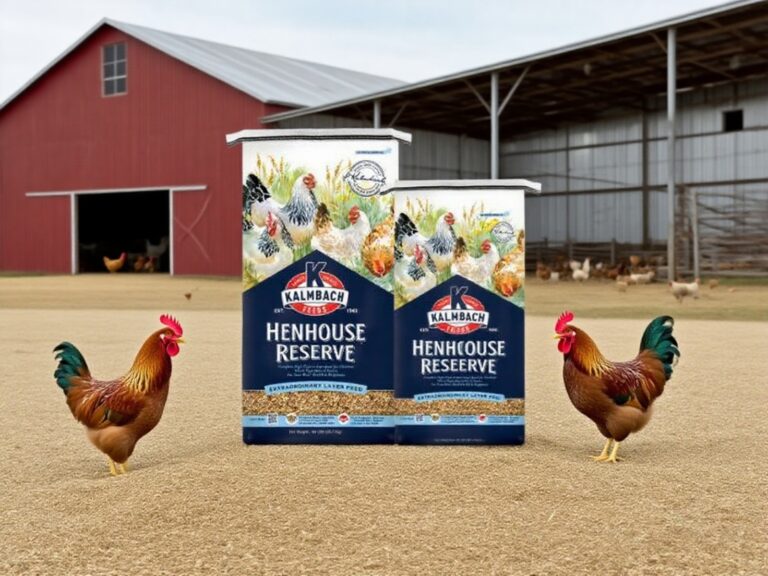
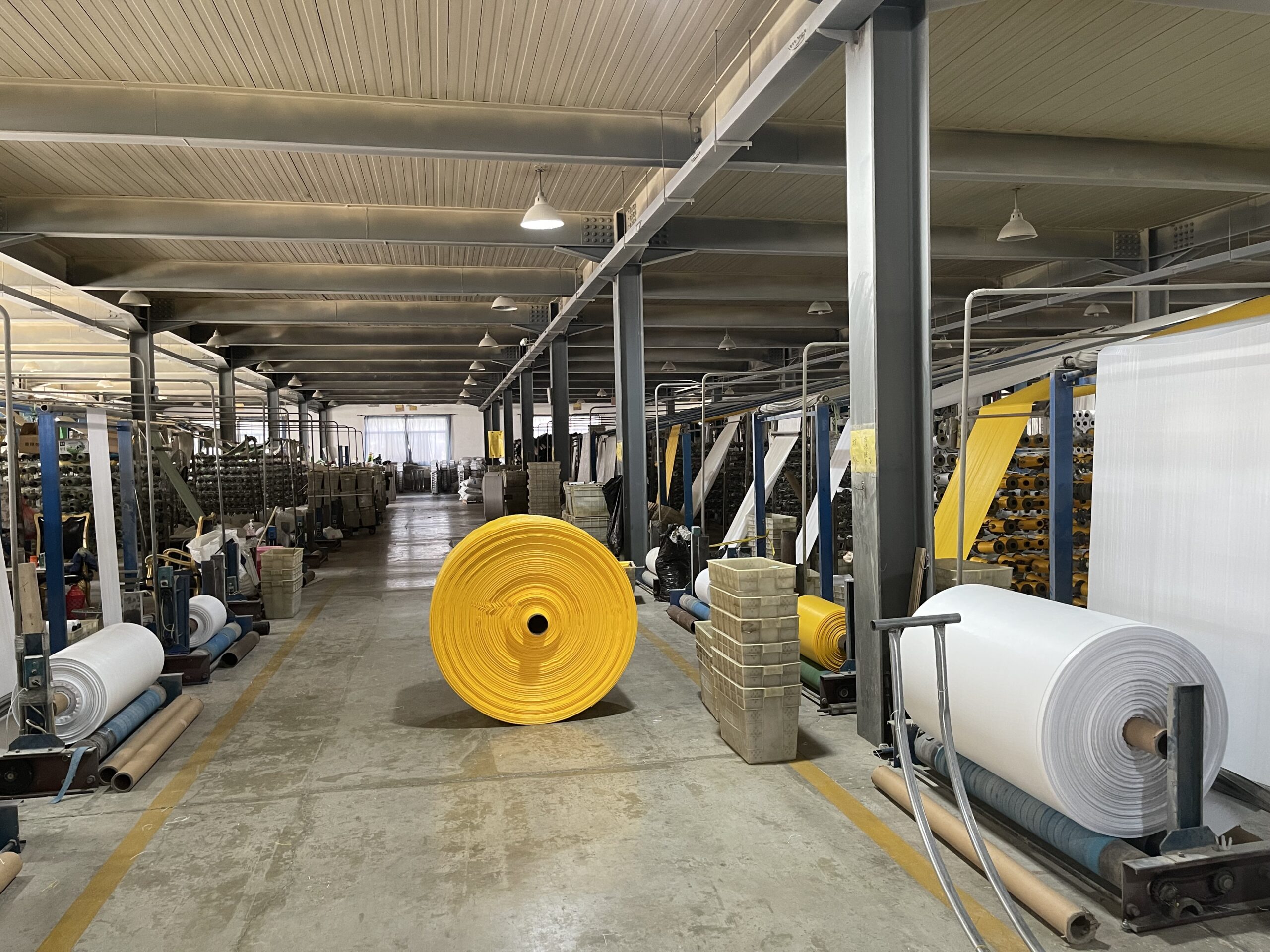
Our focus, however, is where performance meets practicality: Woven Polypropylene (WPP) Bags, especially the advanced BOPP Pinch Bottom Bags.
🚀 The Role of BOPP Pinch Bottom Bags in the Market
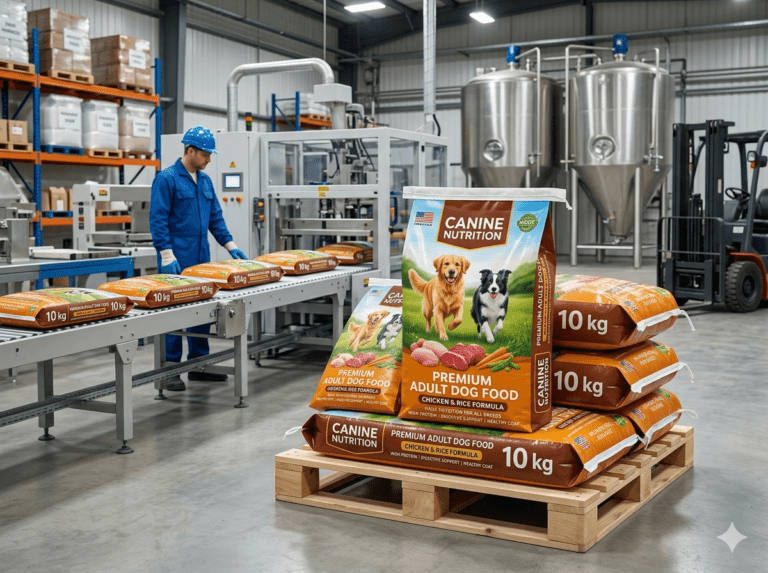
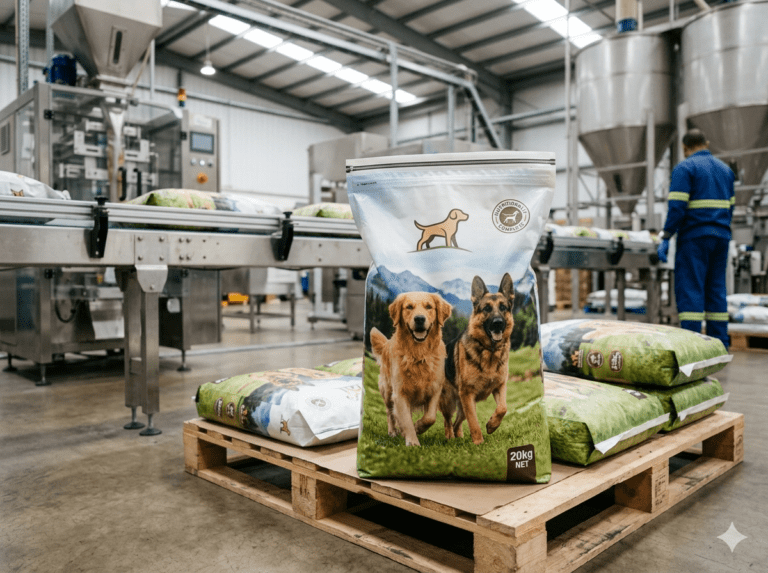
For large-volume dry pet foods—kibble, treats, and bulk supplements—WPP bags have long been a foundational choice due to their strength and cost-efficiency. The evolution to the BOPP Pinch Bottom Bag represents a significant leap forward, directly addressing several key market drivers:
- Superior Barrier: The BOPP (Biaxially Oriented Polypropylene) film, often laminated onto the woven structure, provides a high-quality surface. This lamination significantly enhances the moisture and oxygen barrier properties, crucial for maintaining kibble freshness, flavor, and shelf life.
- Aesthetics and Information: Unlike plain WPP, BOPP allows for high-definition, full-color printing. This addresses the consumer demand for transparency and attractive, informative packaging that stands out on the shelf (or online).
- Convenience and Security (Pinch Bottom): The “pinch bottom” or heat-sealed square bottom offers a secure, sift-proof closure that is robust enough for e-commerce logistics. It also allows the bag to stand upright, improving shelf display and home storage convenience.
- Durability: Woven polypropylene is inherently strong, offering excellent resistance to tearing and puncturing, thereby minimizing product loss and ensuring food safety.
🌐 Future Trends: Innovation and Smart Solutions
The future of pet food packaging will be defined by technological advancements that enhance both function and user experience:
- Sustainable Materials: Expect a major shift towards advanced bio-degradable and compostable films and coatings, reducing the reliance on virgin plastics.
- High Barrier Technology: Utilizing advanced materials like nanomaterials to create even thinner, more effective oxygen and moisture barriers that dramatically extend shelf life without increasing material thickness.
- Smart and Interactive Packaging: Integration of QR codes or AR (Augmented Reality) to provide consumers with instant access to detailed ingredient lists, feeding guides, and product traceability information. Furthermore, intelligent sensors could potentially monitor food freshness or temperature in real-time.
- Enhanced Convenience: Continued push for highly effective re-closable zippers and easy-pour spouts to maximize user-friendliness and prevent spoilage once the bag is opened.
The pet food packaging landscape is dynamic and demanding. For manufacturers, investing in high-performance, aesthetically pleasing, and secure solutions—like the BOPP Pinch Bottom Bag—is essential to meet both the functional needs of the food and the evolving, convenience-driven expectations of pet owners.