-
+86-18322274823


BOPP vs PP Woven Bags: The Complete Buyer’s Guide for Agricultural Packaging
Staring at a supplier catalog trying to distinguish a PP woven bag from a BOPP laminated one? You’re not alone. Procurement teams across agriculture face this daily. The acronyms pile up—PP, BOPP, PE, SOM, pinch bottom, valve—and the wrong choice means damaged product, failed branding, or money left on the table.
This guide cuts through the jargon. Whether you’re packaging fertilizer, animal feed, or pet food, you’ll learn exactly what each bag type offers and how to match it to your product. You’ll understand the differences between PP and BOPP woven bags, when a PE liner becomes necessary, and how to evaluate closure types with confidence.
At JTF Pack, we manufacture both standard and laminated woven bags for export markets. Here’s what every buyer should know.
What Is a PP Woven Bag? (Full Form and Properties)
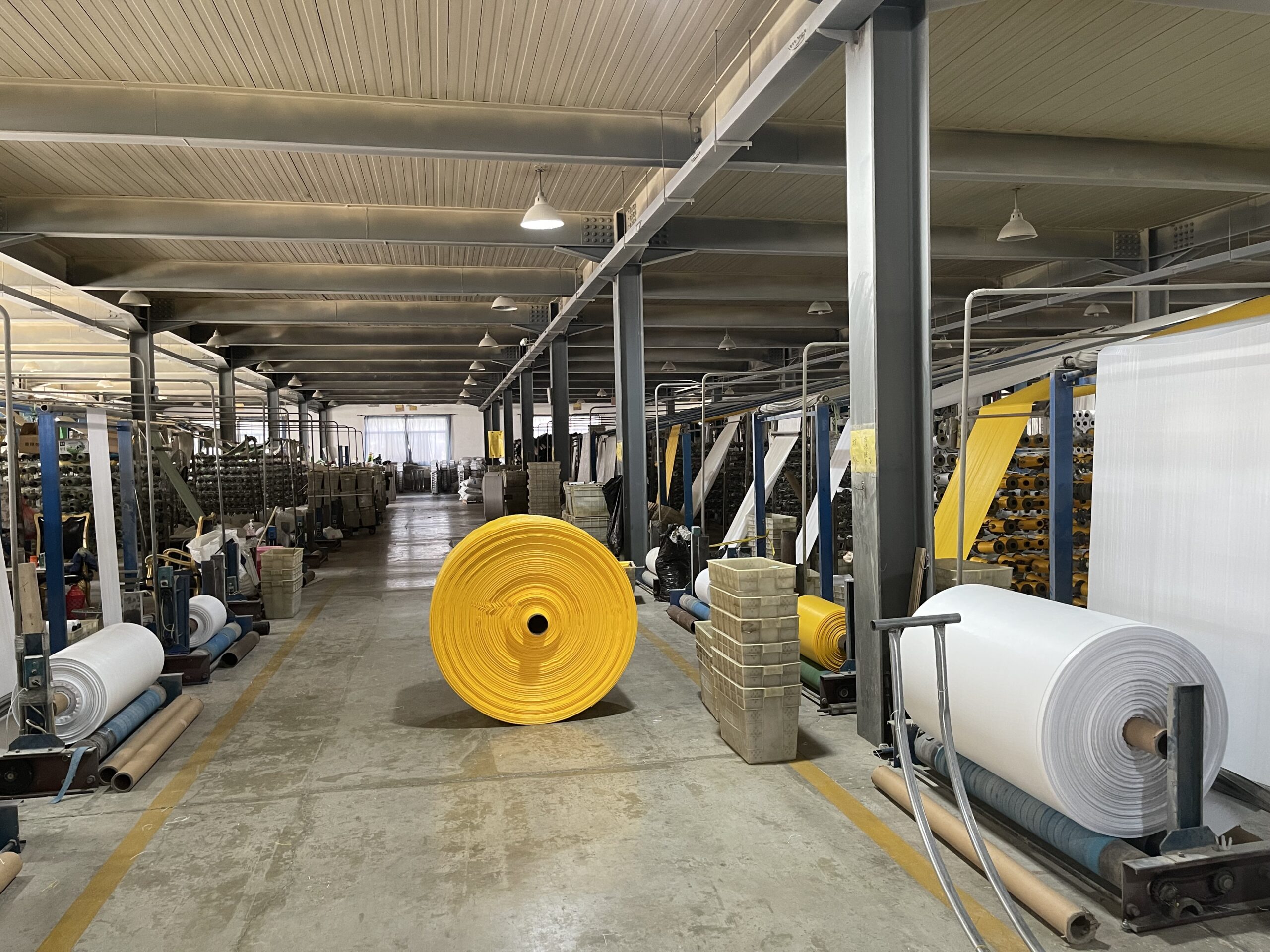
PP stands for polypropylene—a thermoplastic polymer. In packaging, a PP woven bag—or what is a polypropylene bag if you’re searching for basics—refers to sacks made from woven polypropylene tapes on a circular or flat loom, creating durable, breathable fabric.
So what is pp bag exactly? It’s a woven container made from interlaced polypropylene strips. This weaving gives the bags their signature ribbed texture and structural integrity. PP woven sacks—and what are polypropylene bags used for in practice—typically handle loads from 5kg to 100kg. Weight calculation depends on three variables: tape denier, mesh density (threads per inch), and fabric GSM (grams per square meter). Buyers should always request GSM and mesh count from their supplier—your shortcut to understanding pp woven bag weight calculation without expensive testing.
Key Properties of Standard PP Woven Bags
- High tensile strength: Woven structure distributes stress, preventing rupture under heavy loads
- Breathability: Air circulates through the weave, preventing condensation but also allowing moisture ingress
- Lightweight: PP’s low specific gravity means minimal shipping weight added
- Cost-effective: Among the lowest per-unit costs in industrial packaging
- Chemical resistance: Polypropylene resists most acids, alkalis, and organic solvents
Standard PP woven bags dominate commodity packaging—grains, seeds, construction aggregates, and bulk feeds where branding is minimal and cost control is critical. Their primary weakness is moisture. The woven fabric has microscopic gaps where rain, humidity, and ground moisture seep in, degrading hygroscopic products like fertilizer or premium feed.
What Is a BOPP Bag? (Full Form and Lamination Process)
BOPP stands for Biaxially Oriented Polypropylene. Here’s what that means.
“Biaxially oriented” means a flat polypropylene sheet is stretched in two perpendicular directions under controlled heat, aligning polymer molecules and dramatically improving clarity, strength, and barrier properties. The result is a thin, glossy film.
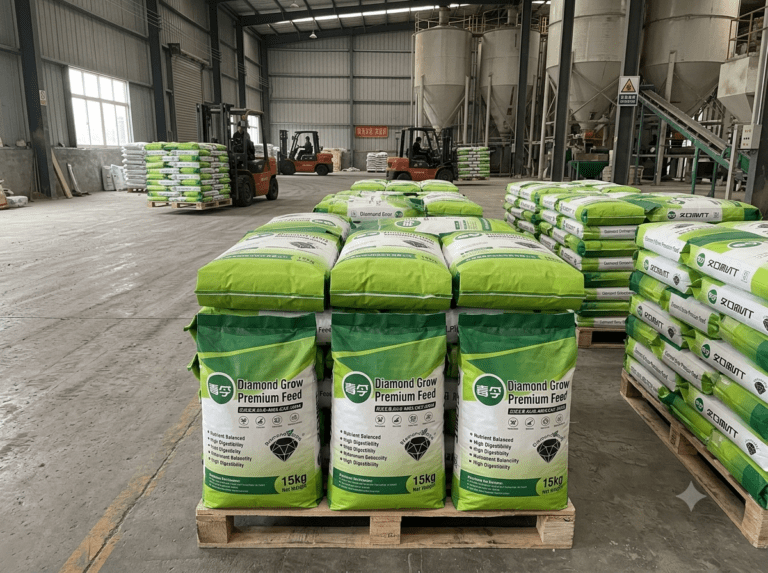
Here’s where terminology confuses buyers: a BOPP bag in industry parlance refers to a BOPP-laminated PP woven bag. The BOPP film is reverse-printed with up to eight colors via rotogravure, then extrusion-laminated onto woven PP fabric. The printed image ends up sandwiched between film and substrate, making it virtually impossible to scratch or fade.
So when buyers search what is bopp bags or ask about biaxially oriented polypropylene bags, the answer isn’t a bag made purely of BOPP film. It’s a PP woven bag enhanced with a BOPP lamination layer.
What BOPP Lamination Adds
- Photo-quality printing: Logos and labels reproduce in sharp detail—critical for retail-facing products
- Moisture barrier: Continuous film blocks water vapor and light rain far better than open weave
- UV resistance: Stabilizers added to the lamination extend outdoor storage life
- Abrasion resistance: Smooth outer surface withstands rough handling and stacking
- Premium appearance: Glossy or matte finishes signal quality to end-users
The bopp bags full form and bopp bags meaning—and the broader bopp meaning packaging question—boil down to this: a stronger, better-looking, more protective version of a standard PP woven sack. Additional cost typically ranges 15–30% over unlaminated equivalents, but for moisture-sensitive or branded products, that investment pays off.
PP vs BOPP Woven Bags: Head-to-Head Comparison
Understanding the difference between pp and bopp bags comes down to matching features to your operational reality. Below is a direct comparison of the two most commonly specified bag types in agricultural packaging.
| Feature | Standard PP Woven Bag | BOPP Laminated PP Woven Bag |
| Moisture Protection | Basic—woven gaps allow humidity and rain penetration | Excellent—continuous BOPP film creates a moisture barrier |
| Print Quality | Limited to 1–3 colors, lower resolution | Photo-quality, up to 8 colors with rotogravure printing |
| UV Resistance | Minimal without additives | High—UV stabilizers integrate into the lamination layer |
| Tear & Puncture Strength | Good for standard loads | Superior—the laminated film reinforces the woven substrate |
| Cost Per Unit | Lower—ideal for commodity applications | Moderately higher—offset by reduced loss and branding |
| Best Applications | Bulk grains, seeds, aggregates | Branded fertilizer, premium feed, pet food |
| Shelf/Retail Appeal | Minimal—generic woven appearance | High—glossy, professional appearance |
| Filling Speed | Fast—lightweight | Fast—stiffer but compatible |
Buyers researching bopp vs pp, comparing pp bopp bags, or evaluating the bopp pp specification spectrum should focus on three questions. Does your product absorb moisture? If yes, BOPP lamination isn’t optional—it’s insurance. Do end-users judge your product by its packaging? In retail pet food and premium fertilizer markets, the answer is yes. Does your product sit in outdoor storage? UV-stabilized BOPP lamination reduces sun degradation dramatically.
For low-margin commodities moving through closed supply chains, standard PP woven bags remain the rational choice. The differences between pp bags and bopp bags are significant, but they matter proportionally to what you’re shipping.
What About PE Bags? Polyethylene vs Polypropylene
No guide to woven agricultural packaging would be complete without addressing the third acronym buyers encounter: PE.
PE stands for polyethylene, another thermoplastic polymer that competes with polypropylene in the flexible packaging market. The difference between pp and pe bags starts at the molecular level and manifests in distinct handling characteristics.
Polyethylene is softer, more flexible, and offers better inherent moisture barrier properties than standard PP. PE woven bags drape more easily and perform better in very low temperatures. However, polypropylene wins on three counts that matter in agriculture:
- Higher tensile strength at equivalent weight—PP carries heavier loads with less material
- Superior UV resistance—critical for outdoor storage of fertilizer and feed
- Better cost efficiency—PP resin and weaving cost less per unit of strength
When buyers compare PE vs PP bags or research the difference between polyethylene and polypropylene, the agricultural sector overwhelmingly favors PP. The choice comes down to whether your priority is flexibility and moisture barrier (PE) or strength and UV stability (PP). PE woven bags find niche use in cold-chain applications where extreme flexibility matters.
For fertilizer, feed, and pet food, PP remains the default. If you need additional moisture protection beyond BOPP lamination, don’t switch to PE—add a PE liner inside your PP or BOPP-laminated bag.
Closure Types Explained
The fabric specification is only half the decision. How the bag closes determines filling efficiency, stacking stability, and user experience. Here are the four main closure types buyers should understand.
Sewn Open Mouth (SOM)
The SOM closure is exactly what it sounds like: filled through an open top, then sewn shut with industrial stitching. It’s the most common, lowest-cost closure and works with virtually all filling equipment. The downside: SOM bags require a sewing station, which can bottleneck high-speed operations.
Pinch Bottom
Pinch bottom bags feature a flat base created by folding and heat-sealing the bottom panel, allowing the bag to stand upright on retail shelves. This is a massive advantage for pet food and branded feed where point-of-sale presentation matters. Pinch bottom pairs well with BOPP lamination because the flat printable panels maximize brand visibility.
Valve Bags
A pp valve bag incorporates a self-closing sleeve (the valve) in one corner. Product enters through the valve during automated filling, and the pressure of the contents naturally seals the sleeve shut. No sewing required. PP valve bags dramatically increase filling line throughput—some systems exceed 3,000 bags per hour. The trade-off: higher unit cost and limited suitability for very fine powders that might leak through the valve.
Block Bottom Bags
BOPP block bottom bags and block bottom BOPP bags represent the premium tier. The bottom forms into a rectangular “block,” allowing the bag to stand perfectly square on pallets or shelves, maximizing stackability and retail presence. This closure is the go-to for premium fertilizer and high-end pet food where every square centimeter of printable surface drives marketing value.
Choosing the Right Closure
| Closure Type | Best For | Filling Method | Cost Level |
| SOM | Commodity bulk goods | Manual or semi-automated | Lowest |
| Pinch Bottom | Retail display, branded products | Automated or manual | Moderate |
| PP Valve Bag | High-speed automated lines | Fully automated | Moderate |
| Block Bottom | Premium retail, maximum stability | Automated | Highest |
When to Add a PE Liner
Even with BOPP lamination, some products demand additional moisture protection. A PE liner is a separate polyethylene film bag inserted inside the woven sack, creating a double barrier system.
BOPP bags with PE liner configurations are recommended in three scenarios:
- Highly hygroscopic fertilizers: Ammonium nitrate, urea, and certain NPK compounds draw moisture aggressively. A PE liner buys weeks of extra protection.
- Tropical or coastal storage: Ambient humidity above 70% overwhelms single-barrier packaging. The PP woven sack with liner combination is standard in Southeast Asian, Central American, and West African markets.
- Extended transit: Ocean freight exceeding 30 days exposes cargo to container condensation. The PE liner absorbs that margin.
The trade-off: liners add material cost ($0.03–$0.08 per bag) and slightly reduce filling speed. For products where moisture damage means write-offs, this cost is negligible. For dry grains in arid regions, it’s unnecessary.
How to Choose the Right Bag for Your Application
With the technical foundation established, let’s apply it. Here’s how to specify the correct bag for three of the most common agricultural packaging categories.
For Fertilizer
Fertilizer demands moisture resistance, UV stability, and chemical compatibility. NPK compounds and specialized blends are hygroscopic and degrade rapidly when exposed to humidity.
Recommended specification: BOPP laminated PP woven bag with optional PE liner, 20kg to 50kg, SOM or valve closure, UV-stabilized lamination rated for 3+ months outdoor exposure.
The bopp woven fertilizer sacks specification enables high-quality branding—critical in markets where distributors judge product quality by packaging presentation.
For Animal Feed
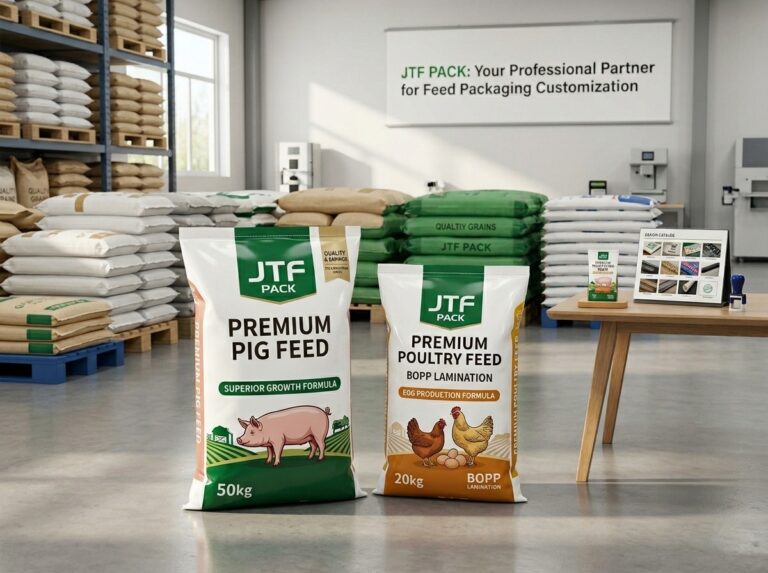
Feed packaging spans a broad spectrum. Commodity bulk feeds (layer mash, broiler pellets) moving through closed supply chains often use standard animal feed pp woven bag specifications with basic printing. Premium feeds—equine supplements, organic poultry feed—benefit from BOPP lamination for moisture protection and shelf differentiation.
Recommended specification: BOPP laminated for premium/retail feeds (25kg–50kg, pinch bottom or block bottom); standard PP woven for commodity bulk feeds (50kg, SOM).
For Pet Food
Pet food is the most demanding of the three categories. Products face extended retail shelf life, must appeal emotionally to consumers, and frequently contain oils that migrate through inadequate barriers.
Recommended specification: BOPP laminated PP woven bag with PE liner, pinch bottom or block bottom closure, 5kg to 20kg, high-resolution printing.
The pet food category delivers the highest packaging ROI. Pet food packaging types with pinch bottom construction and full BOPP print coverage consistently outperform generic woven sacks at retail.
Your Decision Checklist
Before finalizing, confirm:
- ☐ Is my product sensitive to moisture or humidity?
- ☐ Will the packaging be visible to retail customers or distributors?
- ☐ How long will bags sit in outdoor storage or transit?
- ☐ What filling equipment do I operate (manual, semi-auto, fully automated)?
- ☐ Does my budget allow for lamination, or is commodity-grade acceptable?
- ☐ Do I need UV protection, and for what duration?
- ☐ Is a PE liner necessary for my climate or product chemistry?
BOPP Bag Sustainability: Are They Recyclable?
Sustainability questions are increasingly common in procurement RFPs. Buyers want to know: is BOPP recyclable? And what about is BOPP biodegradable?
The straightforward answers: yes, BOPP laminated PP woven bags are recyclable, and no, they are not biodegradable.
Both BOPP film and PP woven fabric are polypropylene (plastic recycling category 5, PP). Because both layers share the same polymer base, the lamination does not prevent recycling. Specialized recycling facilities can process used BOPP bags through washing, shredding, and re-pelletizing stages. The resulting recycled PP resin finds second-life applications in injection-molded products, plastic lumber, and non-food packaging.
However, recycling infrastructure varies dramatically by country. In regions with established programs, BOPP bags enter the waste stream responsibly. In markets without infrastructure, used bags may still reach landfills.
As for the question is BOPP biodegradable, polypropylene resists microbial degradation for decades. Claims suggesting otherwise should be treated with skepticism. Manufacturers can optimize sustainability through:
- Material reduction: Computer-optimized sizing achieving target strength with lower GSM
- Reusable designs: Heavier-duty bags rated for multiple filling cycles
- Recycled content: Post-industrial recycled PP integrated into the woven substrate
- Mono-material construction: Liners, tapes, and lamination using compatible polymers for easier recycling
Why Choose JTF Pack as Your Woven Bag Manufacturer?
Understanding bag specifications is half the battle. Executing them reliably at volume is the other half.
JTF Pack manufactures both standard PP woven bags and BOPP laminated PP woven bags—including bopp bags 5kg to 100kg capacity—with multiple closure types, custom printing up to 8 colors, and optional PE liners. Our lines handle SOM, pinch bottom, valve, and block bottom configurations.
For export markets, we provide pre-shipment sampling, load testing, and flexible MOQs for trial orders and annual contracts. Whether you’re specifying bopp woven fertilizer sacks or retail-ready pet food packaging, our team works from your requirements.
Conclusion
The “right” woven bag doesn’t exist in isolation—it exists in relation to your product, your supply chain, your market, and your budget. Standard PP woven bags remain the workhorse of commodity agriculture. BOPP laminated PP woven bags elevate protection and presentation for branded, moisture-sensitive, and retail-facing applications. PE liners add an extra moisture barrier when the environment demands it. And the right closure type—whether SOM, pinch bottom, valve, or block bottom—determines how efficiently your filling line runs and how your product presents at destination.
Procurement decisions improve when buyers understand the materials and construction behind their packaging. If you’re evaluating specifications, the JTF Pack team can review your product details and recommend an optimized configuration.