-
+86-18322274823


Cat Litter BOPP Woven Sacks: Print Finishing for Shelf Impact
In today’s competitive pet retail landscape, cat litter packaging must survive aggressive lighting, rapid shopper decision-making, and rigorous logistics before a single gram reaches the bin.
The difference between a stagnant SKU and a category leader often comes down to how light interacts with the package surface and how the material holds up through transit. For manufacturers producing heavy-duty, moisture-proof solutions in 5–50kg capacities, mastering BOPP laminated woven sacks print finishing is no longer optional—it is a strategic imperative that bridges structural engineering with shelf psychology. At JTFPACK, we engineer these packages to perform across automated filling lines while delivering consistent visual impact from factory floor to retail display. JTFPACK manufactures bopp laminated woven sacks print finishing from its base in Tianjin, China, under ISO 9001 quality management.
Key Takeaways
- Why Cat Litter Packaging Fails on the Retail Shelf: Cat litter bags compete in high-glare, high-traffic aisles where surface finish determines perceived product quality before a shopper reads the label.
- BOPP Lamination as the Print Foundation for BOPP laminated woven sacks print finishing: Woven polypropylene provides exceptional tensile strength and puncture resistance, but its fibrous texture presents a significant barrier to high-fidelity graphics.
- Gloss vs. Matte Finishing: Controlling Light and Perceived Quality: The choice between glossy and matte BOPP finishes directly influences how a cat litter package communicates value under retail lighting.
- Spot UV and High-Build Varnish for Tactile Brand Cues: Visual differentiation alone rarely sustains long-term shelf engagement; tactile feedback drives subconscious quality assessment.
- Cold Foil and Metallic Accents Without Film Delamination: Metallic accents traditionally rely on hot stamping, which applies heat and pressure to transfer foil via metal dies.
Why Cat Litter Packaging Fails on the Retail Shelf
Cat litter bags compete in high-glare, high-traffic aisles where surface finish determines perceived product quality before a shopper reads the label. Fluorescent overhead lighting, reflective shelving, and competing SKUs create optical noise that can flatten graphics, wash out colors, or create distracting hotspots. When a package relies solely on uncoated printing or inconsistent lamination, the visual hierarchy collapses. Shoppers associate uneven texture, dull tones, or visible glare with lower-grade materials, even if the product inside is identical. Additionally, pet specialty stores, mainstream grocery chains, and mass merchandisers each impose different fixture geometries and handling protocols. A finish optimized for a wire gondola may scuff against plastic dividers or slip during manual restocking. Without aligning the coating profile, coefficient of friction, and graphic contrast to specific channel requirements, even structurally sound bags will underperform. This is why BOPP laminated PP woven bags are engineered with finish specifications that anticipate real-world retail environments, not just lab conditions.
BOPP Lamination as the Print Foundation for BOPP laminated woven sacks print finishing
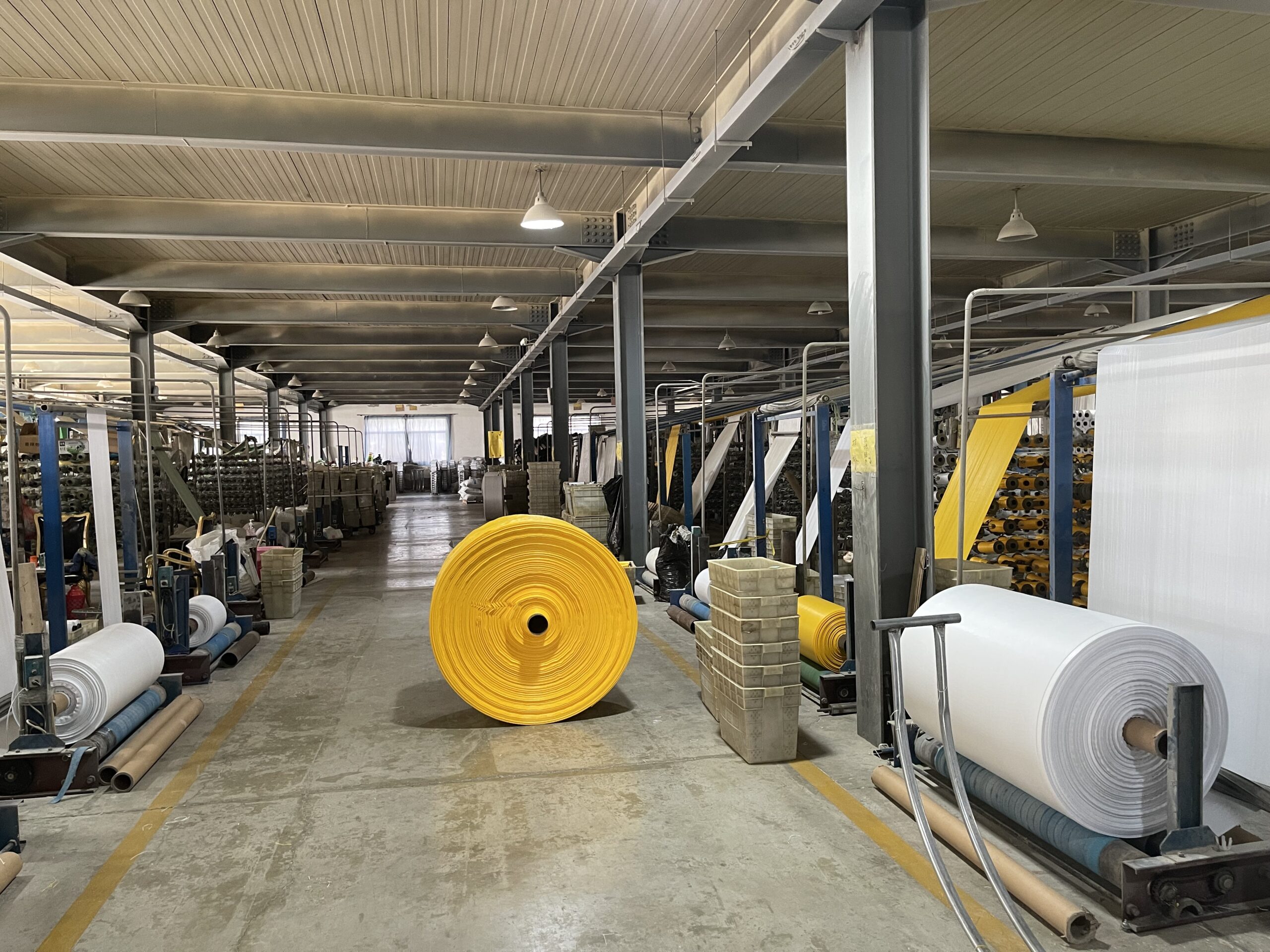
Woven polypropylene provides exceptional tensile strength and puncture resistance, but its fibrous texture presents a significant barrier to high-fidelity graphics. Uncoated woven substrates absorb ink unevenly, crush fine halftones, and struggle to maintain consistent color density across large-format runs. BOPP lamination solves this by applying a continuous, non-porous film layer that creates a smooth, low-absorption printing surface. This film stabilizes ink laydown, allowing flexographic and gravure presses to reproduce sharp typography, detailed ingredient callouts, and complex illustrative elements without dot gain or feathering. Beyond aesthetics, the BOPP layer delivers critical functional benefits: it acts as a vapor barrier to protect against humidity, reinforces the sack’s moisture-proof integrity, and maintains dimensional stability during high-speed automated filling. When paired with precision gusset design and controlled fill-weight tolerances, the laminated composite ensures that every 5kg to 50kg unit arrives at the distribution center with intact graphics and reliable flow characteristics. Manufacturers looking to upgrade their portfolio should evaluate BOPP Pinch Bottom Bags (PBOM) as a baseline platform that marries structural durability with superior print readiness.
What Is the Difference Between Gloss and Matte Finishing: Controlling Light and Perceived Quality?
The choice between glossy and matte BOPP finishes directly influences how a cat litter package communicates value under retail lighting. Gloss BOPP maximizes color saturation, contrast ratio, and specular reflection, making it ideal for bold shelf-blocking graphics, vibrant brand palettes, and high-impact promotional messaging. However, excessive gloss can amplify overhead glare, creating visual fatigue and reducing scanability. Matte BOPP diffuses light more evenly, eliminating hotspots while projecting a refined, understated aesthetic. This finish is particularly effective for brands emphasizing natural ingredients, low-dust formulations, or eco-conscious positioning, as it conveys sophistication and tactile restraint. Many successful cat litter programs now employ hybrid strategies: using matte BOPP as the base field to reduce ambient glare, then selectively enhancing high-value zones to draw the eye. Understanding how your target demographic processes visual cues allows packagers to calibrate reflectance values that align with both brand identity and retail fixture constraints.
Spot UV and High-Build Varnish for Tactile Brand Cues
Visual differentiation alone rarely sustains long-term shelf engagement; tactile feedback drives subconscious quality assessment. Spot UV and high-build varnishes allow converters to introduce raised, glossy micro-zones onto otherwise matte BOPP surfaces without compromising structural integrity. These localized coatings excel at highlighting primary logos, brand mascots, and key performance claims such as “99% Dust-Free” or “Clumping Formula.” By creating deliberate contrast in both reflectivity and texture, spot treatments guide consumer fingers and eyes toward critical information, effectively turning passive scanning into active engagement. High-build varnishes can be precisely registered over photorealistic illustrations of litter granules, adding subtle dimensionality that mimics the product’s physical texture. Importantly, modern water-based and UV-curable formulations cure rapidly on BOPP films, maintaining adhesion without softening the underlying polymer matrix. This approach preserves the bag’s moisture-proof seal and automated filling compatibility while elevating perceived value. Brands seeking this level of precision often pair it with Step-Cut Pinch Bottom Bags to ensure the closure geometry does not interfere with uniform coating application.
Cold Foil and Metallic Accents Without Film Delamination
Metallic accents traditionally rely on hot stamping, which applies heat and pressure to transfer foil via metal dies. On textured or semi-rigid substrates like woven polypropylene, hot stamping introduces significant risks: die marks can fracture the BOPP laminate, cause micro-cracking along crease lines, or trigger partial delamination during thermal cycling. Cold foil transfer eliminates these liabilities by using a UV-curable adhesive pattern printed directly onto the BOPP surface, followed by vacuum-assisted foil application and immediate curing. Because no mechanical pressure or extreme heat contacts the film, the laminate remains fully bonded, preserving tear strength and moisture barriers. The result is crisp, durable metallic highlights that resist abrasion and withstand palletized storage without flaking. This technique is especially valuable for premium cat litter lines competing in upscale pet boutiques, where metallic trim signals clinical efficacy or luxury formulation. When integrated early in the design phase, cold foil patterns can be mapped to avoid stress concentration zones, ensuring the finish survives drop tests and transit vibrations.
Surface Slip, Scuff Resistance, and Stackability Testing
A visually striking package is useless if it fails to survive the distribution cycle. Print finishing directly impacts the coefficient of friction (COF), which governs how bags slide against themselves, conveyor belts, and cardboard cartons. Excessively high slip can cause bags to shift during pallet wrapping or jam automated case packers, while insufficient slip increases drag, slows line speeds, and generates static buildup. Modern BOPP laminates incorporate controlled slip additives that maintain stable COF ranges regardless of humidity or temperature fluctuations. Equally critical is scuff resistance: the surface coating must withstand friction from labeling equipment, robotic grippers, and manual stacking without losing graphic fidelity. Pallet-stack compression testing further validates whether the finish supports load-bearing requirements without blistering or delaminating under sustained weight. JTFPACK recommends running full-cycle validation—including edge-to-edge rub tests, multi-layer compression trials, and automated filling simulation—to verify that the chosen finish protects shelf impact through warehousing, cross-docking, and store receiving. Proper specification requires evaluating the entire system, including BOPP PBOM Dog Food Bags (T-Shape) construction parameters, to ensure finishing choices do not compromise structural performance.
Technical Specifications at a Glance
| Parameter | Specification |
|---|---|
| Capacity range | 5 kg – 50 kg (11 lb – 110 lb) |
| Construction | BOPP film laminated to PP woven or film core |
| Closure | Heat-welded pinch bottom with pre-formed T-shape step-cut fold |
| Printing | Up to 10-colour reverse gravure (gloss, matte or spot-matte) |
| MOQ | 5,000 pcs standard / 500–1,000 pcs FIBC |
| Lead time | 7–15 days standard, 15–25 days custom print |
| Quality system | ISO 9001 |
| Palletising | Bales on pallets, stretch-wrapped for export |
Matching Print Finishing to Pet Retail Channel Requirements
Different retail ecosystems demand distinct packaging behaviors, and finishing specifications must be tailored accordingly. Pet specialty retailers prioritize fixture compatibility, requiring finishes that resist scratching from acrylic displays and maintain consistent grip for frequent manual handling. Grocery chains emphasize barcode scanability and high-speed automation, favoring low-glare matte bases with anti-static topcoats that prevent paper dust accumulation. Mass merchants demand maximum stack stability and cost-efficient production, often specifying reinforced pinch-bottom closures and standardized gusset widths to optimize pallet density. Regardless of channel, the finishing strategy should be defined alongside bag construction, gusset design, and fill-weight tolerances from the initial engineering phase. For example, pinch bottom bags are heat-welded in a pinch sealer: after filling, the bag top enters the sealer, the pre-formed T-shape step-cut top fold is folded, and heat melts the laminated plies into a seamless permanent weld. Step-cut refers to the pre-formed T-shape step-cut TOP FOLD — a stepped corner profile engineered into the bag TOP that interlocks when folded and heat-sealed. It is NOT a cut at the bag ends, and the interlock happens at the CLOSURE (during sealing), NOT during pallet stacking. The squared-off bottom comes from the T-fold + pinch weld expanding into a flat-bottomed rectangular shape after filling — it is a result of the closure design, not a stacking feature. Aligning coating profiles with channel-specific handling, shelf-life expectations, and automated line speeds ensures that every package performs reliably from first fill to final sale.
In a market where shoppers make split-second decisions based on visual clarity and tactile confidence, the right surface treatment transforms a functional container into a silent salesperson. JTFPACK designs customized, cost-effective solutions that integrate BOPP laminated woven sacks print finishing with robust structural engineering, ensuring every 5–50kg unit meets moisture-proof standards, automates seamlessly, and withstands rigorous logistics. By aligning gloss levels, varnish placement, foil application, and friction coefficients with your target retail environment, you eliminate guesswork and protect brand equity from factory to shelf. Partner with a manufacturer who understands the intersection of material science, press capabilities, and channel-specific demands, and position your cat litter line for sustained retail dominance.