-
+86-18322274823


From Giants to Viral Brands: Material Science & Cost Anatomy of Pet Food Packaging Bags
For pet food brands, a packaging bag is far more than a container—it is the brand’s primary handshake with the consumer and the ultimate shield for the product inside. From legacy global giants to fast-growing digital-native brands, choosing the right packaging material dictates everything: shelf-life extension, transit safety, user experience, and, fundamentally, the bottom-line cost structure.
As a leading pet food packaging bags manufacturer, we dive deep into the material anatomy, shifting trends, and cost dynamics dominating the market in 2026, helping brand owners make data-backed, strategic procurement decisions.
1. The Multi-Layer Anatomy: Beyond the “Plastic Bag”
Modern pet food preservation relies on a sophisticated multi-layer composite system. Its sole mission is to block oxygen, moisture, light, and odor, ensuring the kibble or treats retain their nutritional value and palatability throughout their shelf life.
The Structural & Printing Layer
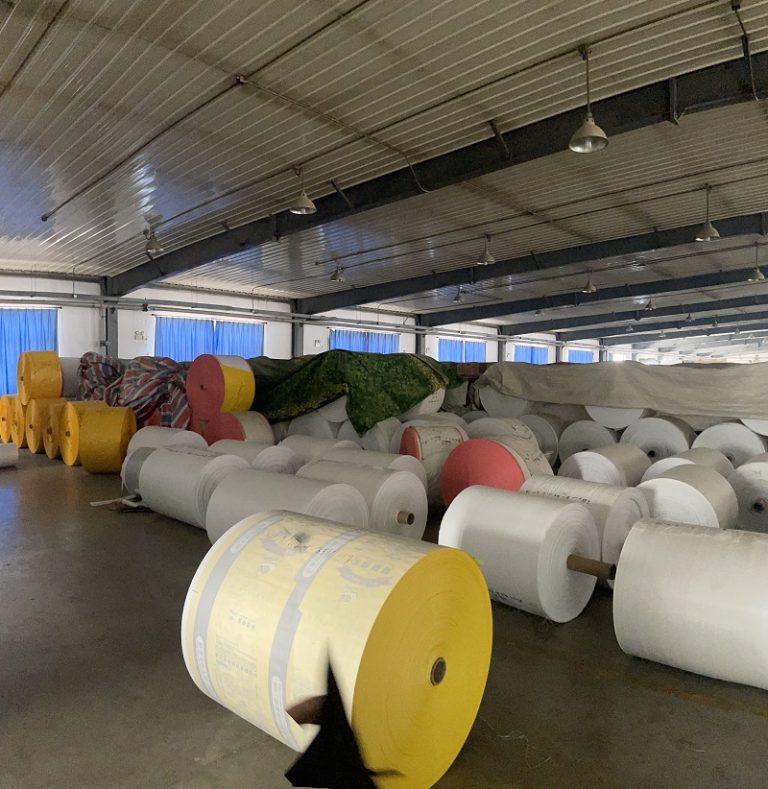
- BOPP (Biaxially Oriented Polypropylene): The go-to substrate for high-definition vivid printing. It delivers excellent gloss, high tensile strength, and crisp brand imagery on the outer shell.
- PET (Polyester Film): Offers superior stiffness, thermal stability, and puncture resistance, frequently utilized as a middle reinforcement layer.
- NY (Nylon/Polyamide): Exceptional impact strength and puncture resistance—vital for recipes containing sharp freeze-dried chunks or bone-in kibble.
The Barrier & Sealing Cores
- VMPET (Metallized PET) & AL (Aluminum Foil): VMPET offers the most cost-effective shielding against light and oxygen. Pure Aluminum Foil (AL) provides a near-perfect barrier but comes at a premium cost and is prone to pinholes when creased.
- CPP & PE (Cast Polypropylene / Polyethylene): These function as the inner heat-sealant layers, ensuring structural integrity and airtight closures to prevent fat oxidation and oil seepage.
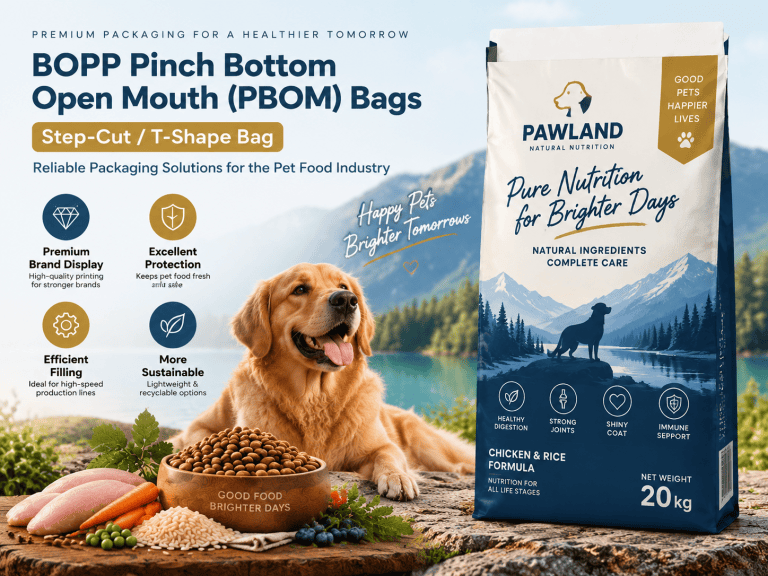
2. Breaking the Heavy-Duty Bottleneck: The Supremacy of BOPP Pinch Bottom PP Woven Bags (10kg–50kg)
While small-to-medium pouches (500g–3kg) focus heavily on retail shelf aesthetics, large-scale distribution (10kg to 50kg bulk packaging) faces entirely different challenges: catastrophic drop-test failures, bag bursting during maritime shipping, moisture ingress in humid warehouses, and grease bleeding.
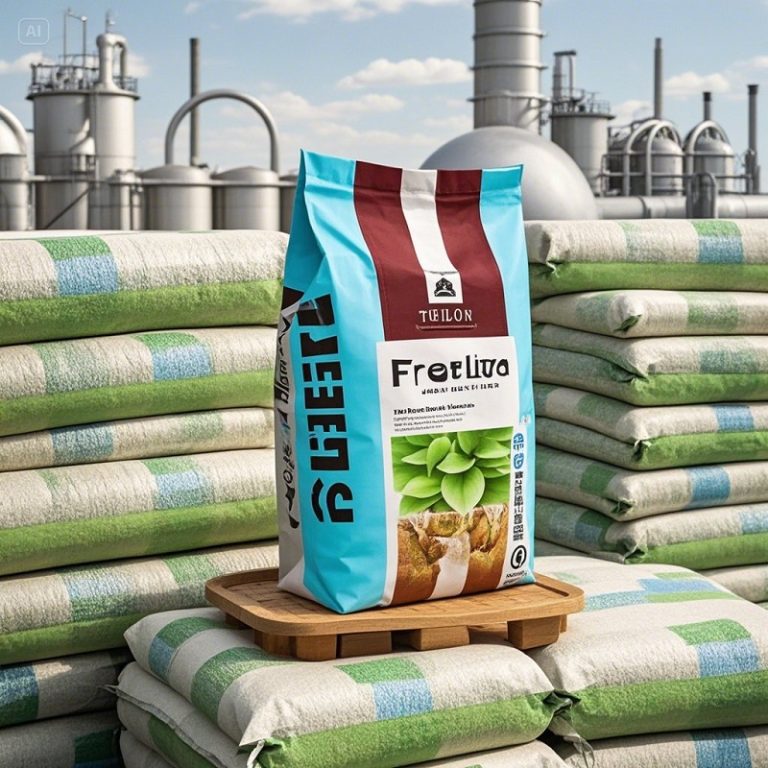
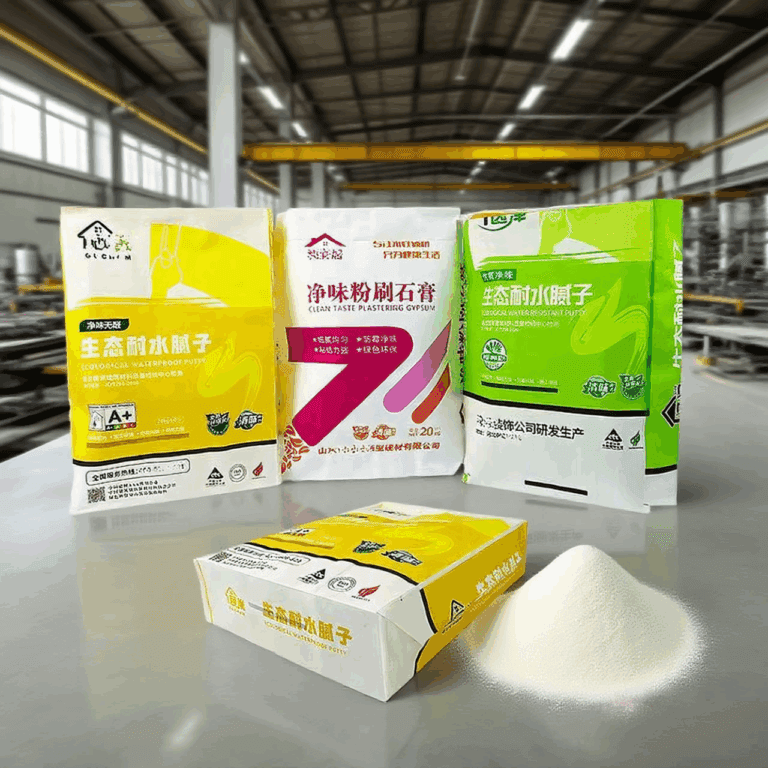
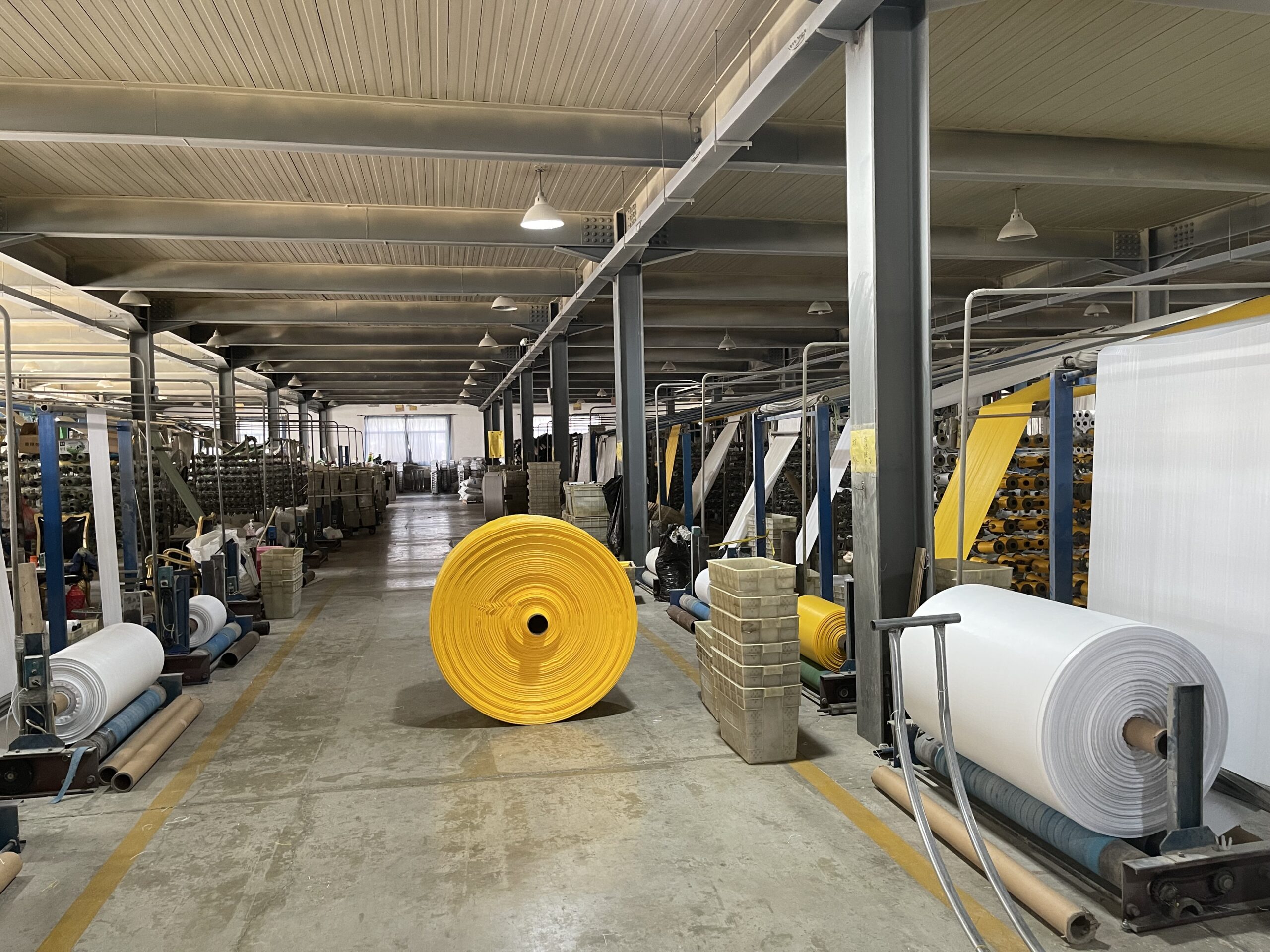
To solve this, industry leaders in 2026 have shifted away from traditional paper sacks or flimsy multi-layer plastic towards BOPP Pinch Bottom PP Woven Bags.
[BOPP Film Layer: High-Def Photo Printing & Gloss/Matte Finish]
                 ↓ (Polyurethane Lamination)
[PP Woven Fabric Core: Unmatched Tensile Strength & Puncture Resistance]
                 ↓ (Hot-Melt / Pinch Bottom Sealing)
[Pinch Bottom Closure: Zero Stitching Holes, Anti-Infiltration, Block Bottom Structure]
Why is this specific configuration dominating the 10kg-50kg bulk pet food market?
- Zero-Leakage Pinch Bottom Geometry: Unlike traditional sewn bags that leave micro-needle holes where bugs can enter or grease can leak, the pinch-bottom design utilizes hot-melt adhesive. This creates a completely hermetic, step-down seal that eliminates product infiltration.
- The Hybrid Armor (BOPP + PP Woven Fabric): By laminating high-definition printed BOPP film onto a heavy-duty polypropylene (PP) woven fabric core, brands get the best of both worlds. You achieve the flawless, premium matte or glossy visual appeal of a boutique retail bag, backed by the industrial-grade tensile strength that prevents tearing when dropped from warehouse racks.
- Optimized Cube Efficiency: The block-bottom or pinch-bottom structure allows the filled 15kg or 20kg sacks to square up perfectly. This maximizes palletization stability, slashes ocean freight volumetric costs, and allows the bags to stand upright on warehouse club floors.
3. The 2026 Cost Breakdown: Sourcing Metrics and Hidden Premiums
A realistic look at the cost architecture reveals that a pet food bag’s total price tag is split across three major pillars:
| Cost Component | Percentage of Total Cost | Key Influencing Factors |
| Raw Material & Substrates | 60% – 75% | Thickness (micron rating), barrier material selection (VMPET vs. AL), fabric GSM. |
| Pre-Press & Cylinder Plates | 15% – 25% | Number of colors, gravure printing complexity, matte/gloss contrast effects. |
| Converting & Post-Processing | 10% – 20% | Pinch-bottom shaping, zipper integration, handle die-cutting. |
The “Small-Order Premium” Trap: According to 2026 packaging industry data, emerging and viral pet food brands often suffer from a 30%+ cost premium purely because their initial order volumes fail to hit the minimum order quantities (MOQs) of traditional massive converters. Balancing rigid MOQs with flexible supply chain management is now a primary bottleneck for new product launches.
4. Driving Trends: Innovation vs. Cost Realities
Trend A: High-Barrier Transparency
“What you see is what you get” drives consumer trust. High-barrier transparent films (like KPET or coated OPP) feature heavily in freeze-dried and premium cat food pouches. Data indicates that retail items with transparent windows see an 18% higher click-through rate online compared to fully opaque metallized alternatives.
Trend B: The Pragmatic Approach to Sustainability
While fully biodegradable PLA pouches remain cost-prohibitive (often 2x to 3x the price of standard plastics) and lack long-term moisture barriers, 2026 has seen a massive push toward mono-material recyclable PE bags and downgraded (thinner yet stronger) woven composites that reduce the overall carbon footprint without compromising 18-month shelf-life targets.
5. B2B Sourcing Playbook: Strategic Actions for Brand Managers
When sourcing pet food packaging from a manufacturer, price per unit should never be the sole metric. To build a resilient supply chain, consider these steps:
- Match Bag Structure to Payload Weights: Do not pack a 20kg premium kibble in an unlaminated plastic bag. For anything over 10kg, specify BOPP laminated PP woven sacks with a pinch bottom to drive down warehouse damage claims to near zero.
- Audit Factory Accreditations: Ensure your manufacturing partner operates under ISO 9001 and food-grade cleanroom environments. Ask for certified third-party testing regarding heavy metals, migration limits, and solvent residues.
- Run Rigorous Abuse Testing: Before signing off on a 50,000-bag run, demand physical mock-ups for real-world testing: 3-meter drop tests, prolonged compression tests (simulating a 20-pallet stack), and oven-bake grease resistance tests.
Summary
The evolution of pet food packaging from legacy giants to viral startups is no longer just an art of graphic design—it is a game of material engineering and logistics efficiency. In 2026, the market leaders are those who know exactly how to balance barrier freshness, rugged logistics protection, and manufacturing costs. By leveraging advanced configurations like BOPP Pinch Bottom PP Woven Sacks, smart brands are securing their product integrity while scaling up their commercial footprint.
FAQ Section
Q1: What are the main benefits of using BOPP Pinch Bottom PP Woven Bags for large 20kg pet food orders instead of traditional multi-wall paper bags?
A1: Paper bags absorb moisture over time, leading to stale kibble and mold risks during maritime transit, and they tear easily under impact. BOPP laminated PP woven bags offer complete water and grease resistance, exponentially higher tensile strength, and zero leakage due to the hot-melt adhesive pinch closure—all while offering identical, top-tier printing quality.
Q2: Is an Aluminum Foil barrier always necessary for dry pet food?
A2: No. Pure aluminum foil is mandatory for hyper-sensitive applications like freeze-dried raw meats or medical-grade diets. For standard dry pet food with a standard 12-to-18-month shelf life, a high-spec VMPET (metallized) layer or a premium laminated woven setup provides more than adequate oxygen and UV block at a fraction of the cost.
Q3: How can we minimize our initial packaging costs when launching a new pet food SKU?
A3: Work with an integrated factory capable of flexible production adjustments. For your flagship, fast-moving bulk items (10kg-50kg), commit to standard sizing in BOPP woven bags to achieve lower unit costs. For smaller test formulas, utilize shared plate-making or digital printing options to bypass high initial cylinder costs.